
- Kiyosaki says he is carrying about $1.2 billion in debt.
- His former wife says the debt is linked to about 1,500 apartment units owned with partners.
- Vanity Fair estimated his personal share at $30 million to $60 million.
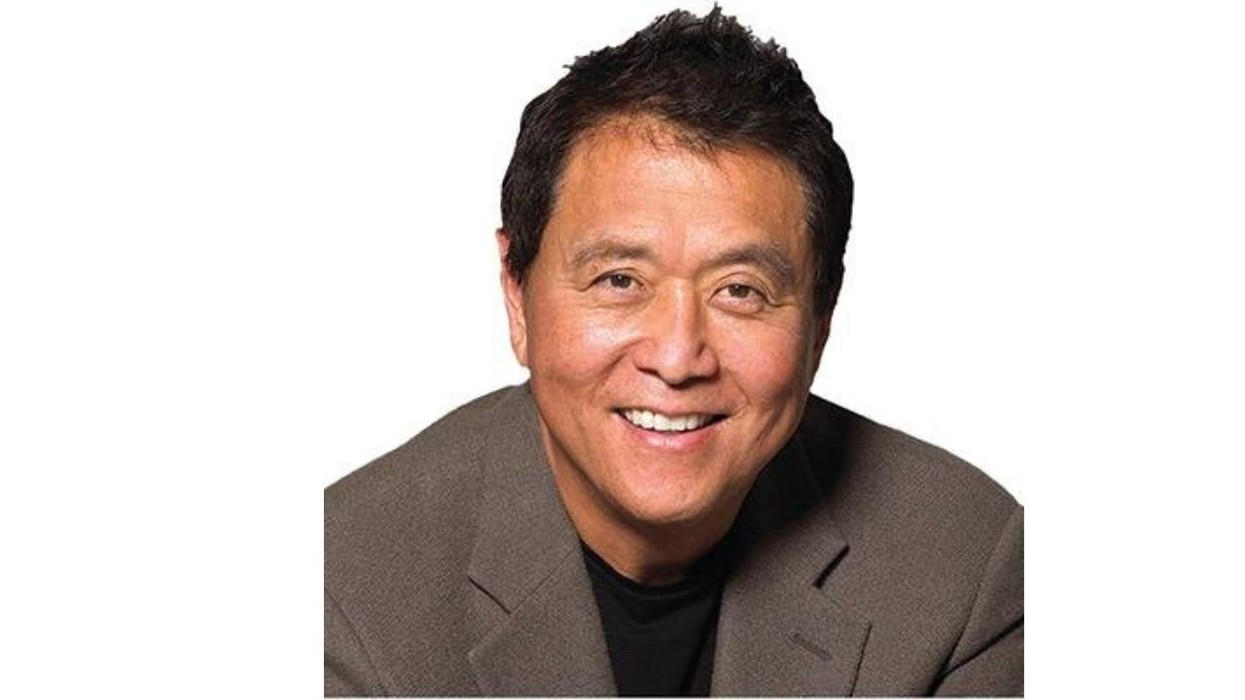
Robert Kiyosaki made his name teaching people how to build wealth. Now, the author of Rich Dad Poor Dad says he is carrying about $1.2 billion in debt.
The 79-year-old financial author has repeatedly cited the figure while explaining his belief that borrowing can be a wealth-building tool when the money is used to acquire income-producing assets. He repeated it during an appearance on the Get Rich Education podcast.
“So, I’m a billion two in debt,” Kiyosaki said, as quoted by The New York Post.
But there is an important catch to that eye-catching number: it does not mean Kiyosaki personally owes $1.2 billion.
His former wife and business partner, Kim Kiyosaki, told Vanity Fair that the debt is largely attached to real-estate investments held with partners. The portfolio includes about 1,500 apartment units, she said.
“We have a lot of apartment houses with our partners. So technically, yes, we have all this debt,” Kim said, according to the New York Post.
She also indicated that Robert’s personal share is much smaller.
The billionaire debt has a very different meaning
Vanity Fair estimated that Kiyosaki’s portion of the debt could be between $30 million and $60 million, assuming his claim that he earns about $3 million a year is accurate.
That estimate is not the same as a confirmed personal balance sheet. It is a calculation based on information Kiyosaki has provided and the structure of his investments.
The distinction matters because the $1.2 billion figure refers to borrowing connected to a much larger real-estate portfolio rather than a $1.2 billion personal loan.
Kiyosaki’s approach is based on borrowing against properties as their values rise. Rather than selling an appreciated property to access its increased value, an investor can potentially borrow against the equity and continue holding the asset.
According to Vanity Fair, Kiyosaki also holds individual investments through separate limited liability companies, or LLCs, creating a degree of separation between different properties and businesses.
“If it all comes to hell, you can talk to my attorney,” Kiyosaki told the magazine. “Firewalls — that’s the way the rich play the game.”
Kim suggested that Kiyosaki also understands the attention the billion-dollar figure generates.
“He loves to say things that shock,” she told Vanity Fair, explaining that he uses the number to attract attention before making his case for investment debt.
Where ‘good debt’ can turn risky
The strategy is closely tied to the distinction Kiyosaki has promoted for years between debt used to acquire income-producing assets and borrowing used for consumption.
David A. Perez, an enrolled agent and multifamily real-estate investor, told The New York Post that substantial property-backed debt is common among large real-estate investors and described the approach as “a great strategy.”
Borrowing against property equity can provide access to cash without selling the underlying asset. But the money is still a loan, which means higher borrowing can also mean higher mortgage payments and interest costs.
That is where the strategy can become more complicated.
John Poole, founder of Scottsdale, Arizona-based consultancy JPTD Partners, took a more cautious view. He told The New York Post that there is “good debt” and “bad debt”, but that anyone carrying $1.2 billion in debt needs to know exactly what they are doing.
Poole also warned that leverage can work in both directions. When property values rise and assets generate enough income to service the loans, borrowing can amplify returns. If values fall or cash flow weakens, the same leverage can magnify losses.
Kiyosaki himself has cautioned people against simply copying his approach. “If you’re going to learn to use debt, you’d better take some education,” he said on the podcast.
That warning may be the most important part of the $1.2 billion headline.
Kiyosaki's philosophy has always been that the question is not simply whether someone has debt, but what the debt was used to buy and whether those assets can generate enough income to support it.
Rich Dad Poor Dad, which Kiyosaki first self-published in 1997, has sold more than 44 million copies worldwide, according to Vanity Fair. The book helped turn his views on debt, investing and financial independence into a global personal-finance brand.
More than two decades later, his own finances are providing a very large example of the strategy he has been teaching all along — with one important difference between the headline and the reality: Kiyosaki says $1.2 billion, but that is not the amount he personally owes.