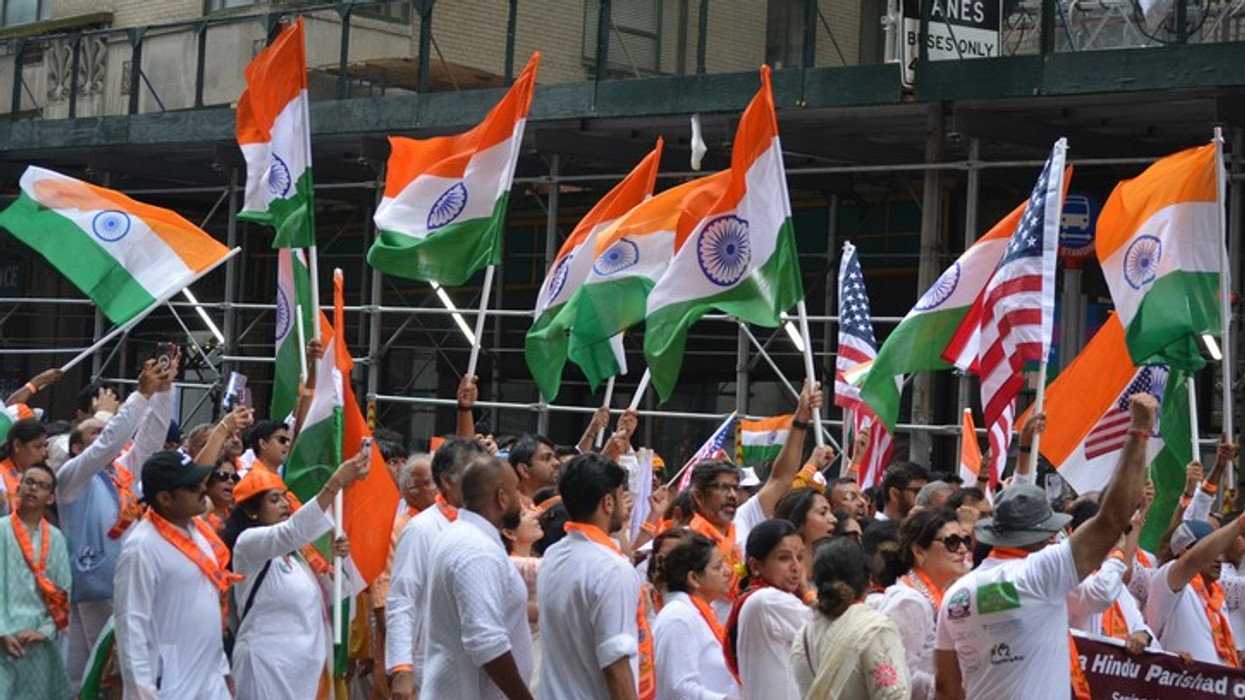

A prominent Indian-American advocacy organization is bringing its policy priorities directly to Capitol Hill this week, launching a large-scale outreach effort aimed at strengthening US-India relations while highlighting issues affecting one of America's fastest-growing and most influential immigrant communities.
The Foundation for India and Indian Diaspora Studies (FIIDS) is meeting with more than 125 congressional offices on Tuesday as part of a coordinated campaign to engage lawmakers and staff on issues ranging from trade and national security to immigration reform and supply-chain resilience.
The initiative comes at a time when Washington and New Delhi are expanding cooperation across defense, technology, and economic sectors, while policymakers in both countries continue to view the relationship as increasingly important to stability in the Indo-Pacific region.
According to FIIDS, discussions with members of Congress and their staff will focus on five major policy areas: Indo-Pacific trade and security, the US-India strategic partnership, the contributions and concerns of Indian-Americans, immigration reform to support American innovation, and strengthening critical minerals supply chains.
The organization says these issues are not only important to the Indian-American community but are also directly tied to America's long-term economic competitiveness and national security.
“This is a moment to translate influence into policy impact,” Khanderao Kand, FIIDS Chief of Policy and Strategy, said in a statement.
“Indian-Americans contribute across technology, research, academia, hospitality, health care, small business, and agriculture, and our community is engaged in ensuring that Congress understands the issues that matter most to America's future,” he said.
The outreach effort reflects the growing political and economic influence of Indian-Americans, who have become an increasingly visible force in sectors critical to the US economy, including technology, medicine, higher education, entrepreneurship, and scientific research.
FIIDS argues that policymakers should recognize the community's contributions while addressing barriers that could affect America's ability to attract and retain highly skilled talent. As a result, immigration reform remains a central part of the organization's policy agenda.
The group is also emphasizing the importance of deepening US-India cooperation at a time of growing geopolitical competition in the Indo-Pacific. Strengthening defense ties, expanding technology partnerships, and improving trade collaboration are among the priorities being discussed with lawmakers.
Another major focus is supply-chain security, particularly access to critical minerals that are essential for advanced manufacturing, clean energy technologies, and national defense. FIIDS says the United States needs a long-term strategy to secure these resources and reduce vulnerabilities in global supply chains.
Kand noted that the policy agenda reflects both the increasing role of Indian-Americans in American society and the need for Congress to address challenges that will shape the country's future competitiveness.
According to FIIDS, its recommendations are designed to support economic growth, innovation, and strategic resilience while reinforcing one of America's most important international partnerships.
As Washington continues to navigate global economic competition and evolving security challenges, the organization hopes its meetings on Capitol Hill will help ensure that the interests of both the Indian-American community and the broader US economy remain part of the national conversation.









 The couple during their visit to the Taj Mahal in Agra earlier this yearxx