
- Apple’s first foldable iPhone opens into a 7.6-inch display and starts at $1,999.
- The new Apple Watch can transcribe the last 15 seconds of a conversation, summarise conversations and recognise important sounds.
- AirPods 5 bring active noise cancellation, hands-free Siri AI and Live Translation to Apple’s more affordable earbuds.
Apple's latest launch may have looked like another iPhone event, but the more interesting change was happening around the phone.
The company is increasingly putting intelligence into the devices people wear, carry and listen through, giving an iPhone, Watch and AirPods the ability to understand more of what is happening around the user.
That makes Apple's Wednesday (9) launch less about one blockbuster gadget and more about an ecosystem that is becoming increasingly aware of its surroundings.
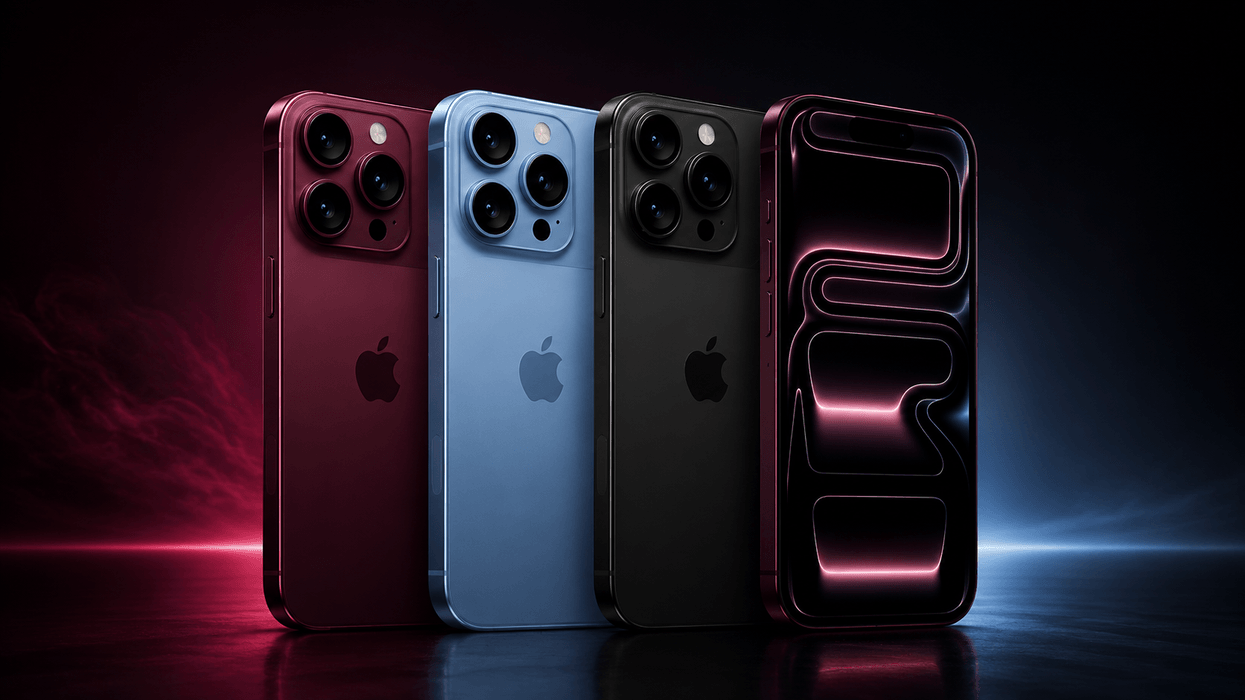
At the centre of the event was the iPhone Duo, Apple's first foldable iPhone. The device opens into a 7.6-inch inner display, the largest screen ever put on an iPhone, while its 5.4-inch outer display is designed for use when the phone is closed. Apple says the unfolded device is its thinnest iPhone yet.
The Duo is powered by the new A20 Pro chip and comes with a vapor-chamber cooling system and dual-battery architecture. It also supports Apple Pencil with USB-C, has Touch ID built into the side button and offers up to 2TB of storage.
The phone starts at $1,999, with pre-orders beginning October 16 and sales starting October 23.
Apple also unveiled the iPhone 18 Pro and iPhone 18 Pro Max, powered by the same A20 Pro chip. The new Pro models get a 48MP Fusion Main camera with variable aperture, allowing users greater control over depth of field and low-light photography.
Apple has also added new Pro controls to the Camera app and a smaller Dynamic Island. The iPhone 18 Pro starts at $1,199, while the Pro Max starts at $1,299. Apple says the Pro Max gets its biggest-ever improvement in iPhone battery life.
The bigger change, however, is how Apple is spreading its intelligence beyond the phone.
Your Watch can now remember what you missed
The Apple Watch Series 12 comes with a new Health Sensing System and Apple's S11 chip. The system takes more frequent heart-rate and heart-rate variability readings and feeds them into a new Readiness score designed to give users an idea of how prepared their body is for the day.
The redesigned Health app will also add a Longevity section with a Health Age feature, using health and fitness data to show how certain measurements compare with the user's age.
Then comes the feature that makes the Watch feel considerably different from its predecessors.
Live Rewind can transcribe the previous 15 seconds of a conversation. If someone says something you missed in a noisy restaurant or gives you an instruction you did not catch, a double-click of the Digital Crown can bring up the text.
Siri Recap can create a summary of a conversation, while Sound Recognition can alert users when the Watch detects sounds such as sirens, alarms, doorbells or a crying baby. Shazam can also automatically identify music playing nearby.
Apple says these audio features are designed with privacy in mind, with some of the processing handled on-device and protections built into the system.
The Apple Watch Ultra 4 gets the same Health Sensing System and S11 chip, along with higher-frequency heart-rate and HRV measurements and the Readiness score. It also offers up to 45 hours of outdoor workout tracking and improved on-device GPS. The Series 12 starts at $399, while the Ultra 4 starts at $799.
AirPods are becoming more than headphones
Apple's AirPods 5 may be the most revealing part of the strategy.
The new open-ear earbuds bring active noise cancellation to the more affordable AirPods line. Apple says the new system can remove up to 50 per cent more external noise than AirPods 4 with ANC.
They also introduce improved sound through a new acoustic architecture and Adaptive EQ, along with hands-free access to Siri AI.
Users can interact with Siri using head gestures, while Live Translation allows conversations to be translated across languages through the earbuds and iPhone.
AirPods 5 start at $129, while a $149 version adds a wireless charging case, longer battery life and on-stem volume controls. Both versions go on sale September 18.
That means the same Apple ecosystem can now do something rather different from what consumers have traditionally expected from these products.
The phone can process personal context and AI tasks. The Watch can monitor the body, understand sounds and help users recall conversations. The AirPods can listen, translate and interact with Siri without requiring the user to reach for a screen.
And there is a clear commercial reason for Apple to push beyond the iPhone.
Apple's wearables, home and accessories business generated nearly $7.9 billion in revenue in its June quarter, up 6 per cent from a year earlier, showing that products such as the Watch and AirPods are already an important part of the company's business.
The launch also comes with a higher bill for consumers. The iPhone 18 Pro line is $100 more expensive than the comparable previous generation, while the first foldable iPhone pushes Apple's smartphone pricing close to the $2,000 mark.
That leaves Apple trying to sell more than a faster phone.
It is selling the idea that your phone, ears and wrist can work together as an intelligent system, one that can understand your surroundings, remember things you missed, translate conversations, track your health and act on information without always requiring a screen.
The question for Apple is whether consumers will see that as the next big reason to stay inside its ecosystem, and whether they will be willing to pay more for it.