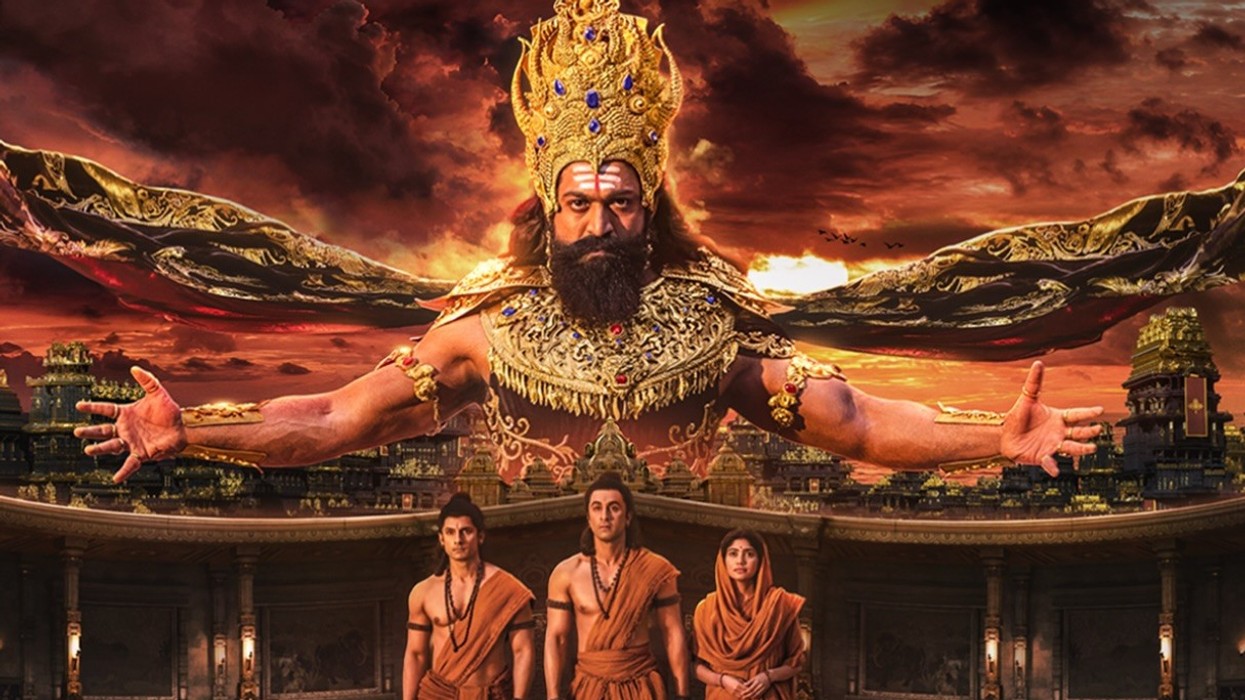

Highlights:
- Nitish Bharadwaj calls Ramayana an “agenda film” and urges the government to investigate its reported approximately $450 million budget.
- He alleges that the production received funding from Luxembourg, the UAE and Singapore, but these claims have not been independently established in the supplied report.
- Bharadwaj has reversed his earlier praise of the film, criticizing Ranbir Kapoor’s Rama and the portrayal of Ravana as a liberal, socially just ruler.
- Mukesh Khanna and Sunil Lahri have separately questioned the film’s interpretation of characters, scenes and the spiritual essence of the epic.
- Ramayana: Part 1 reportedly collected over approximately $174 million in 15 days, while Part 2 is scheduled for 2028.
Actor and former Member of Parliament Nitish Bharadwaj has renewed his criticism of filmmaker Nitesh Tiwari’s Ramayana, questioning the film’s portrayal of its central characters and calling for a government investigation into its reported approximately $450 million budget. He has described the adaptation as an “agenda film” and alleged that its financing and creative choices deserve greater scrutiny.
In an interview with NDTV, Bharadwaj questioned the sources of funding for the ambitious two-part project, claiming that money had come from Luxembourg, the United Arab Emirates and Singapore. He urged the government to examine the financial trail and alleged that foreign powers did not want India to succeed.
“I feel it is an agenda. This is not a simple point of view. I feel Rs 4,000 crores for the film; the company has received funding from Luxembourg, UAE, and Singapore. Money has come from different sources.”
His comments have brought attention to two contentious aspects of the film: its reported production expenditure and its interpretation of the Hindu epic. However, Bharadwaj's claims about the funding are allegations, and the interview does not establish that the sources of investment are improper or that the project has violated any rules.
Why Nitish Bharadwaj is unhappy with Rama and Ravana’s portrayal
Bharadwaj’s strongest objections concern the way the film presents Rama and Ravana. He believes the adaptation changes the moral framework of the Ramayana by portraying Ravana as a liberal and socially just ruler, rather than emphasizing the traditional understanding of the antagonist's role in the epic.
His position marks a significant reversal. After watching the trailer, Bharadwaj had praised the project and even predicted that it could win an Oscar. However, after watching the film, he expressed disappointment and shared a lengthy criticism on Instagram.
“The Ramayan is not just a story. It is deeply rooted in the civilizational and spiritual consciousness of Sanatan Bharat. Its heroes, heroine and antagonist are integral to the values and message of this Mahakavya. Their character and significance cannot be casually redefined. Mahavishnu took the Rama Avatar to uphold Dharma, parampara and establish Maryada. By presenting Ravan as an exceptionally liberal, socially just and fair figure, the film, in my view, alters the moral framework of the Ramayan and undermines the very purpose of avataar.”
In his latest interview, he questioned why Vishnu would need to take the form of Rama if Ravana was being presented as such a well-meaning king. He also described the film’s version of Ravana as a “cool dude,” arguing that the portrayal could influence how younger audiences understand the character before the second installment arrives.
Bharadwaj also criticized Ranbir Kapoor’s portrayal of Rama, calling the character a “weakling.” He objected to the depiction of Rama leaving Ayodhya in tears, arguing that the film reduced the character to an ordinary mortal rather than presenting him as a figure committed to upholding the traditions and dignity of the Ikshvaku dynasty.
He argued that Rama should have stood by the tradition of honoring his father's word instead of accepting the situation as depicted in the film.
Mukesh Khanna and Sunil Lahri have also raised concerns
Bharadwaj is not the only actor associated with mythological television adaptations to have questioned the film. His Mahabharat co-star Mukesh Khanna has also criticized its creative interpretation.
Khanna said audiences could not identify Ranbir Kapoor as Rama, adding that he saw the actor rather than the mythological character. He also questioned the action sequences, arguing that they resembled those of a conventional Hindi film rather than a retelling of the Ramayana.
“I want to ask Hindi filmmakers: is it fair to distort facts mentioned in Valmiki’s Ramayana, go beyond it to show your vision. Ever since the Ramayana was released, it has stirred a debate on social media and among the YouTubers. Everyone is reviewing the film, and no one is sure how much the film will earn. But here, the main agenda has been about recovering the budget of Rs 4,000 crore, not about telling the story most authentically”.
Khanna also objected to the portrayal of Sita as a warrior and accused the filmmakers of glorifying Ravana. His criticism has added another dimension to the debate over how much creative freedom filmmakers should exercise when adapting religious and culturally significant texts.
Sunil Lahri, who played Lakshman in Ramanand Sagar’s 1987 television series Ramayan, also shared his reservations. While appreciating Ravie Dubey’s portrayal of Lakshman, he said several emotional scenes and important moments lacked the spiritual quality he expected.
“Some of the film’s scenes are outstanding, but some emotional scenes and dialogues haven’t been paid enough attention to. Some of the key scenes don’t even exist in the film. I found the Parshuram scene to be quite weak. There are many more such scenes that lack divinity. This film is more shakti-pradhan (powerful) than bhakti-pradhan (devotional).”
Can the film's box-office success settle the debate?
Ramayana: Part 1 was released on November 5, 2026, as the first installment of a planned two-part adaptation. The second film is scheduled to arrive in 2028.
Despite the criticism, the film has enjoyed a strong theatrical run. According to the report, it collected more than Rs 1,547 crore (approximately $174 million) worldwide within 15 days of release. It also surpassed Dhurandhar, which had earned Rs 1,307.35 crore (approximately $147 million), to enter the list of the five highest-grossing Indian films worldwide.
The film has received praise from prominent filmmakers and actors, including Karan Johar, SS Rajamouli, Rishab Shetty and Sandeep Reddy Vanga. Yet the contrasting reactions from actors associated with earlier mythological productions have kept the discussion focused on authenticity, religious representation and creative interpretation.
With Part 2 still expected in 2028, the debate over the film’s portrayal of the epic is likely to continue. Bharadwaj’s demand for a funding investigation has also introduced a separate question about the scale and sources of investment behind one of Indian cinema’s most expensive productions.



 Getty Images
 Getty Images
 Getty Images
 Getty Images