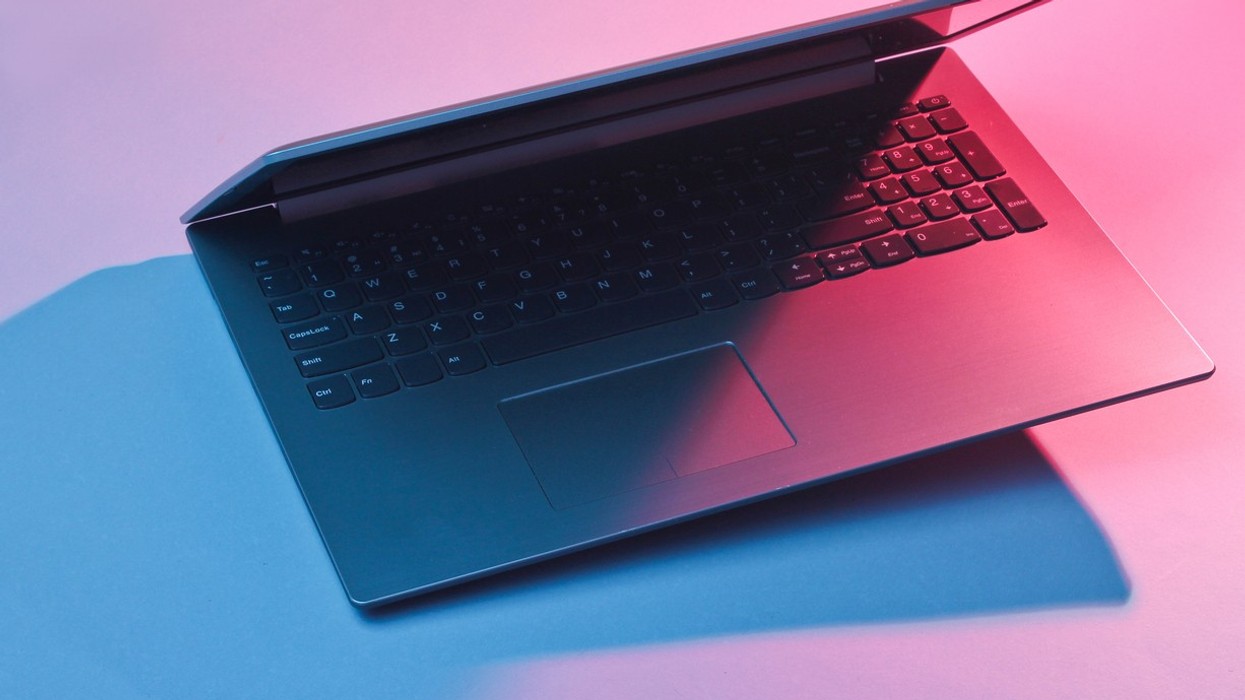

- Lenovo’s IdeaPad Vibe starts at $699.99 and comes in 14- and 15-inch sizes.
- Buyers can choose from seven colors and optional swappable keycaps.
- AMD Ryzen AI 400 and Qualcomm Snapdragon X versions are coming first, with Intel models planned later.
For years, buying an affordable laptop has often meant accepting the same formula: a gray or silver machine, a handful of ports, limited customization and hardware chosen for you.
Lenovo seems to think that formula is getting old.
The company’s new IdeaPad Vibe, unveiled at IFA 2026 in Berlin, is a $699.99 laptop aimed at people who want something practical without ending up with a machine that looks like every other budget notebook on the market.
And Lenovo is putting an unusual amount of emphasis on making the laptop feel personal.
The Vibe comes in seven colors developed with the Pantone Color Institute: Dreamy Violet, Spicy Gold, Zen Green, Chill Blue, Radiant Coral, Moody Blue and Lowkey Grey. Buyers can also swap the keyboard keycaps for different colors, allowing them to create a contrasting look rather than simply choosing whatever finish comes in the box.
That may sound like a cosmetic detail, but it points to a bigger change in the affordable laptop market.
With electronics becoming more expensive, manufacturers have an obvious incentive to make lower-priced devices feel less like compromises. Lenovo is trying to do that by giving buyers something they normally associate with more expensive products: choice.
More than a pretty laptop
The Vibe is not relying on its colors alone.
It comes in 14- and 15-inch versions, with AMD Ryzen AI 400 or Qualcomm Snapdragon X processors initially. AMD models are scheduled to arrive in October, while Snapdragon versions follow in November, both starting at $699.99. Intel-powered models are planned for a later date.
The hardware options are also more flexible than you might expect at this price.
AMD versions can support up to 32GB of user-upgradeable RAM, while Snapdragon models top out at 24GB and use non-upgradeable memory. Both support up to 1TB of storage through dual M.2 SSD slots. AMD models also offer a choice between 50Wh and 65Wh batteries.
There are several display choices too. The 14-inch model can be configured with a WUXGA OLED display, while the 15-inch version can go up to a 2.1K OLED panel. More affordable configurations use IPS LCD panels, with some supporting refresh rates of up to 120Hz.
Then there is something that could matter more to everyday users than the color of the machine: ports.
The Vibe has two USB-C ports, two USB-A ports, HDMI 1.4, a 3.5mm headphone jack and a microSD card reader. That means someone moving photos from a camera, connecting an external display or plugging in an older accessory may not need to carry a bag full of adapters.
The laptop also includes a 5-megapixel camera with infrared support for Windows Hello and a physical privacy shutter, along with Wi-Fi 7 and Bluetooth 5.4.
The 14-inch model weighs about 2.87 pounds and is just 0.59 inches thick, while the 15-inch version weighs about 3.31 pounds.
The $700 question
The biggest catch may be hiding behind that attractive starting price.
Lenovo has not fully detailed what hardware will be included in the $699.99 base configuration. The base machine is expected to have limited RAM, with several reports pointing to 8GB, which could become restrictive for a Windows laptop as software and local AI workloads become more demanding.
That makes the upgrade path particularly important.
If the budget allows, moving to 16GB or more could make the Vibe a much safer long-term purchase than choosing the absolute cheapest configuration.
There is also a choice between AMD and Snapdragon that goes beyond brand preference. Snapdragon could appeal to buyers prioritizing power efficiency, while AMD offers upgradeable memory and broader compatibility with traditional Windows software and peripherals.
That flexibility is perhaps the Vibe’s biggest advantage.
Apple’s MacBook Neo may have helped establish the $700 laptop as a category worth paying attention to, but Lenovo is approaching the idea from a very different direction. Instead of giving everyone essentially the same machine, it is offering different sizes, processors, memory configurations, storage options, colors and even replaceable keycaps.
For a generation of buyers watching the price of electronics climb, that could be a compelling proposition.
A laptop does not have to be the most powerful machine on the shelf. It just needs to feel like your machine — without forcing you to spend a fortune to get there.











 Amazon
 Amazon
 Amazon
 Amazon
 Amazon
 Amazon
 Amazon
 Amazon
 Amazon
 Amazon
 Amazon
 Amazon
 Amazon
 Amazon
 Amazon
 Amazon
 Amazon
 Amazon
 Amazon
 Amazon