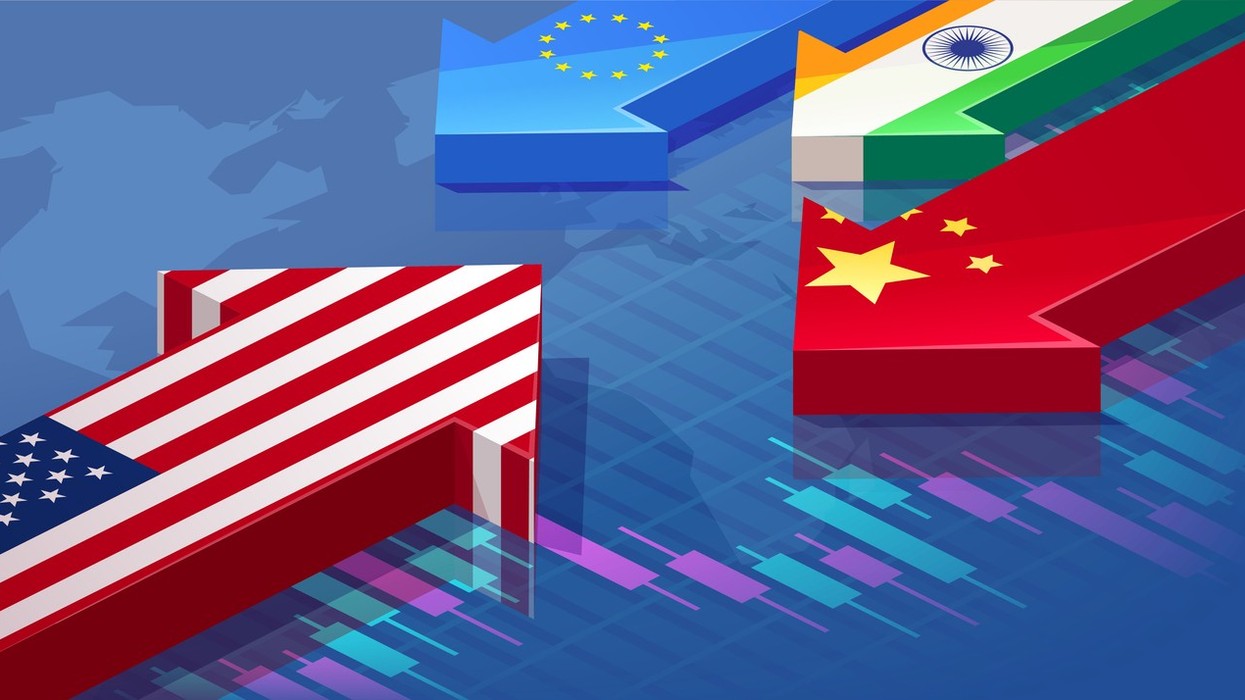

- The proposed deal would give India access to more than 99 per cent of EU markets by export value.
- The EU expects tariff cuts to save European exporters around €4 billion a year.
- India and Europe are both looking to diversify supply chains amid heavy dependence on China.
The India-EU free trade agreement has moved one step closer to becoming reality, with the European Commission forwarding its proposal to the European Council for approval.
On the surface, it is a deal about tariffs, market access and investment. Underneath it sits a much bigger question for both sides: how do you build more resilient supply chains when so much of the world still depends on China?
The European Commission said that, once approved and brought into force, the agreement would reduce tariffs, remove unnecessary trade barriers and create more predictable rules for trade and investment between India and the European Union.
The EU and India already trade more than €180 billion worth of goods and services each year, supporting close to 800,000 EU jobs, according to the European Union.
The proposed agreement would eliminate or reduce tariffs on 96 per cent of EU goods exports to India, with the tariff cuts expected to save European companies around €4 billion a year in duties.
For India, the deal could secure market access for more than 99 per cent of exports to the EU by trade value.
That matters particularly for sectors such as textiles, apparel, leather, footwear, marine products, gems and jewelry, handicrafts, engineering goods and automobiles. India’s Commerce and Industry Ministry said tariffs on almost $33 billion worth of exports from these labor-intensive sectors could fall to zero once the agreement enters into force.
Beyond goods, the deal also includes commitments on services and a mobility framework intended to make it easier for skilled Indian professionals to move between the two markets.
Why China matters
The negotiations are also unfolding against a changing global supply chain landscape.
India and the EU both remain heavily dependent on China for industrial products and manufacturing inputs. That dependence became particularly visible during the COVID-19 pandemic, when disruptions exposed the risks of concentrating critical supply chains in one country.
A 2025 report by the Delhi Policy Group said the experience had pushed both India and the EU to reassess their dependence on China and pursue diversification and de-risking strategies.
The issue has become even more important as China continues to run a large trade surplus despite growing trade tensions with the US.
Both India and the EU have already taken steps to protect strategic industries from Chinese competition. The EU imposed tariffs of up to 35 per cent on Chinese electric vehicles in 2024, while India continues to impose duties of more than 100 per cent on imported automobiles from China.
At the same time, both markets are looking for alternative trading and manufacturing partners.
That makes the India-EU trade deal more than a tariff-cutting exercise. A stronger trade relationship could give European companies another major market for exports and investment, while giving Indian manufacturers greater access to one of the world's largest consumer markets.
For India, that could mean more opportunities to expand exports beyond traditional markets and build stronger links with European supply chains. For Europe, India offers a large and growing market as companies look to diversify production and sourcing.
There is also pressure from the US.
Washington has been pushing countries to reduce dependence on China and has raised concerns about goods being routed through third countries before reaching the US. A recent US report criticized several global manufacturing hubs, including the Pune-Gujarat-Chennai industrial corridor, arguing that such routes could weaken American manufacturing.
The India-EU agreement therefore arrives at a time when trade is increasingly becoming a question of where products are made, where components come from and how dependent companies are on a single country.
The European Commission's proposal still needs approval from the European Council. If authorized, the agreement would then require the consent of the European Parliament before it can be concluded and enter into force. India is also going through its own internal ratification procedures.
If completed, the deal would create a larger trading bridge between India and Europe at a moment when both sides are trying to build alternatives to the supply chains that have made China central to global manufacturing.
China may not be a party to the agreement. It could still be one of the biggest reasons the agreement matters.









 A visitor holds a baby at the Empty Sky 9/11 Memorial with One World Trade Center and Lower Manhattan in the distance on August 23, 2026 in Jersey City, New Jersey.Getty
 American flags and flowers line the memorial pool at the National September 11 Memorial to mark the 22nd anniversary of the 9/11 terror attack at the World Trade Center on September 11, 2023 in New York.Getty
 Balbir Singh Sodhi, a Sikh immigrant from India, was shot and killed outside the gas station he owned in Mesa, Arizona. .
 Muslim men pray during a Day of Remembrance open house at the Islamic Cultural Center of New York September 11, 2002 in New York City. Getty

