
The White House has once again reiterated its claim that former US president Donald Trump was instrumental in brokering a ceasefire between India and Pakistan during their worst military escalation in decades. Press Secretary Karoline Leavitt praised Trump’s foreign policy as "aggressive, results-driven, and underappreciated," citing his involvement in diffusing the May 2025 conflict.
Operation Sindoor and Pahalgam attack
The military standoff between the two South Asian nuclear powers erupted following a terror attack in Pahalgam, Jammu and Kashmir, on April 22, which claimed the lives of 26 civilians. In response, the Indian government launched Operation Sindoor on May 7, targeting terror infrastructure across the Line of Control (LoC), including areas in Pakistan-Occupied Kashmir (POK). According to Indian sources, the strikes were precision-based and aimed at select terror camps.
Pakistan denied involvement in the Pahalgam attack and refuted allegations that the targeted sites were linked to terror outfits.
Claim of ceasefire announced by Trump
A ceasefire was reached on May 10, just three days after India’s military action. Trump publicly took credit for mediating the de-escalation, claiming that US trade negotiations were used as diplomatic leverage. “We stopped a lot of wars. And these were serious — India and Pakistan — planes were being shot down,” Trump said during a White House dinner with Republican lawmakers.
He asserted that four to five fighter jets were downed during the conflict, although no official clarification was given regarding whether the losses were Indian or Pakistani.
India denies third-party mediation
Despite Trump’s repeated claims — made over 20 times since May 10 — Indian officials have strongly rejected any notion of external mediation. India maintains that the ceasefire was the result of direct military-level communication. According to sources in New Delhi, the Director General of Military Operations (DGMO) of Pakistan contacted his Indian counterpart requesting a cessation of hostilities, which led to the ceasefire understanding.
India’s Chief of Defence Staff, General Anil Chauhan, has dismissed Pakistan’s claims that five Indian jets were shot down. He did, however, acknowledge that “an unspecified number” of aircraft were lost on both sides during the brief but intense aerial skirmishes.
Political messaging from White House
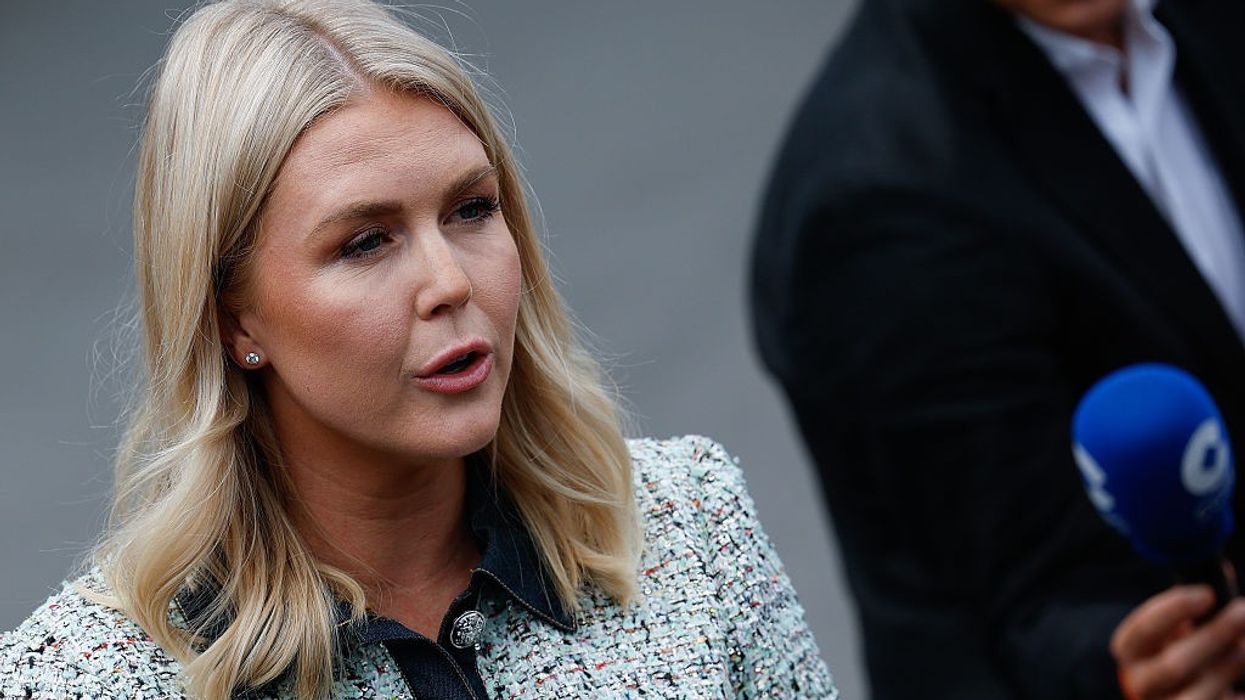
Karoline Leavitt, speaking to reporters, used this incident as an example of Trump’s diplomatic effectiveness on the global stage. She also cited ongoing efforts during his presidency to end the Russia-Ukraine war, curtail Iran’s nuclear ambitions, and negotiate ceasefires in Israel-Gaza. “The president has ended wars — like India and Pakistan. He continues to pursue peace aggressively,” she said.
Indian response remains firm
Indian diplomats and policymakers have consistently stated that matters concerning national security and border conflicts with Pakistan are strictly bilateral and do not involve third-party mediation. They view Trump’s statements as political posturing, likely aimed at a domestic audience in the lead-up to the 2025 US election campaign.