
Highlights
- Swara Bhasker has faced fresh backlash over her comments about the jauhar sequence in Padmaavat.
- The actor questioned what the scene could communicate to survivors of sexual violence.
- Swara later clarified that her comments were mistranslated and said she never called Rani Padmaavati or the women who performed jauhar “cowards.”
- Her remarks have reignited the long-running debate over Padmaavat and its depiction of honor, violence and women’s choices.
Swara Bhasker has found herself at the center of a fresh Padmaavat controversy after revisiting her criticism of the film’s climactic jauhar sequence.
Speaking at a Woman, Life, Freedom event at the India International Centre in Delhi on August 31, the actor recalled her reaction to the sequence, which depicts women choosing jauhar rather than facing capture and sexual violence. Her comments quickly spread online, with some interpretations claiming that she had called Rani Padmaavati and the women who performed jauhar “cowards.”
Swara has since rejected that interpretation, saying her remarks were mistranslated and clarifying that she was not calling the women in the film cowards.
The comment that reignited the debate
Swara's latest comments focused on what she believes the film's climax could communicate to survivors of sexual violence.
She questioned how a rape survivor might feel watching a scene in which women are shown choosing death rather than the possibility of sexual assault. She also recalled a shot involving a pregnant woman that particularly disturbed her.
Her criticism was centered on the message she believes the sequence could send about survival, dignity and sexual violence. She argued that a woman surviving rape should never be made to feel that she has lost her honor or right to live.
Swara says her words were misunderstood
The backlash grew as a short clip of her comments circulated on social media.
Swara later shared a clarification, saying the clip had been used to create a false impression that she had called Rani Padmaavati and the other women who committed jauhar “cowards.”
She insisted that was not what she said and maintained that her criticism was aimed at the way the film presented the sequence, rather than at the women depicted in it.
She has also pushed back against the criticism of her broader argument, saying her point was about the right of rape survivors to live rather than an attack on the historical or cultural significance of the women portrayed in the film.
Why Padmaavat is back in the spotlight
Swara's comments have reopened a debate that has surrounded Padmaavat since before its 2018 release.
The Sanjay Leela Bhansali film, starring Deepika Padukone as Rani Padmaavati, became a major flashpoint over its portrayal of Rajput history, honor and the jauhar sequence. The film faced protests and intense criticism before its release, making any discussion of its depiction of the Rajput queen particularly sensitive.
Swara had already criticized the film in an open letter to Bhansali after watching it in 2018. Her latest remarks revisit many of the same concerns, particularly the way cinema can frame women's choices in the context of sexual violence.
This time, however, the controversy has taken an additional turn: Swara is not only defending her criticism of the scene but also challenging the interpretation of what she actually said.
The result is a renewed Padmaavat debate, with the conversation now caught between questions about historical representation, feminist readings of the film and whether Swara's original remarks were accurately represented online.







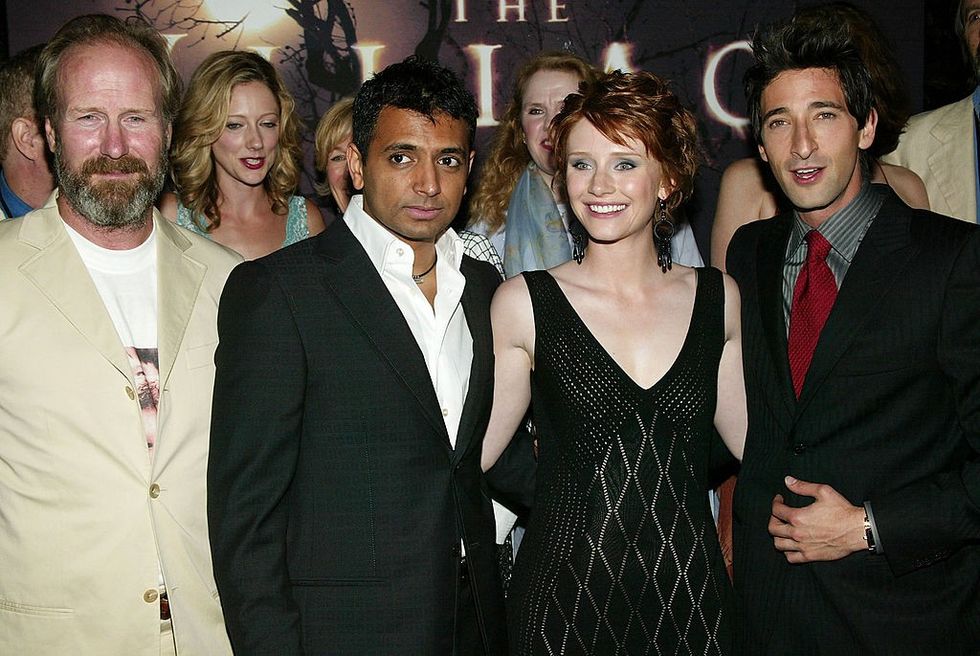 Actor William Hurt, director M. Night Shyamalan, actress Bryce Dallas Howard and actor Adrien Brody attend a pre-screening dinner for the world premiere of "The Village" on July 26, 2004 at Prospect Park, in New York City.Getty Images