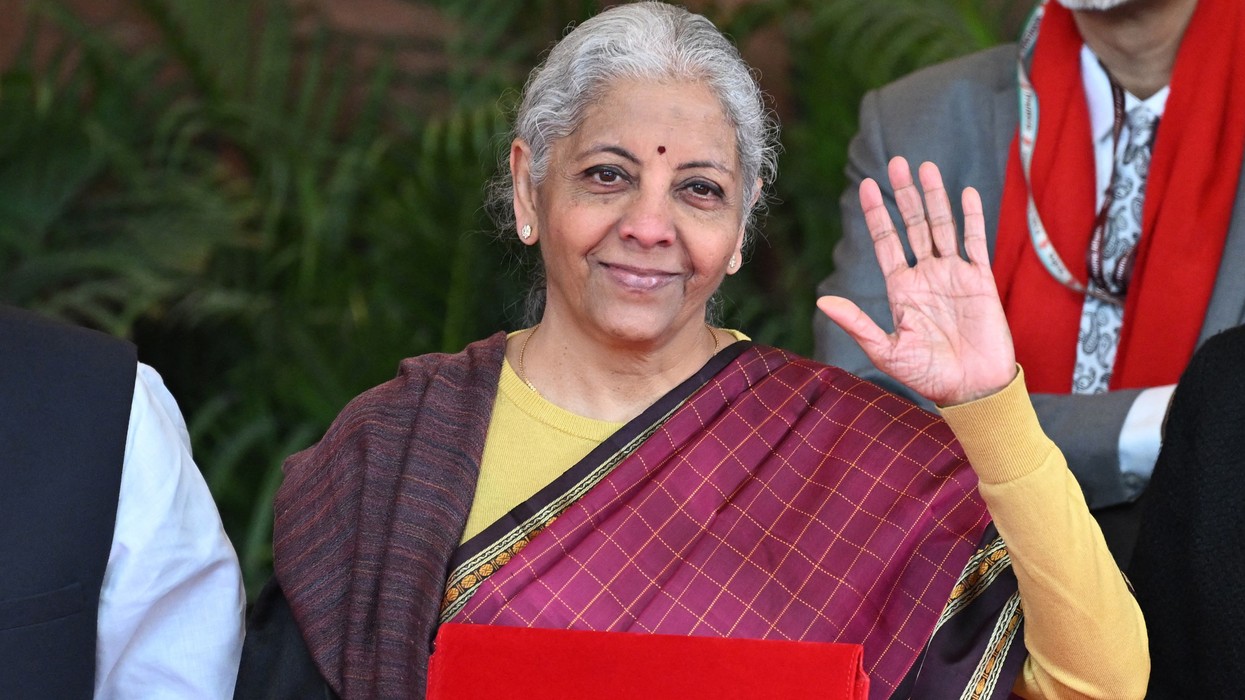

Indian finance minister Nirmala Sitharaman held a series of bilateral meetings with some of the world's most influential financial figures this week, using the sidelines of the G20 Finance Ministers and Central Bank Governors (FMCBG) meeting to advance India's agenda on infrastructure financing, growth recognition, critical minerals and multilateral cooperation.
Over two days in Asheville, Sitharaman met World Bank Group president Ajay Banga, International Monetary Fund managing director Kristalina Georgieva, Russian finance minister Anton Siluanov, European Commissioner for Economy Valdis Dombrovskis and South Korean deputy prime minister Koo Yun-cheol.
The talks ranged from a possible expanded role for the World Bank's political risk insurance arm in India to the establishment of a new Shanghai Cooperation Organisation (SCO) Development Bank, according to India's finance ministry statements.
G20 meeting brings key global players together
The meetings took place on the sidelines of the G20 FMCBG gathering in Asheville, held under the current G20 presidency of the United States. Sitharaman led India's delegation to the two-day meeting, which brought together finance ministers and central bank governors from G20 member countries to discuss global economic growth, financial stability and international cooperation.
Siluanov's presence added a layer of diplomatic significance to the gathering. He had previously participated in a G20 meeting by video link in April 2022, a session that prompted several Western finance ministers to walk out in protest. Russia was expelled from the Group of Eight most industrialized nations in 2014 after it annexed Ukraine's Crimean Peninsula, though it remains a member of the G20.
Asked by reporters at the Oval Office about the invitation extended to Siluanov, President Donald Trump said Monday: "Well, we are going to see what happens, but we like getting along with everybody. One of the reasons that I'm so successful, I get along with everybody."
Sitharaman's meeting with Georgieva centered on the global economic outlook and what the finance ministry described as India's "evolving growth trajectory." Georgieva appreciated India's strong economic performance and track record, according to a finance ministry statement, which said the discussion also covered the structural shifts underway in the Indian economy and the importance of appropriately reflecting these developments in macroeconomic assessments and growth projections.
"Excellent exchange of views with India's Finance Minister @nsitharaman - reflecting on India's stellar growth performance, the global outlook, and our shared resolve to work ever-more-closely together," Georgieva said in a post on X.
Sitharaman, for her part, highlighted India's strong macroeconomic fundamentals and pressed the importance of robust, evidence-based surveillance frameworks that adequately reflect structural shifts in Emerging Markets Developing Economies, or EMDEs.
The two sides also discussed the IMF's capacity development initiatives, including support for strengthening institutional capacity, macroeconomic policymaking and statistical systems across EMDEs. Both leaders emphasized the importance of continued India-IMF engagement in strengthening analytical capabilities, supporting sound macroeconomic policies and contributing to global economic resilience.
World Bank partnership shifts towards private capital and infrastructure
In her meeting with Banga, Sitharaman discussed further strengthening the partnership between India and the World Bank Group, with a specific focus on deepening India's corporate, infrastructure and municipal bond markets.
The finance minister appreciated the World Bank Group's continued engagement with India, acknowledging what the ministry called the speedy processing of a $1.5 billion Development Policy Financing package.
She also credited the International Finance Corporation's support for micro, small and medium enterprises (MSMEs) through the Small Industries Development Bank of India (SIDBI), which was processed in record time and has had a positive impact on the sector.
The two leaders discussed exploring a larger role for the Multilateral Investment Guarantee Agency (MIGA) in India, aimed at deepening corporate, infrastructure and municipal bond markets through the systematic use of guarantees and greater mobilization of private capital. The discussions also covered a sector-based, programmatic approach to credit enhancement for infrastructure.
Banga appreciated the significant transformation in India's infrastructure and noted opportunities to further leverage the World Bank Group's instruments to support India's development ambitions, including through MIGA's engagement and political risk insurance for Indian companies investing overseas, the finance ministry statement said.
Sitharaman also highlighted India's engagement with the World Bank Group on establishing a Global Digital Public Infrastructure
Knowledge Hub in India, including exploring opportunities to leverage technology in areas such as agriculture, and said she looked forward to early progress toward its launch. The finance minister additionally discussed developing globally competitive tourism destinations under the new India-World Bank Group Country Partnership Framework, through a coordinated approach combining International Bank for Reconstruction and Development (IBRD) policy and infrastructure support, IFC investment and MIGA guarantees.
The two leaders further discussed evolving the partnership from a traditional lender-borrower relationship toward a strategic platform for global knowledge, innovation and private capital mobilization, combining India's scale and implementation capacity with the World Bank Group's global expertise and financing instruments.
India and EU push deeper ties on trade, technology and critical minerals
Sitharaman and Dombrovskis discussed further deepening the India-EU Economic and Financial Partnership, including through the India-EU macroeconomic dialogue and the Trade and Technology Council (TTC), according to a finance ministry statement. The two sides also discussed ongoing India-EU Free Trade Agreement and Investment Protection Agreement negotiations, with a shared commitment to take those engagements forward.
The two leaders exchanged views on strengthening resilient and diversified supply chains, including cooperation on critical raw materials and technologies. Sitharaman emphasized the importance of not only sourcing critical minerals but also developing processing and value-addition capabilities.
They also explored opportunities for greater cooperation in fintech, artificial intelligence and generative AI, including fostering greater engagement between Indian and European startups. Both sides reaffirmed their commitment to further strengthening the India-EU partnership and working together on shared priorities.
Russia and South Korea talks expand India’s multilateral and strategic partnerships
Sitharaman's meeting with her Russian counterpart focused on strengthening bilateral cooperation and establishing the Shanghai Cooperation Organisation Development Bank. "The two sides exchanged views on strengthening bilateral cooperation, regional and global economic developments, and issues of shared interest in the multilateral sphere," the finance ministry said in a statement.
Sitharaman and Siluanov also discussed cooperation within the New Development Bank and the Asian Infrastructure Investment Bank, exploring ways to strengthen both institutions as effective multilateral development banks. Separately, Siluanov held a bilateral meeting with US treasury secretary Scott Bessent, where the two discussed the Russian-American financial relationship and issues of cooperation within the G20.
Sitharaman also met South Korean deputy prime minister Koo Yun-cheol in Asheville on Monday, describing South Korea as a very important economic partner for India in a relationship that has been mutually beneficial across several dimensions.
The two ministers discussed strengthening bilateral economic and financial cooperation, including taking forward the India-Korea Finance Ministers' Meeting through early working-level consultations.
Sitharaman noted that India and South Korea have maintained a Special Strategic Partnership since 2015, further strengthened this year through the Joint Strategic Vision for 2026-2030 announced during President Lee's state visit to India in April 2026.
She said India looks forward to strengthening cooperation with South Korea further, including in emerging and strategic areas such as critical minerals and resilient supply chains.
Sitharaman welcomed greater investment from South Korea in emerging sectors and suggested Indian companies would further explore investment opportunities in South Korea, with a view to promoting mutually beneficial investment flows.
She also proposed strengthening investment cooperation through the National Investment and Infrastructure Fund (NIIF) and advancing a proposed concessional credit line under South Korea's Economic Development Cooperation Fund (EDCF) framework for infrastructure and green-transition investments in India.
The two ministers discussed ongoing efforts toward interoperability between India's and South Korea's QR-based payment systems, aimed at facilitating easier payments and strengthening economic and people-to-people ties.
Mentioning India's growth potential and the scale of its economy, the South Korean minister said both countries should further develop stronger bilateral cooperation to enhance trade and investment for both sides.