
Highlights:
There is something striking about seeing a saree in Times Square.
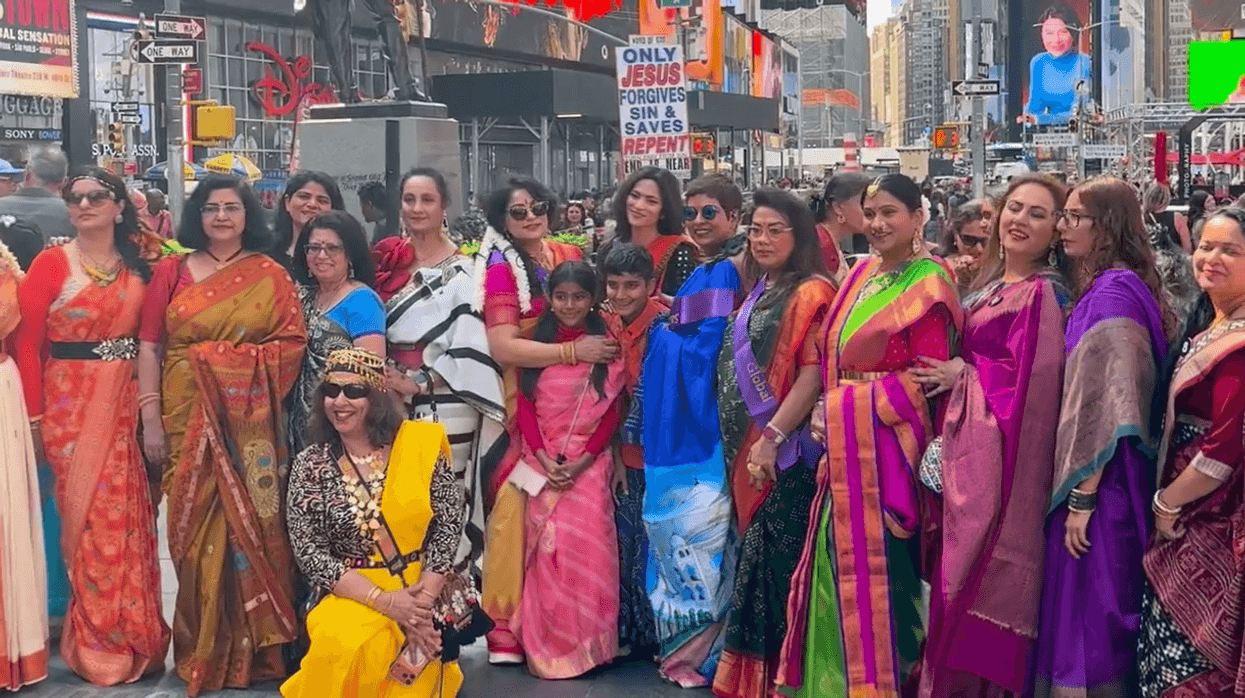
Surrounded by giant digital billboards, Broadway theatres, tourists and the constant movement of New York City, the traditional Indian garment can look almost out of place. Yet on Sunday (23), it became the centre of attention as women and girls wearing sarees from different parts of India gathered at Father Duffy Square for the third US edition of Saree Goes Global.
Organized by New York-based philanthropic organization Uma Global in partnership with the consulate general of India in New York, the event brought together people wearing Assamese weaves, Lucknow Chikankari, Banarasi silk, Kanjeevarams and other regional styles.
There were national flags, photographs, dancing and conversations about the stories behind the sarees.
But the event was about more than clothing.
For many Indian Americans, the saree can carry memories that are deeply personal. It may be the garment a mother wore at her wedding, a grandmother's silk saree kept carefully in a cupboard, something bought for Diwali or an outfit associated with family celebrations in India. Bringing those garments into the middle of New York transforms a private connection into a public celebration.
From India To New York
Saree Goes Global has its roots in the UK, where Dr Dipti Jain founded the initiative through the British Women in Sarees movement. The concept later travelled to the US, with Uma Global helping bring it to Times Square.
The first US edition took place in 2024 and attracted more than 500 participants representing at least nine saree-wearing countries. The New York celebration has since developed into a recurring cultural gathering.
That journey from Britain to America gives the event a wider diaspora story. The saree is no longer being presented only within an Indian setting. It is being worn in some of the world's most recognisable international spaces.
And Times Square is perhaps the clearest example.
It is a place where different cultures, languages and identities constantly meet. Against that backdrop, hundreds of Indian sarees become a highly visible expression of heritage.
There is no single Indian Saree
One of the most important things the event demonstrated was the sheer regional diversity of Indian textiles.
An Assamese weave tells a different story from a Kanjeevaram from Tamil Nadu. Banarasi silk has its own weaving traditions, while Lucknow's Chikankari is recognised for its delicate embroidery.
The saree therefore does not represent one single version of India.
Instead, its fabrics, patterns, embroidery, colours and draping styles reflect different regions, communities and generations. The Times Square ramp walk, led by host committee member Garima Agrawal, showcased that diversity through traditional weaves and contemporary styling.
That is also why the saree continues to evolve.
Rajlakshmi Appasaheb Kadam, Consul Trade at the Consulate General of India in New York, described the garment as a "living legacy" of Indian art, traditions, culture and weavers.
She noted that young designers are combining traditional weaves with modern cuts, while women continue to wear sarees at weddings, workplaces and global events.
"From the saree's ancient roots dating back to the Indus Valley civilisation to its modern legacy where young designers are mixing old weaves with new modern cuts, women wear the saree proudly at weddings, work, and global events. It remains a zero-waste, sustainable choice for the future," Kadam said.
More than a fashion show
The afternoon was designed as a community celebration rather than a conventional fashion event.
There was live music, flute and dhol performances, a ramp walk and a flash dance led by celebrity choreographer Jayshree Srikanth and Dance X Studio. Participants and members of the public joined the dancing in Times Square.
The celebration ended with the signature Saree Walkathon, bringing participants, families and supporters together.
Men also joined the event wearing dhotis.
Dr Rita Kakati-Shah, president of Uma Global, said, "It was also wonderful to see the men proudly joining us in their 'dhotis'. Saree Goes Global is about much more than what we wear. It is about confidence, heritage, connection, and creating a space where cultures and communities can be celebrated together,"
The event also recognised women for their professional contributions. Shaila Rizvi, an interior designer and Creative Director of New York restaurant Bungalow, was honoured for her creative achievements. Mysha Rizvi, Guest Relations Manager at Bungalow, was recognised for her work in hospitality.
New York Governor Kathy Hochul also sent a message celebrating women who "positively transform our communities, while wearing sarees in proud celebration of your heritage in Times Square."
For younger Indian Americans, perhaps the most meaningful part of such an event is the opportunity to see heritage outside the home.
A saree can begin as something worn by a parent or grandparent. In America, it can become something a younger generation chooses for itself.
It can be worn with a contemporary blouse, styled differently or paired with Western accessories. What remains is the connection to where the garment came from.
Dr Dipti Jain described sarees as a way to celebrate "our shared heritage and foster a deep sense of belonging."
That may be the real significance of hundreds of sarees filling Times Square.
They were not simply bringing India to New York for an afternoon. They were showing how Indian identity can travel, change and still remain recognisable.
In the middle of one of America's busiest cities, the saree became both a reminder of home and a statement of belonging.