
Highlights:
- Pakistan claims a key diplomatic role in facilitating US-Iran negotiations.
- Sharif says Pakistan has emerged as a global “peacemaker.”
- Iranian President Masoud Pezeshkian’s visit is described as recognition of Pakistan’s efforts.
- Prime Minister warns of growing regional and domestic security challenges.
- Sharif accuses India of using "proxies" to destabilize Pakistan without presenting evidence.
Prime minister Shehbaz Sharif on Saturday (27) said Pakistan has emerged as a “peacemaker” on the global stage after its diplomatic efforts contributed to a breakthrough agreement between the United States and Iran aimed at reducing tensions in the Middle East.
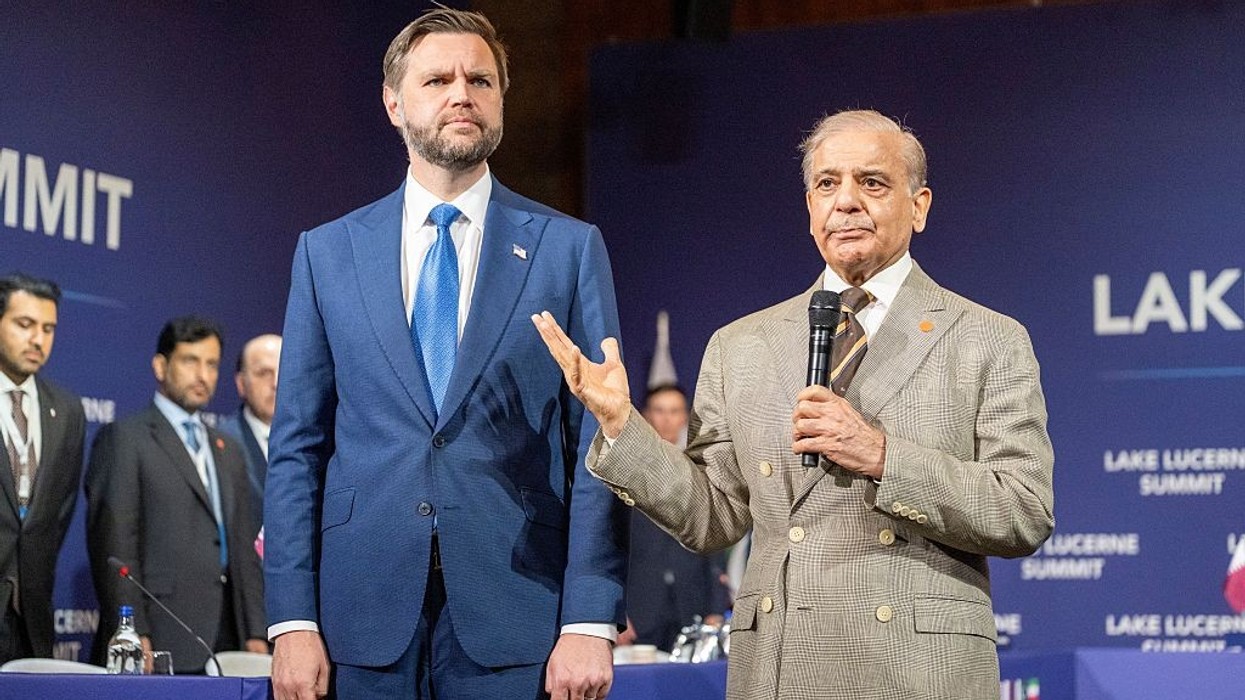
According to Pakistani officials, the United States and Iran have agreed on a roadmap designed to reach a comprehensive agreement within 60 days. The framework follows high-level negotiations mediated by Qatar and Pakistan that took place in Switzerland last week.
The discussions were held under the Islamabad Memorandum of Understanding (MoU), which was signed by the United States and Iran on June 18. Pakistani leaders have described the agreement as evidence of the country's growing role in regional diplomacy and conflict resolution.
Speaking at the passing out parade of cadets at the Pakistan Naval Academy in Karachi, Sharif praised Pakistan’s diplomatic engagement, saying the country has become a “peacemaker” through its efforts to encourage dialogue and stability in West Asia.
Sharif also pointed to the recent visit by Iranian President Masoud Pezeshkian, calling it a recognition of Pakistan’s role in promoting peace across the region. He said the visit reflected the confidence neighboring countries have in Pakistan’s ability to facilitate diplomatic initiatives during periods of heightened tensions.
In his address, the prime minister also discussed Pakistan’s broader security environment, saying the country continues to face complex challenges stemming from both external pressures and internal threats. He said Pakistan is navigating conflicts and multi-faceted security concerns that require continued vigilance and a strong national defense.
Sharif also accused India of using "proxies" to undermine the stability in Pakistan, without providing any evidence in support of his allegations.
His remarks come as Pakistan seeks to position itself as an active diplomatic player in regional affairs while balancing ongoing security concerns at home. The reported US-Iran roadmap, if successfully implemented, could mark an important step toward easing tensions in the region and reinforce Pakistan’s efforts to expand its influence through diplomacy.