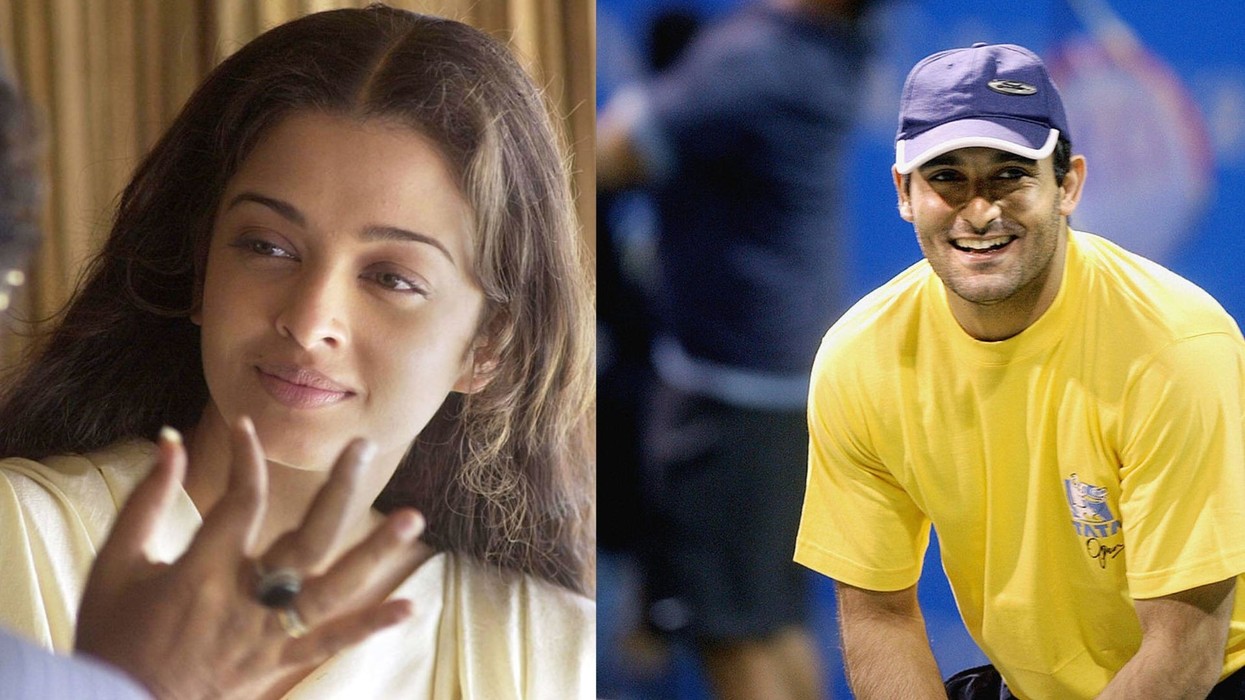

- Akshaye Khanna came through his famous father, Vinod Khanna.
- Aishwarya Rai was recommended by choreographer Saroj Khan.
- Ghai deliberately stripped away Rai’s pageant-era glamour.
- Both leads were still early in their careers when cast.
- The commercial success of Taal made the risky choices look inevitable.
When Subhash Ghai began casting Taal in the late 1990s, he wasn't simply looking for two young actors to headline an ambitious musical. He was betting on two performers who, in very different ways, stood outside the image of the Hindi film star he wanted them to become.
Twenty-five years later, the casting of Taal looks almost obvious. At the time, however, it was anything but.
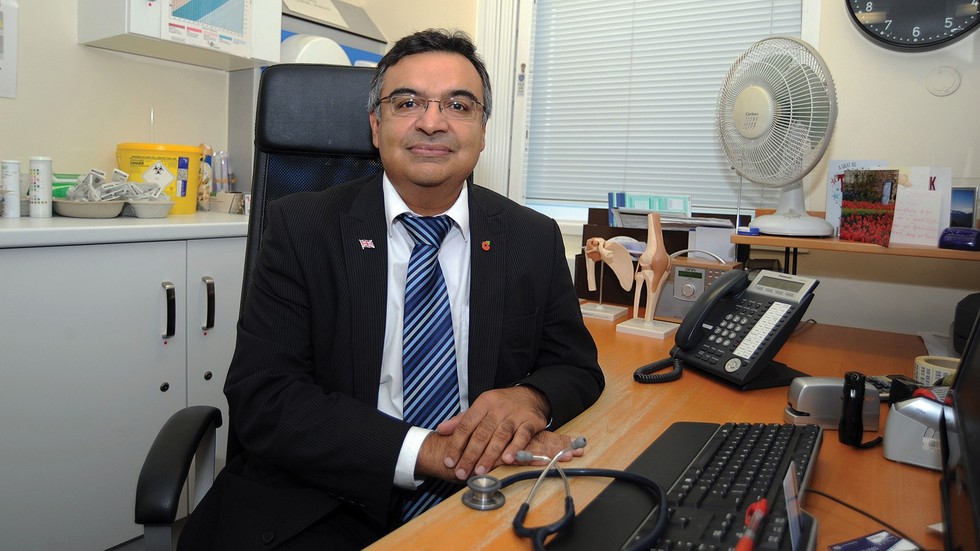
Akshaye Khanna arrived at Ghai's home with an unmistakable industry connection: his father, veteran actor Vinod Khanna, personally brought him in. Yet the younger Khanna had little established screen history to lean on. His challenge was not access but credibility. Ghai saw something in his intensity that went beyond his résumé and decided to take the chance.
Aishwarya Rai presented the opposite problem. She was hardly unknown. In fact, she was already one of India's most recognizable new faces after winning Miss World. But that visibility came with baggage. Her beauty-pageant image was powerful — perhaps too powerful — for a director who wanted audiences to believe her as a dramatic character.
Her name reportedly entered the conversation through choreographer Saroj Khan, who suggested Rai while Ghai was considering actresses beyond Madhuri Dixit.
- YouTube youtu.be
“I wanted to break her image”
The most revealing part of Ghai's casting strategy was what happened after Rai got the role.
Rather than capitalize immediately on her beauty-queen persona, Ghai reportedly chose to dismantle it. He told Rai that he wanted to undo the image audiences associated with her and had her appear without makeup during the film's opening stretch.
It was a strikingly deliberate choice.
Rai's greatest advantage, her extraordinary glamour, was treated as an obstacle that had to be removed before the audience could fully accept her as Mansi, the character she played in Taal. The idea was not simply to introduce a beautiful newcomer but to force viewers to look beyond the beauty queen.
In hindsight, the move was both controversial and clever: Ghai took the very quality that made Rai commercially irresistible and temporarily stripped it away.
Two outsiders, two different battles
Khanna and Rai were not outsiders in the same sense.
Khanna was an industry insider who still had something to prove. As Vinod Khanna's son, he had access, but his own identity as a leading man was far from established.
Rai was an outsider to the traditional Hindi-film acting hierarchy who had already become a celebrity before proving herself as an actress. Her problem was almost the reverse: she had too much image and not enough acting history.
Ghai's solution was to reshape both.
He used Khanna's intensity as the foundation for his character while pushing Rai away from the polished persona audiences already knew. The result was a pair of leads who could feel fresh even within a film backed by one of Bollywood's biggest commercial filmmakers.
A risk hidden inside a spectacle
The gamble becomes more striking when the scale of Taal is considered.
This wasn't a modest experiment. The film had an AR Rahman soundtrack, Anil Kapoor as its established star, and Ghai's reputation for lavish commercial cinema behind it. Casting relatively inexperienced leads in such a high-profile production left little room for failure.
Ghai has recalled facing skepticism over his choices, underscoring just how unconventional the pairing could look before the film arrived.
But Taal did what successful gambles always do: it rewrote the history of the risk.
Its music became iconic. The film became a major commercial success in India and overseas. And Khanna and Rai emerged from it with their reputations substantially strengthened.
Why Taal's casting still matters
The nostalgia surrounding Taal usually begins with Rahman's music, the choreography and its lush visual scale. But its casting story may be the more revealing legacy.
Ghai effectively placed two different kinds of outsiders at the center of a major Bollywood production, a star kid who still had to establish himself and a beauty-pageant celebrity who had to convince audiences she was more than a beautiful face.
Neither entered through a conventional audition-to-stardom pipeline. Yet once they were inside, Ghai didn't simply accept the images they brought with them. He tried to reshape those images for his film.
That is what makes the casting of Taal more than a piece of Bollywood trivia. It was an experiment in access, perception and transformation.
The soundtrack made Taal unforgettable.
But the real gamble was trusting two very different outsiders and betting that audiences would see what Ghai saw in them.