
Highlights:
- Trump says Iran deal depends on more countries joining Abraham Accords
- Saudi Arabia, Qatar, Turkey and Pakistan named as possible signatories
- Trump warns US may reconsider regional peace efforts if countries refuse
- Saudi Arabia still ties normalization to progress on Palestinian statehood
- Pakistan rejects joining, while Qatar remains cautious due to regional role
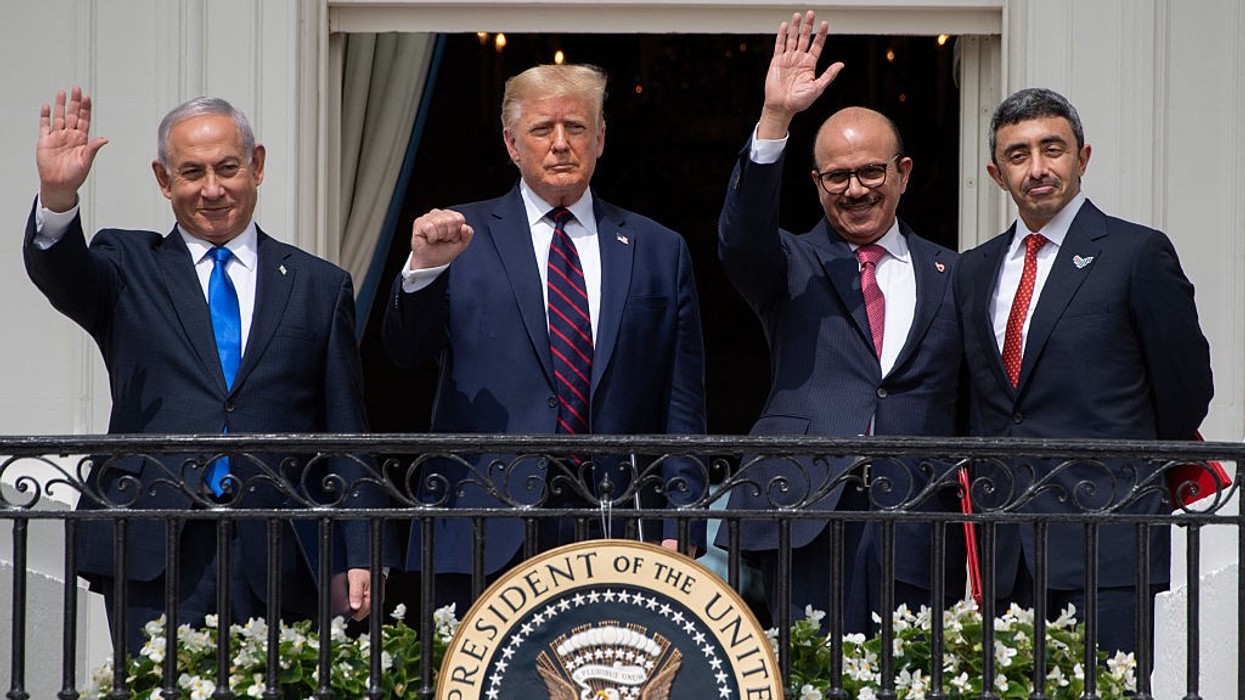
President Donald Trump has tied future negotiations with Iran to the expansion of the Abraham Accords, the US-backed agreements that normalize relations between Israel and Arab and Muslim-majority countries.
Speaking during a Cabinet meeting, Trump said a deal with Iran would depend on whether countries such as Saudi Arabia, Qatar, Pakistan, Turkey and Egypt agree to formally join the accords. He also said his envoys, Steve Witkoff and Jared Kushner, are actively working to persuade more nations to sign on.
"I think they owe that to us, to be honest," Trump said. "It'll be historic if they do it."
The Abraham Accords were introduced in 2020 during Trump’s first term. The agreements were designed to improve diplomatic, economic and strategic ties between Israel and Arab states. The United Arab Emirates and Bahrain were the first Gulf nations to establish formal relations with Israel under the framework. Morocco and Sudan later joined.
During the Cabinet meeting, Trump asked his envoy Steve Witkoff whether more countries could be convinced to participate.
"We're definitely pushing it," Witkoff replied.
Trump then suggested that Washington could reconsider its efforts to end conflict in the Middle East if Gulf nations refuse to join the accords.
"I'm not sure we should make the deal if they don't sign," Trump said.
The president praised countries already participating in the framework, especially the United Arab Emirates. He said the accords could bring economic and political benefits to countries such as Saudi Arabia, Qatar and Kuwait.
The agreements promote cooperation in areas including trade, technology, tourism, medicine and agriculture. The United States says the accords have helped create new trade routes and stronger economic partnerships across the region. Israel and the UAE have already signed several business and technology deals since normalizing ties.
The accords are widely seen as one of the most important diplomatic developments in the Middle East since Egypt signed a peace treaty with Israel in 1979 and Jordan followed in 1994.
Earlier, Trump also addressed the issue in a Truth Social post. He named Saudi Arabia, Qatar, Pakistan, Turkey, Egypt and Jordan as possible future signatories. He criticized countries refusing to join, saying they were showing "bad intention" and argued that most nations should be willing to participate.
Trump said wider participation would help create a stronger and more united Middle East. He also suggested that Iran could eventually become part of the framework.
"It would be an Honor to have them also be part of this unparalleled World Coalition," Trump wrote.
Despite Trump’s push, several political barriers remain. Saudi Arabia has repeatedly said that any normalization with Israel must include meaningful progress toward Palestinian statehood. Pakistan has already rejected the possibility of joining the accords.
Qatar is also considered unlikely to sign in the near future. The country has positioned itself as a neutral mediator in regional conflicts and maintains ties with Hamas. Analysts also view the possibility of Iran joining the accords as highly unrealistic because opposition to Israel remains a central part of the Iranian government’s position.









 A traveller preparing to board an American Airlines FlightiStock