
Highlights:
INDIA’S top money managers are launching a flurry of funds in a tax-neutral hub to absorb the record sums that domestic investors are sending overseas, frustrated by weak returns at home and craving exposure to AI-related assets.
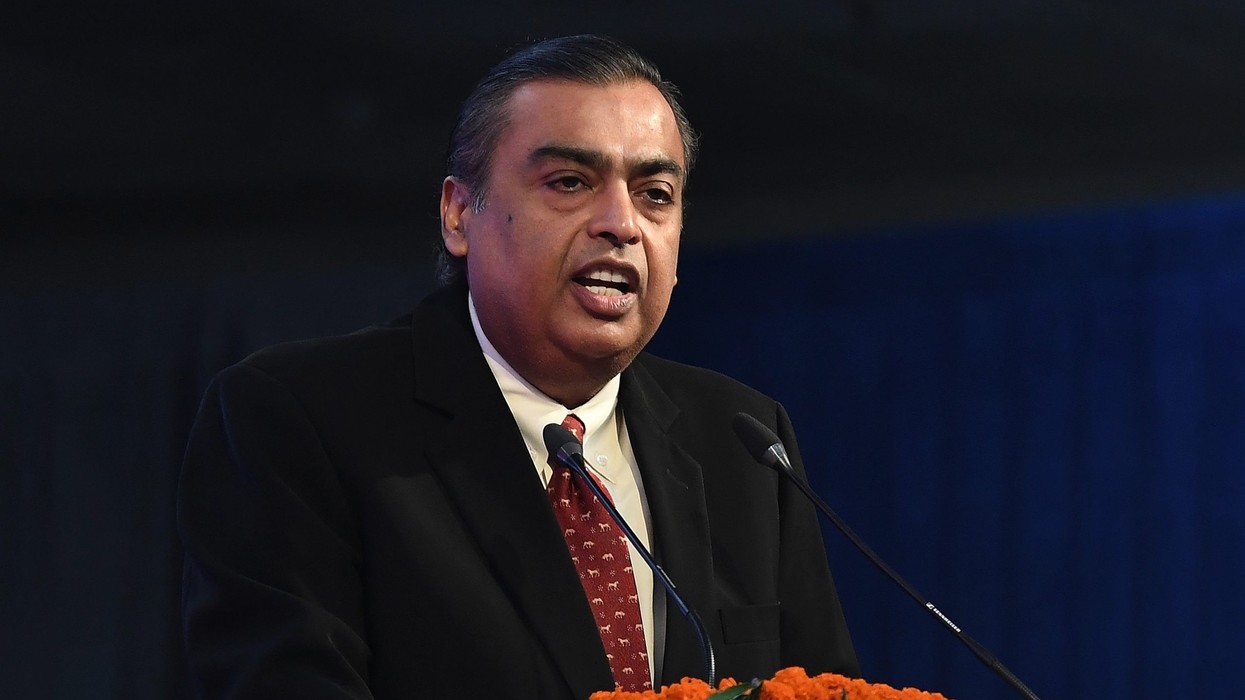
At least half a dozen such funds have been launched in the past six months, including the JioBlackRock Advantage World Equity Fund this week by the joint venture of Mukesh Ambani’s Jio Financial and BlackRock, the world’s largest asset manager.
The overseas investment rush poses a dilemma for policymakers, who have spent years encouraging households to move savings from real estate, gold and bank deposits into domestic equities.
The world’s most populous nation has more than 130 million retail stock investors, many of whom are scouring for investment targets abroad, from New York to Kazakhstan, after sustained underperformance in the domestic stock market.
“Over the last two years, we’ve seen a clear increase in demand for global assets,” said Shobhit Mathur, co-founder of money manager Ionic Wealth. “Investors are no longer looking at overseas exposure as a tactical allocation but increasingly as a permanent part of portfolio construction.”
International investments by individuals in India either directly or through funds more than doubled from a year earlier to nearly $2.3 billion in the first half of 2026, on track to surpass the 2025 full year’s record $2.65bn, data from the central bank, the Reserve Bank of India (RBI), showed.
One such investor is Ankit Khandelwal, a 41-year-old resident of Kota in Rajasthan, who invests in global exchange-traded funds (ETFs) and companies listed in markets such as Kazakhstan and Mongolia.
“It began as an experiment, but since then better returns overseas and persistent rupee weakness has led me to grow the overseas portion of my portfolio to over 60 per cent from about 5 per cent in early 2025,” said Khandelwal, who is an import and export adviser to companies, adding that he understands metals, mining and energy firms of the world.
The RBI restricts Indian funds to a maximum cumulative overseas investment of $7bn and a $1bn limit for an individual asset manager. With the limits almost exhausted, funds cannot create fresh units to invest at will even as demand grows.
But these limits do not apply to overseas investment funds of domestic asset managers launched via the GIFT City tax-neutral hub in Gujarat.
Thus, besides JioBlackRock, HDFC Asset Management, Parag Parikh and Aditya Birla Sun Life have launched such funds in the past six months. Other domestic funds that invest in foreign equities too are sought after, despite the RBI limits.
Assets in overseas fund-offunds schemes rose 42 per cent year-on-year to `488bn in September, while investors registered for such investments climbed 34 per cent to nearly 2 million, according to data published by the Association of Mutual Funds in India.
Indian authorities are cautious about the money flowing abroad from such investments but are not considering measures to curb such flows, three people at Indian regulators told Reuters.
Emails to India’s market regulator and the RBI, which sets overseas investment limits, were not answered.
Some industry executives voiced caution. “Indian markets have not given returns and overseas markets are looking attractive,” said Swarup Mohanty, chief executive of Mirae Asset Investment Managers. “If you want to invest for diversification then it’s fine, but investing purely to chase short-term returns is worrying.”