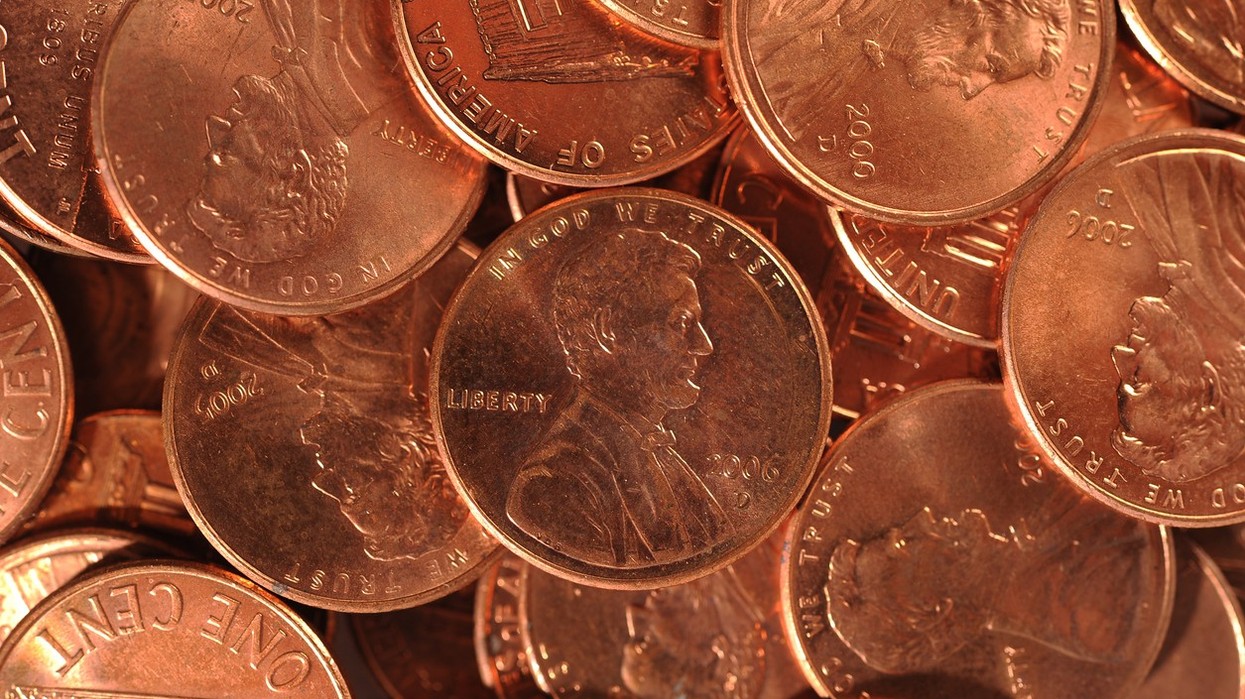

- The Common Cents Act formally ends penny production for general circulation, although limited collector versions can still be made.
- Existing pennies remain legal tender and can continue to be used in cash transactions.
- Businesses can round cash payments to the nearest five cents when exact change is unavailable.
After more than two centuries in American commerce, the penny is officially being retired from production.
President Donald Trump signed the bipartisan Common Cents Act into law on Friday (20), formally directing the Treasury Department to stop producing one-cent coins for general circulation.
The decision makes permanent a move that began in November 2025, when the US Mint struck its final circulating penny after 232 years of production.
The legislation also establishes rules for rounding cash payments as the supply of pennies gradually declines. It authorizes the Treasury to use lower-cost materials in future nickel production and sets out procedures for discontinuing other coins if necessary.
The penny will not immediately disappear from Americans' wallets. Existing coins will remain legal tender, meaning they can still be used to pay for goods and services.
Why has the US decided to stop making pennies?
The main reason is the cost of production.
According to the US Mint, manufacturing a single penny costs 3.69 cents, nearly four times its face value. The cost has risen from 1.42 cents over the past decade, making continued production increasingly expensive.
The Treasury Department estimates that ending production will save the government around $56 million annually in material costs.
The figure differs from the $85 million saving cited by Representative Lisa McClain, the Republican from Michigan who co-sponsored the legislation in the House. The higher amount was cited during the campaign for the bill, while the Mint's estimate is based on its projected immediate savings.
McClain argued that the legislation would eliminate unnecessary spending on a coin that costs more to manufacture than it is worth.
The penny's declining role in everyday payments has also contributed to the decision. As more consumers use cards and digital payment methods, demand for small-denomination coins has changed.
The government had already stopped producing pennies for general circulation in November 2025, following Trump's call for the Treasury Department to end production. The new law formalizes that decision and provides a legal framework for the transition.
The Mint can still produce limited quantities of pennies for collectors and historical purposes.
How will cash payments change, and can Americans still use pennies?
The biggest practical change concerns cash transactions.
Under the new law, businesses will be able to round the final amount of a cash payment to the nearest five cents when exact change cannot be provided.
For example, a transaction ending in one or two cents can be rounded down, while an amount ending in three or four cents can be rounded up. The same principle applies to amounts ending in six or seven cents, which round down, and eight or nine cents, which round up. Totals ending in zero or five cents remain unchanged.
The rounding applies after taxes and other charges have been calculated. It does not change the price of individual products or the way electronic payments are processed. Card, check and other digital transactions will continue to be settled to the exact cent.
The law also does not make existing pennies invalid. They remain legal tender, and the Treasury Department has said the Federal Reserve will continue recirculating the approximately 114 billion pennies already in existence for as long as possible.
Consumers can continue spending their pennies and depositing them with financial institutions. Businesses are also able to keep accepting the coins while they remain in circulation.
The legislation gives the nickel, worth five cents, a potential manufacturing change as well. It allows the Mint to produce the coin with an inner layer of zinc and an outer layer of nickel, replacing its existing copper-and-nickel composition if testing confirms that the alternative reduces costs and does not significantly affect coin-operated machines.
The penny has been part of American life since the early days of the republic. Congress authorized the coin under the Coinage Act of 1792, and the Mint began producing it the following year.
Its design changed several times over the decades. The modern image of Abraham Lincoln first appeared in 1909 to mark the 100th anniversary of his birth. In 2010, the reverse side was updated with the Union Shield design, representing Lincoln's preservation of the United States as one country.
Although the coin will remain valid, the end of production marks the close of a significant chapter in American currency history. For consumers, the transition will be gradual, with the most noticeable change likely to come at the checkout when paying in cash.