
Highlights:
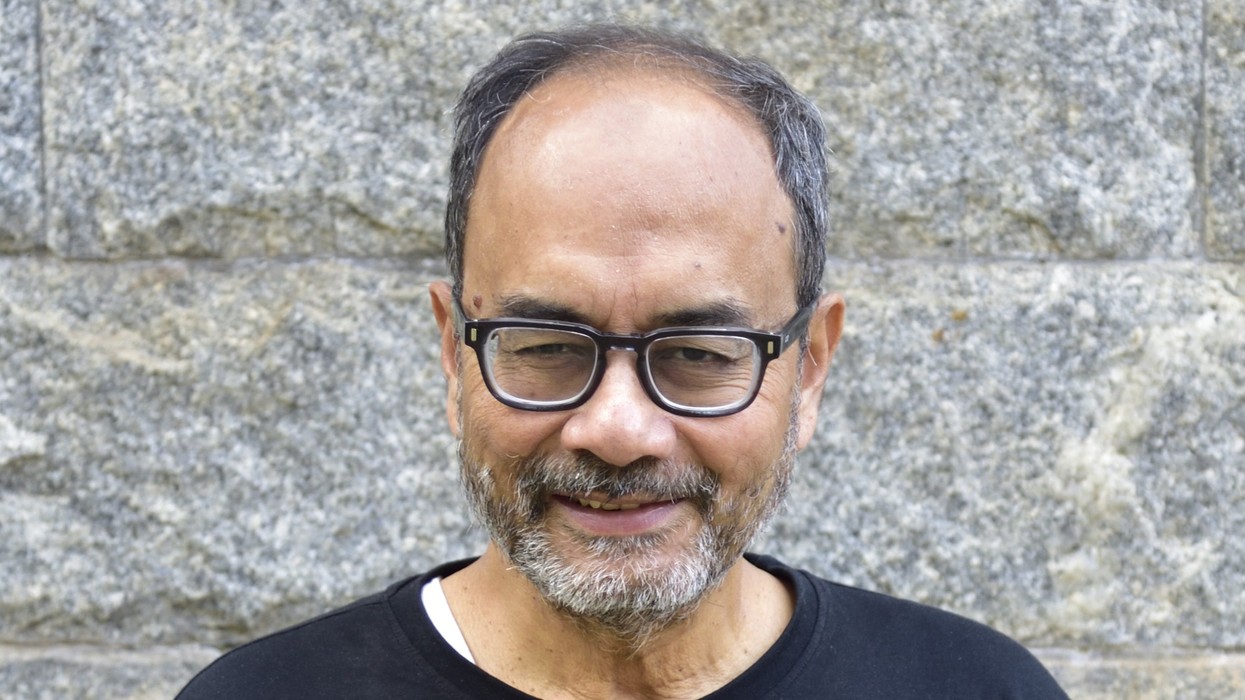
Indian physicist Ashoke Sen has been awarded the 2026 Oskar Klein Medal, becoming the first Indian physicist to receive the prestigious honor for his pioneering contributions to modern string theory, a field that seeks to explain the fundamental building blocks of the universe and the forces governing them.
Sen, an ICTS-Infosys Madhava Chair professor at the International Centre for Theoretical Sciences (ICTS), part of the Tata Institute of Fundamental Research (TIFR) in Bengaluru, is widely regarded as one of the architects of modern string theory.
The theory proposes that the elementary constituents of matter are not point-like particles but tiny, one-dimensional, string-like objects. By offering a framework to describe matter and the forces between its constituents, it seeks to provide a unified understanding of the universe.
The Oskar Klein Medal is awarded annually by Stockholm University and the Nobel Committee for Physics of the Royal Swedish Academy of Sciences. Established in 1988, it commemorates Swedish theoretical physicist Oskar Klein and recognizes distinguished researchers invited to deliver the Oskar Klein Memorial Lecture.
Sen delivered his lecture, titled ‘Gravity from strings and strings from gravity', on October 22 at the AlbaNova University Centre in Stockholm.
His talk explored how string theory can provide a consistent quantum theory of gravity, while addressing some of the most challenging questions surrounding the quantum nature of black holes. Understanding gravity within the framework of quantum physics remains a major challenge in theoretical physics, making these questions central to efforts to develop a more complete picture of the universe.
Sen's work has helped shape the field through a series of influential theoretical breakthroughs. In 2012, he received the Breakthrough Prize in Fundamental Physics for contributions that helped establish the idea that different string theories could represent different limits of a single underlying theory.
His research has also earned him some of India's highest civilian honors. He received the Padma Shri in 2001 and the Padma Bhushan in 2013.
"Prof. Sen, an ICTS-Infosys Madhava Chair Professor, is internationally recognised for his pioneering work on S-duality, the precision counting of black-hole entropy and string field theory, all of which have helped shape modern string theory," the ICTS said in its announcement.
The Oskar Klein Medal has previously been awarded to several prominent figures in physics, including Kip Thorne in 2016, Peter Higgs in 2009 and Stephen Hawking in 2003. Earlier recipients include Nobel laureates Hans E. Bethe in 1990, Steven Weinberg in 1989 and Chen Ning Yang in 1988.
Sen's recognition places him among a distinguished group of physicists whose work has advanced understanding of the universe. His achievement also marks a milestone for Indian theoretical physics, highlighting the international impact of research conducted by Indian scientists in some of the most complex areas of modern science.