
Highlights:
The Cockroach Janta Party (CJP) is returning to India’s capital with another high-profile protest, this time targeting alleged irregularities in the country’s electoral rolls. But ahead of Saturday’s demonstration at Delhi’s Jantar Mantar, the scale of the authorities’ response has become a major story in its own right.
Delhi Police have prepared an extensive security plan involving thousands of personnel, metro station closures and railway cancellations to manage the expected crowds. The restrictions prompted the Supreme Court of India to intervene on Friday, questioning whether authorities could effectively shut down essential public transport in anticipation of a political demonstration.
At the centre of the dispute is the Special Intensive Revision (SIR), an exercise to review and update electoral rolls. The controversy highlights a wider question facing India’s democratic institutions: how can electoral integrity and public order be protected without unnecessarily restricting ordinary citizens’ access to public services?
Why is CJP protesting this time?
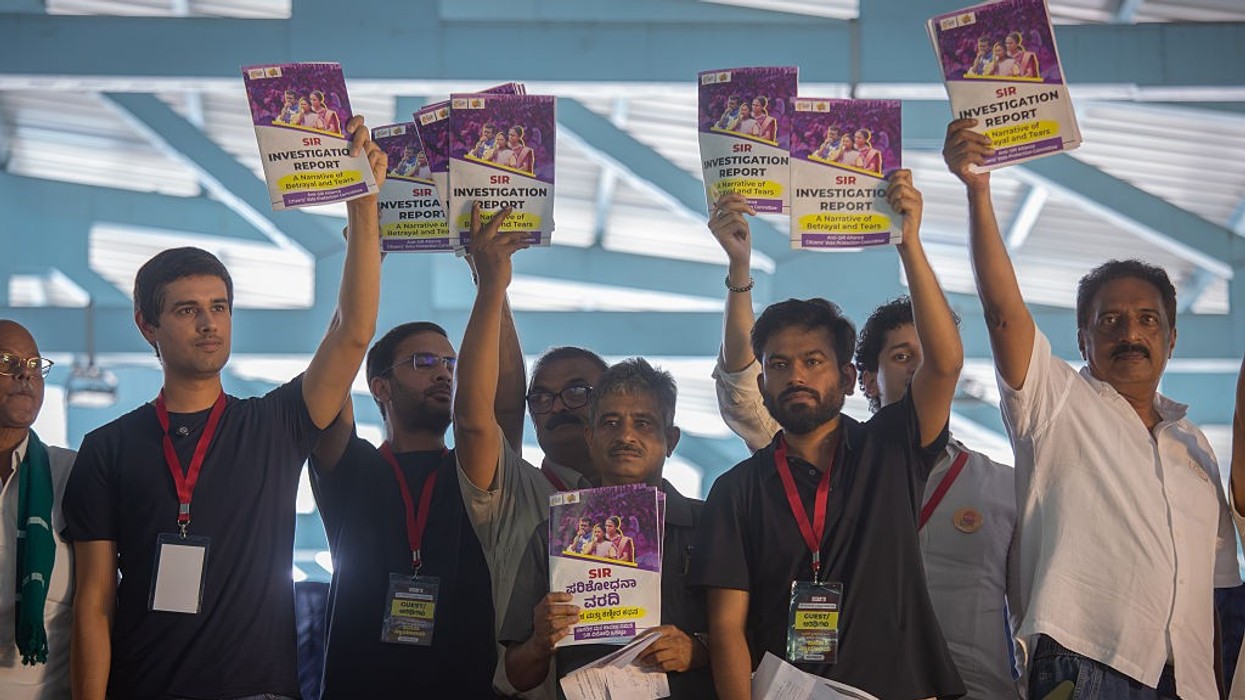
CJP’s October 10 demonstration is directed against Chief Election Commissioner Gyanesh Kumar and alleged irregularities in the SIR process.
Electoral rolls are official lists of eligible voters. Their accuracy is fundamental to elections because errors can affect whether eligible citizens are registered and able to exercise their voting rights. A revision exercise can involve checking voter details, removing duplicate or otherwise ineligible entries and updating records.
Such exercises can become politically contentious when questions arise about the criteria used, the handling of disputed entries or the possibility that eligible voters could be excluded. CJP’s protest centres on allegations of irregularities in this process, although the allegations should not be treated as established findings.
Jantar Mantar, the designated protest area in central Delhi, has long served as a venue for demonstrations on political and public-policy issues. The latest gathering is expected to bring the party’s supporters to the capital to press their concerns about the electoral process.
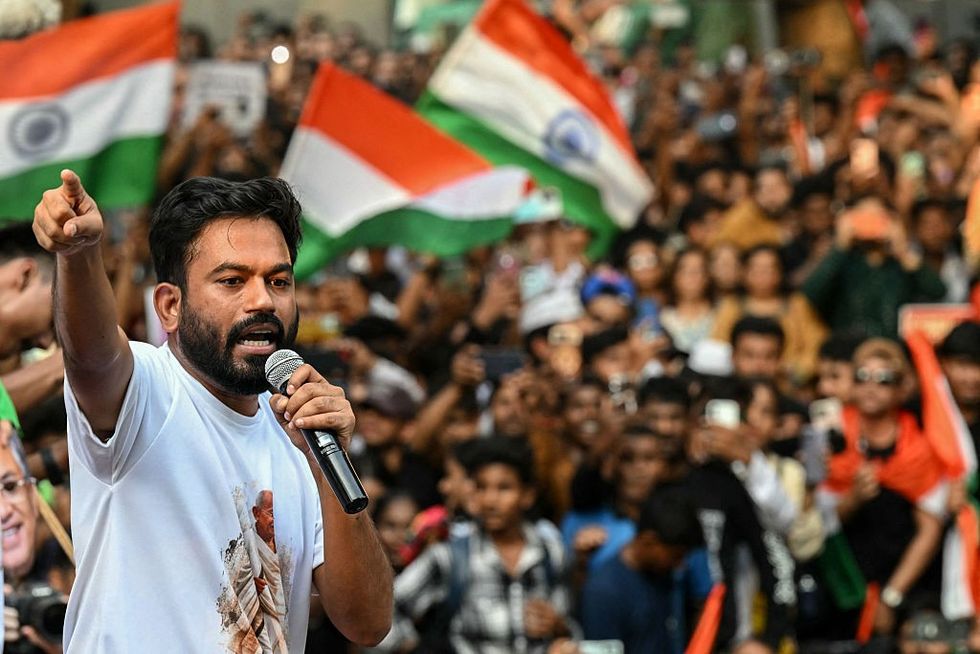 Cockroach Janta Party (CJP) founder Abhijeet Dipke addresses supporters during a protest demanding the resignation of India's chief election commissioner Gyanesh Kumar over alleged voter-roll irregularities in Mumbai on October 2, 2026. Indian protesters rallied in New Delhi and Mumbai on October 2, including members of the popular youth-led "cockroach" party, demanding the resignation of the chief election commissioner over alleged voter-roll irregularities.Getty Images
From examination corruption to electoral rolls
This is not the first time CJP has staged a major demonstration in Delhi. The party previously organised protests over alleged corruption in India’s public examination system, an issue with implications for students competing for educational opportunities and government positions.
According to reports, the earlier protests in June forced then-Union Education Minister Dharmendra Pradhan to resign. Police officials say they have reviewed the previous demonstration while preparing for the latest gathering.
Their concern is that a large mobilisation could lead to crowds moving towards sensitive locations or create public-order challenges. Authorities have consequently prepared what they describe as an extensive security operation.
Why has Delhi imposed such sweeping restrictions?
The security plan reportedly contains 37 measures, with restrictions affecting metro services, rail travel and movement around sensitive areas.
An advisory announced restrictions at 57 metro stations, with entry and exit gates scheduled to close from 9 pm on Friday, October 9. Metro trains passing through affected stations could also operate at reduced frequencies.
Rail services have faced disruption as well. Reports indicate that 61 Delhi-bound trains scheduled to arrive at New Delhi and Hazrat Nizamuddin railway stations were cancelled between Friday (9) and Saturday (10).
The police deployment is also substantial. Around 5,000 personnel were reported to be stationed in New Delhi district, where Jantar Mantar is located, with the possibility of the number rising to 15,000. Other reports cited a wider deployment of approximately 23,000 personnel for the protest-related operation.
The restrictions reflect the authorities’ stated concerns about crowd movement and security. However, their scale has raised questions about whether measures intended to manage a demonstration could impose disproportionate costs on the wider public.
Why did the Supreme Court intervene?
On Friday, the Supreme Court questioned the government over the metro closures and railway cancellations after a petition challenged the restrictions.
"You can't use a sledgehammer to kill a fly," the court said, expressing concern about the breadth of the measures.
Chief Justice of India Surya Kant stressed that the issue was not simply about protesters but also about the thousands of people who depend on public transport to reach their workplaces and travel across the capital.
"We are primarily concerned about the complete closure of these metro station entrances. Our concern is not about any specific protester or individual; rather, it is about the hundreds and thousands of commuters who travel to Delhi from Gurugram, Greater Noida, East Delhi, and South Delhi for their livelihoods," CJI Surya Kant told the Solicitor General.
The court acknowledged that law enforcement agencies have the authority to introduce security restrictions. It nevertheless questioned whether closing transport infrastructure altogether was justified when more limited measures might address the risks.
"Law enforcement authorities are certainly entitled to implement regulatory measures; there is no doubt about that. If you wish to curb uncontrolled movement, you are free to do so. However, this does not mean you can bring everything to a halt and leave people without any means of transport," the top court said.
The court indicated that metro frequency could be reduced rather than services being completely stopped. It also directed authorities to reconsider road closures and assess which locations genuinely required restrictions.
Solicitor General Tushar Mehta told the court he would consult the government and assured it that proportionate measures would be taken.
What happens next?
The immediate focus is Saturday’s demonstration and how authorities manage security without unnecessarily disrupting essential services. The Supreme Court’s intervention places proportionality at the centre of that task: preventing disorder is a legitimate objective, but restrictions must also account for the rights and needs of people who are not participating in the protest.
For international observers, the episode offers a glimpse into the tensions that can emerge when electoral disputes move from political debate into the streets. CJP’s protest is about alleged problems in voter registration, but the preparations surrounding it have opened a second debate over public order, democratic expression and the limits of emergency-style restrictions in India’s capital.