
- JD Vance says he would support eliminating the H-1B visa program altogether.
- His comments come as a $100,000 H-1B fee faces its second federal court block.
- Indian professionals could be closely affected because India-born workers accounted for 71 per cent of approved H-1B petitions in FY2024.
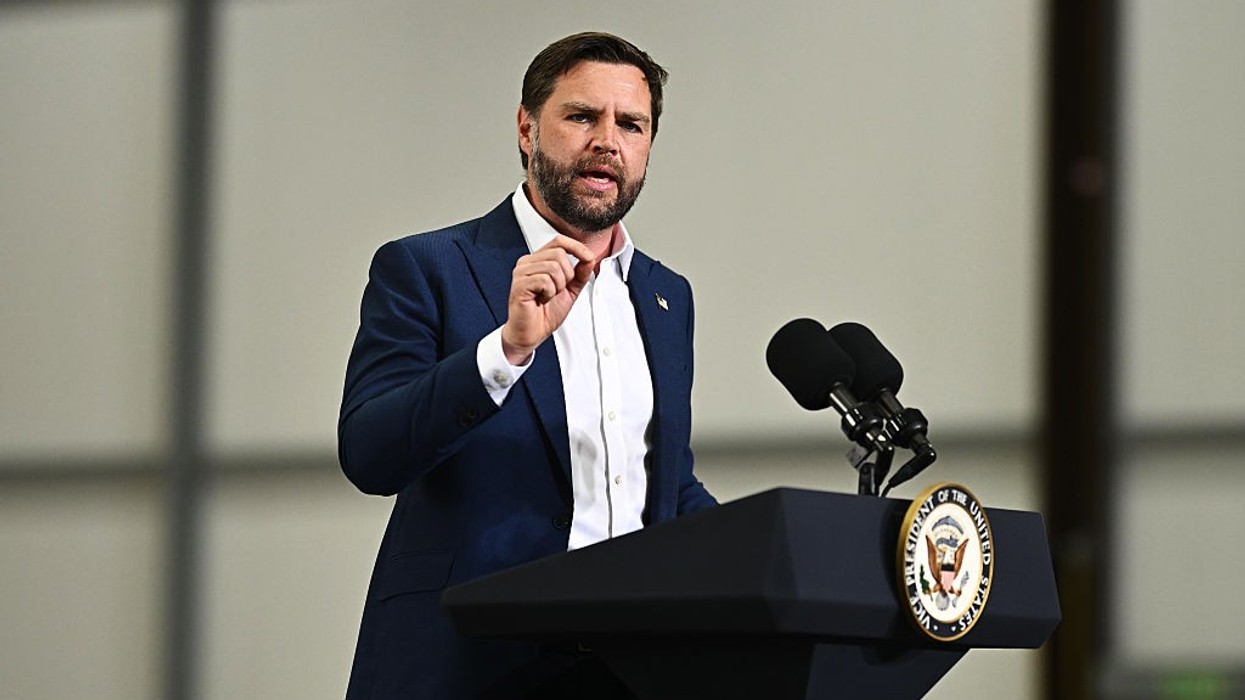
US Vice President JD Vance has backed abolishing the H-1B visa program, calling it “completely broken” and accusing companies of using the system to replace American workers with cheaper foreign labor.
Vance made the comments on Thursday during a livestream interview broadcast by Real America’s Voice, taking the Trump administration’s increasingly hardline position on skilled-worker visas a step further. He said he would support getting rid of the program, although he acknowledged that it remains in place for now.
“My view is the H-1B programme is completely broken, and I'd be very supportive of just eliminating it. But while we have it, what we have to do is protect American workers,” Vance said, according to reports.
The vice president accused companies in technology, accounting and other sectors of taking advantage of the program. He drew a distinction between bringing highly skilled foreign professionals into the US and using H-1B visas primarily to cut labor costs.
“If you’re going to bring in an accountant making $45,000 a year to replace an accountant who is an American making $60,000 a year, that’s not you using the program to bring in a genius,” Vance said. “That’s you destroying American jobs and defrauding the American people.”
The allegations echo the broader case the Trump administration has made for tightening the H-1B system. A September 18 executive order said the program had been abused by some employers and directed the Departments of State, Labor and Homeland Security to consider whether companies sponsoring H-1B workers had recently laid off, or planned to lay off, similarly situated US workers.
A $100,000 fee caught in court battle
Vance also defended the administration’s controversial $100,000 payment requirement for certain new H-1B cases involving workers outside the United States.
The vice president said the fee was intended to discourage employers from using the program simply to bring in lower-cost foreign workers.
“The thinking there was, if you're just trying to replace an American accountant with a cheaper foreign accountant, then you're not going to pay $100,000,” Vance said, according to reports.
But the fee is currently tied up in a legal battle.
On September 30, US District Judge Haywood Gilliam in California blocked the administration from enforcing the $100,000 fee, ruling that US Citizenship and Immigration Services and the State Department had not followed the required rule-making procedures. It was the second federal court to block the measure after a Boston judge issued a similar ruling in June.
The Trump administration has extended the fee requirement for another year, while the Department of Homeland Security has separately moved toward a permanent fee of about $103,000. That proposal is also expected to face legal challenges.
The H-1B program itself, however, remains in place.
It allows US employers to hire foreign workers for specialty occupations and currently provides for 65,000 visas a year, plus another 20,000 for certain workers with advanced US degrees. H-1B status generally allows eligible workers to remain in the country for three years, with extensions potentially taking the total period to six years.
Why India is watching closely
The debate has particular significance for Indian professionals, who make up a large share of the H-1B workforce.
According to US Citizenship and Immigration Services data, 71 per cent of H-1B petitions approved in fiscal year 2024 were for beneficiaries born in India. China was the second-largest country of birth at about 12 per cent.
That means any fundamental change to the H-1B system could have consequences well beyond Silicon Valley, particularly for Indian technology, engineering and other specialized professionals seeking to work in the US.
For now, however, Vance’s comments do not amount to an abolition of the program. Eliminating H-1B would require changes to US immigration law, while the administration can continue tightening eligibility, enforcement and scrutiny within its existing authority.
The immediate picture is therefore one of increasing restrictions rather than an end to the visa route.
The administration has already ordered closer scrutiny of H-1B sponsors and their employment practices, while the courts are deciding whether the administration had the authority to impose the $100,000 payment requirement without going through the required rule-making process.
Vance’s latest comments nevertheless raise the stakes. Until now, much of the Trump administration’s H-1B push has centered on making the program more expensive and selective. The vice president is now openly backing a much more sweeping option: eliminating it altogether.