

- Six independent biological-age “clocks” showed younger age estimates in patients receiving rentosertib.
- The strongest signal suggested roughly 3 to 4 years of biological-age reversal, with one clock showing up to six years.
- The study analyzed blood proteins from just 42 participants in an earlier clinical trial.
- Rentosertib was originally developed to treat idiopathic pulmonary fibrosis, a serious lung disease.
- The results need larger, longer clinical trials to determine whether the drug can actually slow aging or extend healthy lifespan.
Could a drug designed by artificial intelligence also influence the biology of aging?
That is the intriguing question raised by a new study involving rentosertib, an experimental drug being developed for idiopathic pulmonary fibrosis, or IPF. Researchers analyzed blood samples from participants in a Phase IIa clinical trial and found that several independent measures of biological age shifted in a younger direction after treatment.
The research, published in Nature Biotechnology, involved scientists from institutions including Harvard Medical School, Stanford University, the Broad Institute, Peking University and Westlake University, in collaboration with Insilico Medicine, the company that developed rentosertib.
The headline-grabbing finding is that six different “aging clocks”—computer models that estimate biological age from patterns in proteins—showed broadly consistent results. In the group receiving 30 milligrams twice daily, the strongest effect appeared around Week 4, with several models estimating approximately three to four years of biological-age reversal. One model suggested a change of as much as six years.
That sounds dramatic. But there is an important distinction: the study did not show that people became biologically younger in the everyday sense, nor that they will live longer. It showed that certain measurable proteins in their blood shifted toward patterns associated with younger age.
What exactly is a biological-age clock?
Your chronological age is simply the number of years you have been alive. Biological age is an attempt to estimate how old your body appears to be based on measurable biological changes.
Scientists can build “aging clocks” using information such as DNA, chemical modifications, metabolism or, in this case, proteins circulating in the blood.
The researchers used six independently developed proteomic clocks, including models called ProtAge, OrganAge, PAC, ipfP3GPT and PAOPAC. These systems were developed using different methods and datasets, which makes their agreement particularly interesting.
The researchers also compared the findings with more than 55,000 protein profiles from the UK Biobank. That analysis suggested that rentosertib shifted several proteins in directions opposite to typical age-related changes.
Among the proteins affected were markers associated with cellular senescence and inflammation, including EREG, ESM1, IGFBP4, ITGA2, MMP10, MMP13 and SPP1.
In simpler terms, the drug appeared to alter some of the molecular signals that become more common as tissues age.
The drug was built for lung disease, not longevity
Rentosertib wasn't originally created as an anti-aging pill.
Insilico Medicine used artificial intelligence to identify a protein called TNIK as a potential drug target involved in both fibrosis and aspects of aging biology. The company then used its generative-AI chemistry platform to design a molecule aimed at TNIK.
The development program moved from target identification to a preclinical candidate in roughly 18 months. Rentosertib subsequently entered human testing for IPF.
In the Phase IIa trial, the drug met its primary safety goal and showed encouraging signs of improving lung function. Among participants receiving 60 milligrams once daily, average forced vital capacity, or FVC—a standard measure of lung function—improved by 98.4 milliliters, compared with a decline in the placebo group.
FVC also tends to decline with age, making it an interesting physiological measure to examine alongside biological-age markers.
But the new analysis raises an even more interesting possibility: the changes in biological-age markers may not simply be a consequence of improved lung function. The strongest biological-age signal and the strongest lung-function response occurred at different doses, suggesting the two effects may not be completely dependent on each other.
Why this is exciting, and why it's still early
The study is notable because it examines a potentially longevity-related effect inside a human clinical trial, rather than relying only on laboratory experiments or studies of older drugs such as rapamycin or metformin.
It also demonstrates a possible new strategy for aging research. Instead of waiting years to see whether a drug extends lifespan, researchers could measure biological-age markers during conventional trials for age-related diseases.
Still, there are major unanswered questions.
The analysis included only 42 participants, and the follow-up was relatively short. Biological-age clocks are useful research tools, but they are not the same thing as proving that a person is aging more slowly. A younger score does not automatically mean longer life, fewer age-related diseases or a longer period of healthy living.
The researchers themselves acknowledge that a larger trial will be needed to determine whether the findings represent genuine changes in the aging process or changes caused by treating disease.
That makes the next phase especially important. If larger and longer studies reproduce these results—and show improvements in meaningful health outcomes—rentosertib could become an important test case for a new generation of AI-assisted longevity research.
For now, the most accurate takeaway is also the most intriguing: an AI-designed drug has produced early human evidence that it can shift multiple molecular measures of biological age in a younger direction. Whether that translates into slower aging or more healthy years of life remains an open question.





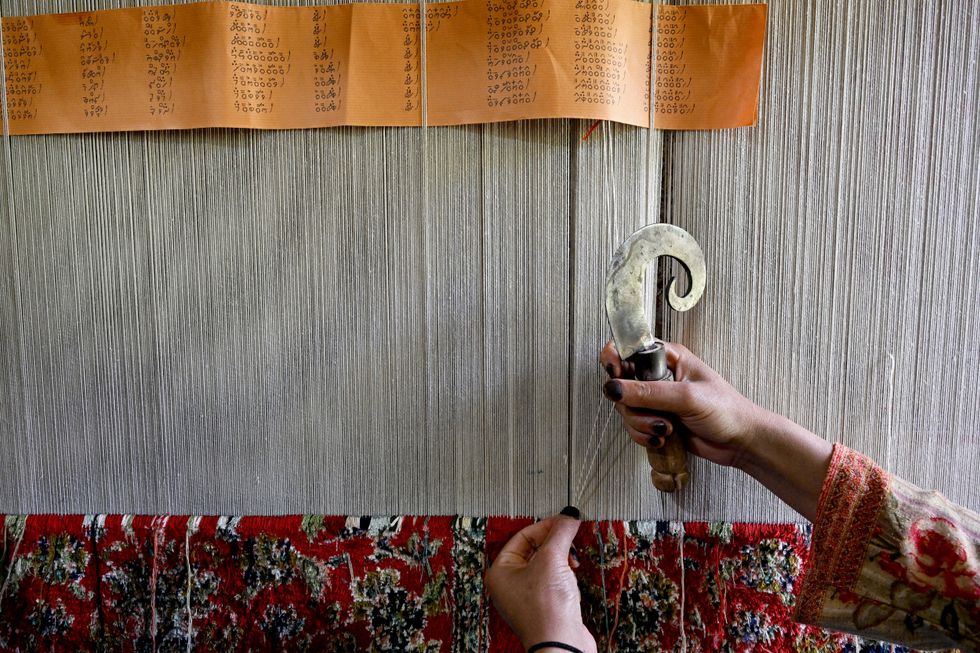 A Kashmiri craftswoman weaves a silk carpet at a factory in SrinagarTauseef Mustafa/AFP via Getty Images
 A worker weaves a carpet at a factory on the outskirts of JammuAlok pathania/AFP via Getty Images
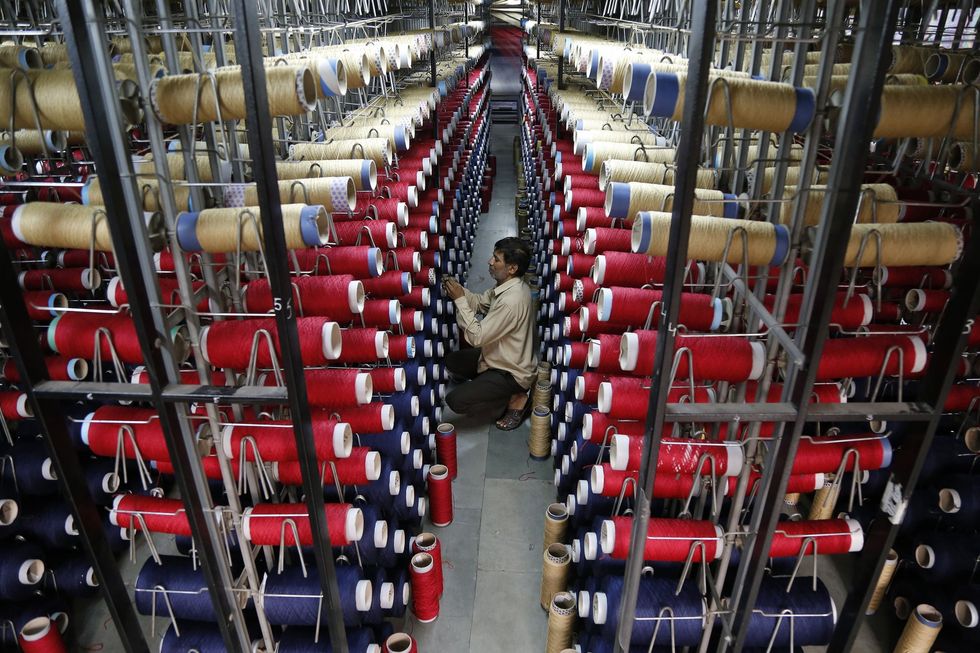 A worker checks thread reels at a carpet factory in JammuAlok pathania/AFP via Getty Images






 Claude.in