
Highlights:
- Team Trump used Swift’s “August” in a TikTok celebrating August under Trump.
- The song was later removed from the post by the copyright owner.
- Swift endorsed Kamala Harris during the 2024 presidential election.
- Trump responded publicly: “I HATE TAYLOR SWIFT!”
- Trump later softened his tone after Swift and Travis Kelce announced their engagement.
The latest Taylor Swift-Trump clash began with a Team Trump TikTok rather than a direct attack from the president.
The account posted a video showing Donald and Melania Trump on a balcony watching fireworks, set to Swift’s “August,” from her 2020 album Folklore. The video carried the message: “Mood because it’s August and Donald Trump is your president.”
The caption appeared deliberately provocative: “I’m sure @Taylor Swift is going to be super excited we used her song! #taylorswift #maga #august.”
But the song did not remain attached to the video. In the US version of TikTok, the audio was later replaced with a notice saying: “The copyright owner hasn’t made this sound available in your country.”
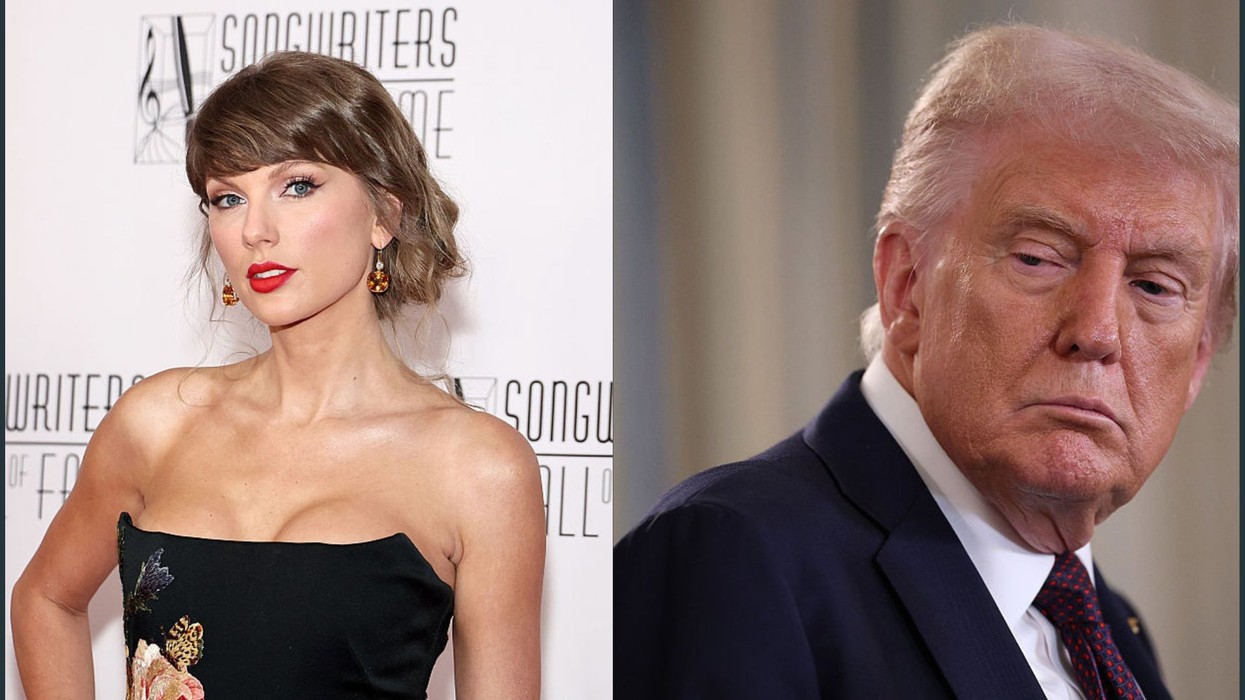
Swift has not publicly said she personally ordered the removal, and there is no indication that Trump was responsible for the copyright decision. But the choice to use one of Swift’s songs was notable because the pop star and Trump have spent years on opposite sides of the political divide.
Swift’s Harris endorsement changed the feud
The relationship deteriorated sharply during the 2024 presidential campaign.
After Swift endorsed Kamala Harris, she described Harris as “a steady-handed, gifted leader” and said she believed the country could accomplish more under “calm and not chaos.”
Trump responded with one of his most direct attacks on the singer, posting: “I HATE TAYLOR SWIFT!”
He also warned that Swift would “pay a price for it in the marketplace.”
The dispute was no longer simply about a celebrity refusing to support Trump. Swift had become one of the most recognizable cultural figures to openly oppose him, giving her political endorsement enormous attention among younger voters and her millions of fans.
Trump continued taking shots at Swift after the election.
In 2025, he wrote: “Has anyone noticed that, since I said ‘I HATE TAYLOR SWIFT,’ she’s no longer ‘HOT?’”
Swift, meanwhile, did not appear to turn the dispute into a continuing public campaign against Trump. Her political intervention was concentrated largely around the 2024 election.
Trump’s attacks have continued even as his tone changed
The feud has produced repeated attempts by Trump and his political operation to needle Swift.
The Team Trump TikTok account, which has about 14 million followers, previously used another Swift song, “Father Figure,” in a video. That audio was also subsequently removed.
The account has also mocked Swift by altering the tracklist for her album Red, changing its title to Red (Donald Trump’s Version) and replacing song titles with pro-Trump jokes.
The White House joined in on Swift-related trolling in 2026, posting an AI-generated image after reports about Swift and Travis Kelce’s wedding.
Yet Trump’s tone has not remained uniformly hostile.
When Swift and Kelce announced their engagement, Trump congratulated them publicly.
“Well, I wish them a lot of luck,” Trump said. “I think it’s, I think he’s a great player, I think he’s a great guy and I think that she’s a terrific person. So I wish them a lot of luck.”
That moment of goodwill has done little to erase the history between them.
The removal of “August” therefore matters less as a standalone copyright dispute than as another reminder of an unusually persistent political feud between a sitting president and one of the world’s biggest pop stars.