
Highlights:
According to a new report by the United Nations, India's economy is expected to maintain solid growth in the coming years. The report, released by the United Nations Economic and Social Commission for Asia and the Pacific, estimates that India will grow by 6.4 per cent in 2026 and 6.6 per cent in 2027.
The report explains that South and South-West Asia saw economic growth of 5.4 per cent in 2025, slightly higher than 5.2 per cent in 2024. India's strong performance mainly drove this growth.
In 2025, India's economy grew by 7.4 per cent. This was 'supported by robust consumption, especially from the rural economy along with goods and services tax rate cuts, and export frontloading ahead of the United States' tariffs," said the report.
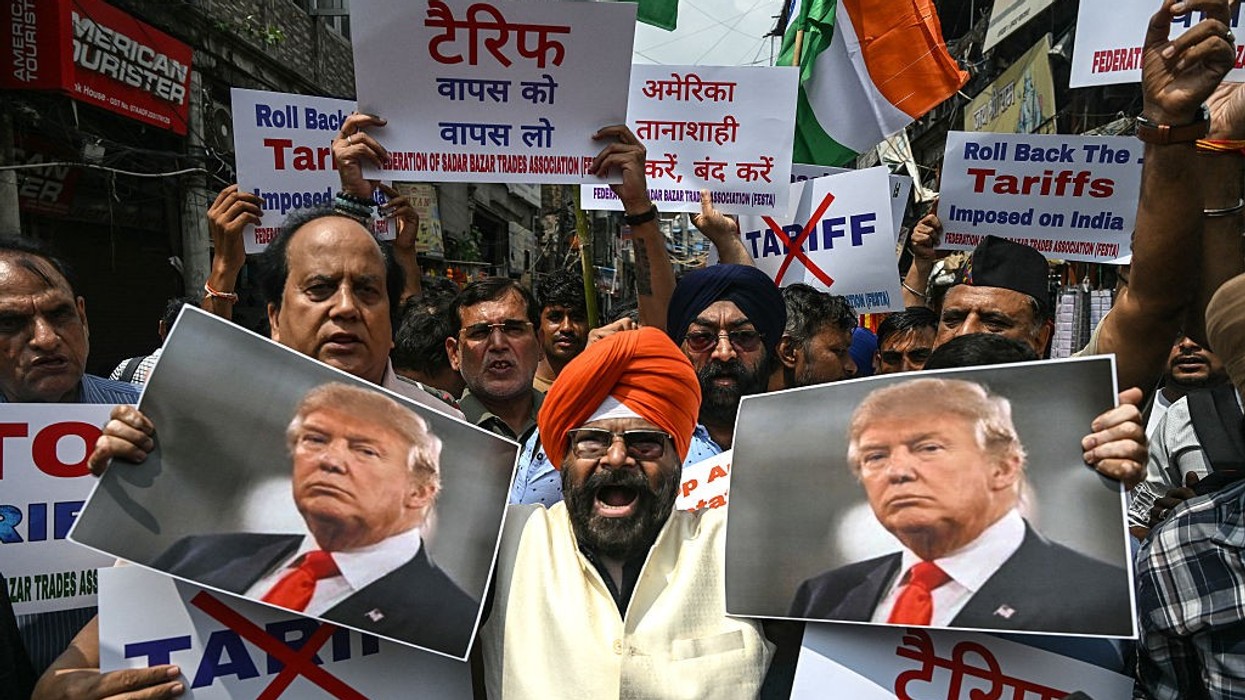
However, growth slowed in the second half of 2025. This happened because exports to the United States dropped by 25 per cent after a 50 per cent tariff was introduced in August 2025. Despite this, India’s services sector continued to play a major role in supporting economic activity.
Inflation in India is expected to remain under control. The report projects inflation at 4.4 per cent in 2026 and 4.3 per cent in 2027, showing a stable price environment.
The report also highlights global challenges. Foreign direct investment (FDI) into developing countries in Asia and the Pacific declined by 2 per cent in 2025, even though global investment flows increased by 14 per cent. Trade tensions and geopolitical uncertainty were key reasons for this decline. Still, India remained one of the top destinations for greenfield investment, attracting about $ 50 billion.
Remittances continue to support many households. In countries like India and the Philippines, about 40 per cent of remittances are used for essential needs such as medical expenses. However, there are new risks. The report states, “However, as the world's largest remittance recipient of USD 137 billion in 2024, India could face a sizeable loss as the United States has levied a 1% tax on all remittances since January 2026.”
The report also looks at green jobs and clean energy. According to estimates by the International Renewable Energy Agency, there were about 16.6 million green jobs worldwide. India accounted for around 1.3 million of these jobs.
It suggests that governments can use clean energy investments to create jobs and boost industries. “Governments can leverage the energy transition to an environmentally sustainable economy to foster new domestic industries and build supportive constituencies,” it said.
India’s production-linked incentive scheme is highlighted as an example of how policy can support green industries like solar energy, batteries, and hydrogen. These efforts can reduce imports and create new economic opportunities.
Overall, the report shows that while challenges exist, India’s economic outlook remains positive and stable.












 A visitor holds a baby at the Empty Sky 9/11 Memorial with One World Trade Center and Lower Manhattan in the distance on August 23, 2026 in Jersey City, New Jersey.Getty
 American flags and flowers line the memorial pool at the National September 11 Memorial to mark the 22nd anniversary of the 9/11 terror attack at the World Trade Center on September 11, 2023 in New York.Getty
 Balbir Singh Sodhi, a Sikh immigrant from India, was shot and killed outside the gas station he owned in Mesa, Arizona. .
 Muslim men pray during a Day of Remembrance open house at the Islamic Cultural Center of New York September 11, 2002 in New York City. Getty