
Highlights
- Piyush Goyal said the India-US interim trade agreement is close.
- US trade officials will visit India from June 1-4 for talks.
- Goyal met leaders from Morgan Stanley, Warburg Pincus, Amneal Pharmaceuticals, and Mastercard.
- Discussions focused on trade, investment, fintech, and supply chains.
- Goyal also led a business delegation to Canada to boost economic ties.
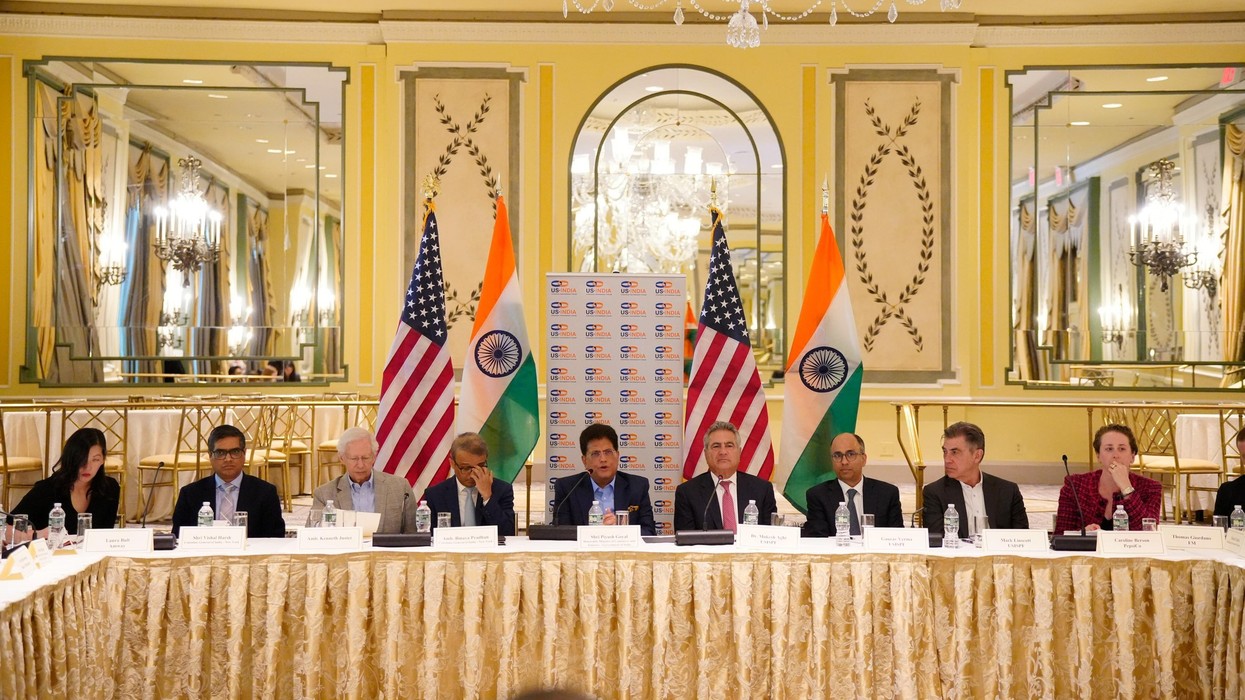
Indian commerce and industry minister Piyush Goyal said India and the United States are close to finalizing an interim trade agreement. He shared the update during a closed-door roundtable discussion with business leaders in New York on Thursday (28).
The event was hosted by the Consulate General of India in New York in partnership with the US-India Strategic Partnership Forum (USISPF). More than 50 leading business and industry executives attended the discussion.
USISPF said Goyal provided an “encouraging update on US-India trade negotiations, assuring the industry that an interim agreement is close."
Goyal said he highlighted India’s economic growth, reforms, and business opportunities under Indian prime minister Narendra Modi’s leadership.
“Discussed ways to further deepen India-US trade, investment, innovation, and supply-chain partnerships for shared prosperity,” he said in a post on X.
USISPF said Goyal stressed that “investor confidence, business stability, and a predictable regulatory environment remain top priorities for the Indian government.” The organization added that the minister’s visit showed India’s strong commitment to expanding economic ties with the United States.
A team from the United States is expected to visit India from June 1-4. The talks will focus on finalizing details of the interim trade pact and continuing negotiations on the larger bilateral trade agreement. Discussions are expected to cover market access, non-tariff measures, and customs facilitation.
USISPF said it “wishes both governments a productive and successful round of negotiations” as the US delegation prepares for the visit.
During his trip, Goyal also held separate meetings with major industry leaders.
In a meeting with Morgan Stanley Chairman and CEO Ted Pick, Goyal said discussions focused on “strengthening long-term investments and institutional partnerships in India, while exploring how Morgan Stanley can leverage the immense opportunities emerging across sectors in the country.”
Goyal also met Warburg Pincus Chairman Chip Kaye. The two discussed the global investment environment and India’s role as a major growth and innovation center.
“Highlighted that with scale, talent, rising domestic demand, and a steady policy push, India continues to create new opportunities across sectors for global investors,” Goyal said.
In his meeting with Amneal Pharmaceuticals Co-Founder and Co-CEO Chintu Patel, Goyal discussed investment opportunities in India’s pharmaceutical sector and possible cooperation in innovation.
Goyal also met Mastercard CEO Michael Miebach. He said they discussed “deepening collaboration in digital commerce, digital security, and next-generation payment solutions.”
“Conversations centred around India's growing digital economy, robust digital public infrastructure, and its emergence as a trusted global hub for fintech innovation,” Goyal added.
Before visiting New York, Goyal led a business delegation of more than 150 members to Canada from May 25-27. The visit aimed to attract investments, strengthen partnerships, and support talks for the proposed free trade agreement between India and Canada.
Following the visit, VFS Global Head of Americas Amit Kumar Sharma said the trip and the strong business participation “reflects a renewed momentum in the India–Canada relationship at a critically important time.”
He added that business leaders expect the India-Canada relationship to become “increasingly dynamic" in the coming years through stronger economic cooperation, education partnerships, and business connections.
“The true strength of any bilateral relationship is measured not only by trade, but by the ease and confidence with which people can move across borders. As mobility demand continues to grow, the focus must now shift toward building operational capacity, trusted systems, and seamless customer experiences that can support this next phase of engagement between the two nations,” Sharma said.