
Highlights
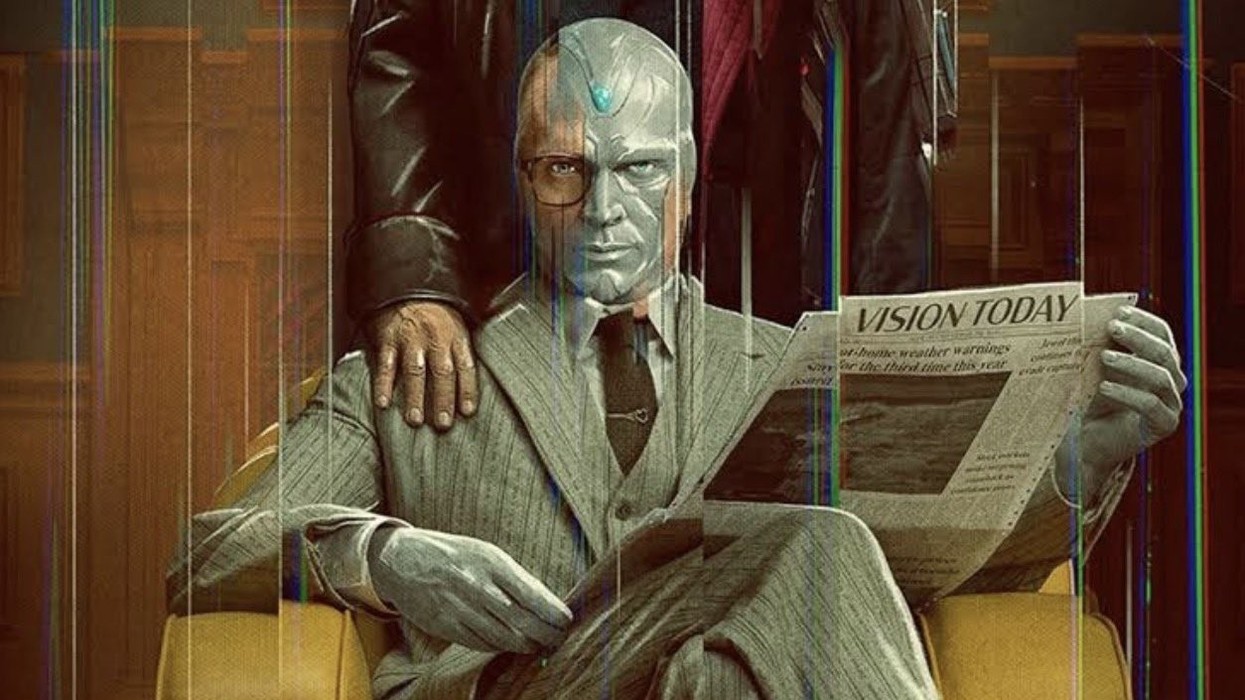
- Paul Bettany returns as White Vision in Marvel’s long-awaited follow-up to WandaVision.
- James Spader’s Ultron emerges as a standout in the first two episodes.
- Vision’s colder personality may take some getting used to for longtime MCU fans.
Marvel is finally revisiting one of the biggest unanswered questions from WandaVision, but VisionQuest takes an unexpected approach to its central character. The Disney+ series brings back Paul Bettany as White Vision, the emotionless version of the Avenger who left Westview at the end of the 2021 series.
The first two episodes explore his struggle to understand humanity while introducing familiar artificial intelligence characters and bringing James Spader back as Ultron. Although the series has promising elements, its biggest challenge may be getting audiences to connect with a version of Vision who feels very different from the hero they remember.
A very different Vision
Five years after WandaVision, White Vision is still trying to understand his place in the world. He works in a bar during the day, struggling with ordinary human interactions, while spending his nights inside a digital construct populated by AI characters designed by Tony Stark.
The setting offers an opportunity to explore Vision’s identity, but its elaborate mental world feels familiar after the reality-bending storytelling of WandaVision and Loki.
The bigger adjustment is Bettany’s portrayal of Vision. The original character was known for his compassion, wisdom and understanding of humanity despite being a synthetic life-form. This version is colder, more distant and less sympathetic, with little appreciation for the people around him.
That contrast is central to the story. Vision must discover whether he can develop the emotional maturity of his predecessor, but his detached personality makes him difficult to connect with during the opening episodes. The second episode begins to address this problem, although longtime fans may need time to adjust.
Ultron steals the spotlight
One of the series’ biggest strengths is James Spader’s return as Ultron. The villain, introduced in Avengers: Age of Ultron (2015), brings an entertaining mix of arrogance, sharp humor and menace to the story.
Rather than serving as a straightforward enemy, Ultron becomes an uneasy counterpart to Vision. Their dynamic creates an intriguing reversal, with Ultron offering insights into humanity while Vision struggles to understand it.
Spader makes the most of the role, giving Ultron a distinctive personality that adds energy to the episodes. His performance is a major reason to keep watching, particularly when Vision’s emotional distance makes the central storyline harder to engage with.
The supporting cast also adds depth. Orla Brady appears as F.R.I.D.A.Y., Emily Hampshire plays E.D.I.T.H., and James D’Arcy returns as J.A.R.V.I.S., bringing familiar AI characters into human form within Vision’s mind.
Ruaridh Mollica also makes an impression as Tommy, whose struggle to reconcile conflicting memories gives the second episode another compelling emotional thread. His presence helps push Vision toward a greater understanding of himself.
Meanwhile, Todd Stashwick’s Paladin and Diane Morgan’s unnamed handler introduce a different source of tension. Their exchanges provide some campy humor while establishing Paladin as a credible threat, despite Vision’s considerable powers.
Is VisionQuest worth watching?
VisionQuest arrives later than many fans might have expected, but it finally moves forward with a story left unresolved by WandaVision. Its opening episodes establish an interesting question about identity and whether a recreated being can develop the humanity of the person whose memories he carries.
However, the series does not immediately recapture the emotional connection that made the original Vision such a memorable MCU character. Its familiar-looking digital setting and emotionally detached protagonist make for an uneven start.
Ultron’s return, the supporting cast and the progress made by the second episode offer reasons for optimism. While VisionQuest has not delivered a flawless opening, it lays the groundwork for a potentially rewarding journey.
Verdict: The first two episodes may divide fans over Vision’s new personality, but James Spader’s Ultron provides a compelling reason to continue watching.