
- More than 600 dead: Nepal’s flood death toll has crossed 600, with more than 2,400 people still missing.
- A 97-year-old survivor: Guna Maya Bohara was pulled alive from the rubble after a four-hour rescue.
- Homes vanished: Survivors watched entire settlements disappear beneath mud and floodwaters.
- A night in the forest: Stranded survivors relied on food dropped by a Nepalese Army helicopter.
- Families still waiting: Some survivors remain separated from missing parents, spouses and children.
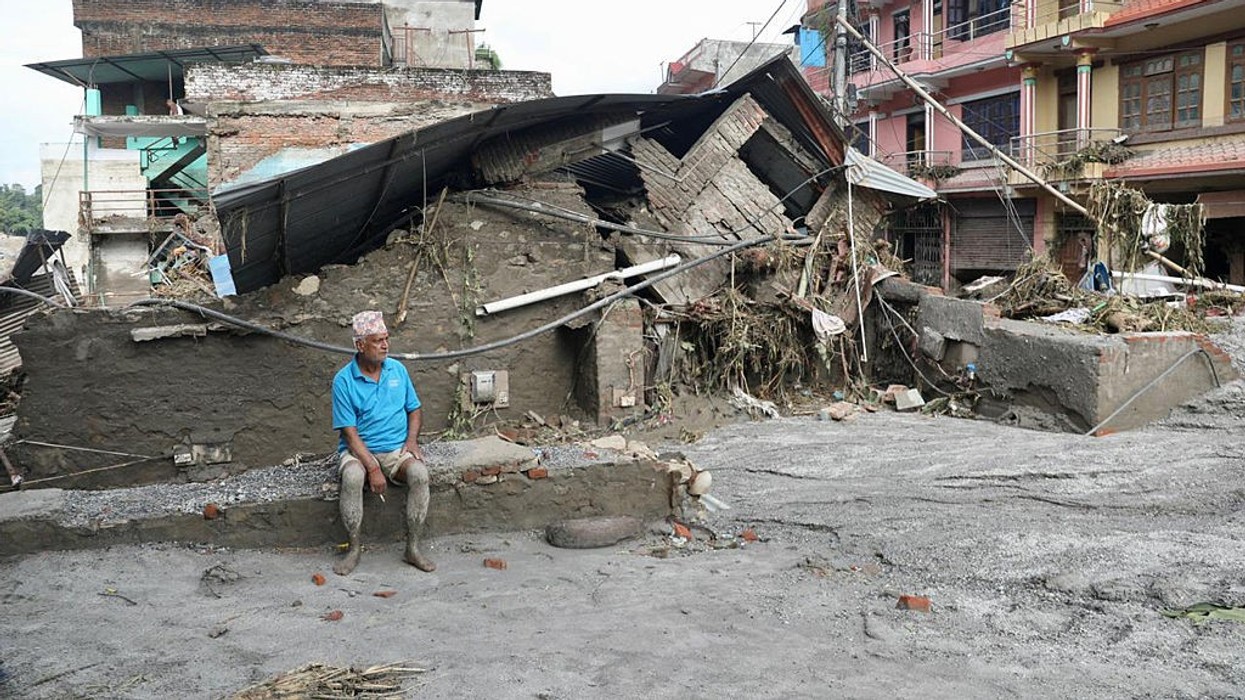
The mud covered nearly everything.
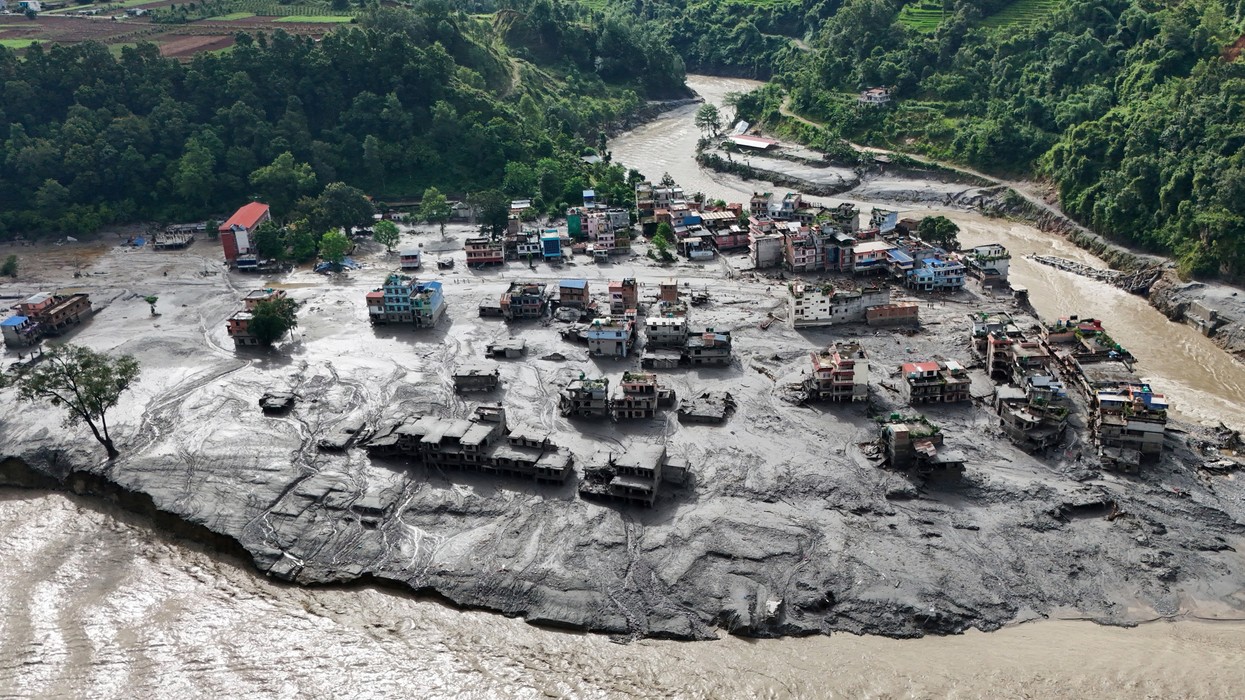
Buildings had collapsed. Roads had disappeared. Entire sections of settlements were swallowed by torrents of water and black earth. In the middle of the destruction, a 97-year-old woman was carried to safety in the scoop of a construction digger — alive after spending hours buried beneath the rubble.
Guna Maya Bohara had survived.
Her rescue, which took four hours, has become one of the most striking images from Nepal's devastating flash floods. Doctors say she is recovering in a hospital. Her great-nephew, Dipak, told BBC Nepali that she looked like “a warrior” returning victorious from battle.
But for many others, there was no such victory.
Nepal's death toll from the floods crossed 600 on Saturday, while more than 2,400 people remained missing as rescue teams continued searching devastated communities.
Behind those numbers are people who ran without knowing where they were going, families separated in the chaos and survivors who spent long, terrifying hours wondering whether anyone would come for them.
“I never imagined I would get a second chance at life”
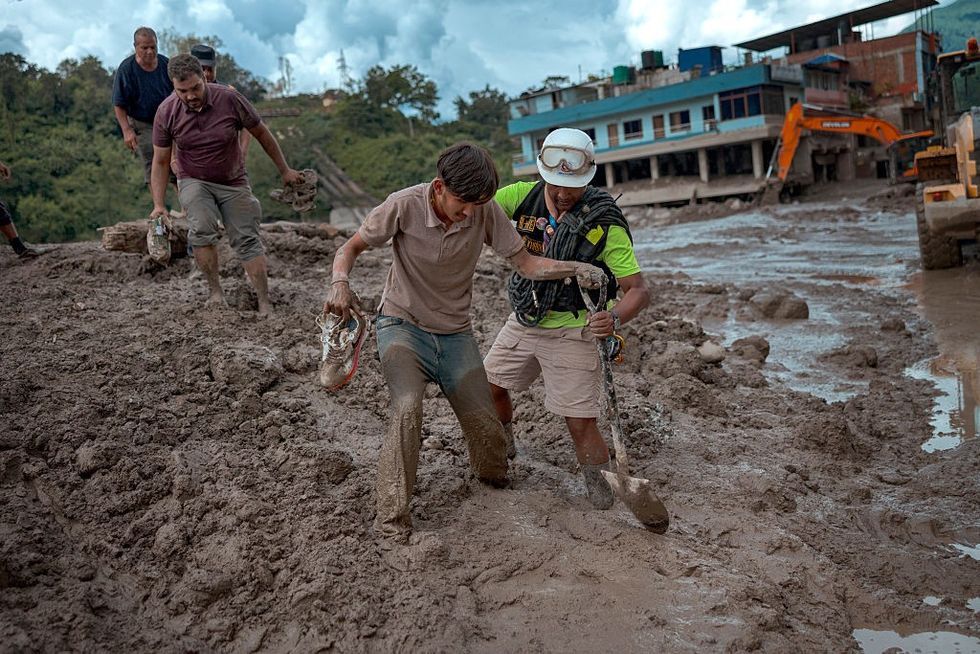 A rescuer assists a resident through heavy mud following flash floods on August 27, 2026 in Trishuli, Nepal. A sudden flood swept through the Bhote Koshi River basin in northern Rasuwa on August 26, damaging settlements, roads and energy infrastructure as rescue teams searched for residents and foreign travellers reported out of contact. Hundreds were reported missing, as the death toll started to climb.Getty Images
For Raju Budhathoki, the disaster began with a strange shaking beneath his feet.
Budhathoki, a customs agent in Timure near the Nepal-Tibet border, was resting in his room Wednesday morning when the hillside suddenly began to move.
At first, he thought an earthquake had struck.
He ran outside and headed toward a nearby police post, only to discover that the police officers were running too.
As he scrambled over a wire fence, he injured his hand. Then he looked back.
What he saw was almost impossible to comprehend.
Houses in the Timure market were being swept away one after another. Some disappeared into the river within seconds.
Budhathoki kept running.
He eventually reached a forest about 500 meters uphill from the settlement. There, he found a place to survive.
From the safety of the trees, he looked down at what had been his town.
“From the forest, when I looked down at Timure, I never imagined I would get a second chance at life like this,” he told The Kathmandu Post from his hospital bed in Trishuli.
His words capture the bewilderment of survivors across Nepal: the feeling of being alive when so many around them were suddenly gone.
Another customs agent, Prakash Gautam, also escaped Timure.
He remembers hearing a huge rumbling sound before darkness seemed to consume the market. A black cloud covered the sky.
Gautam ran from his room without knowing which direction would lead him to safety.
During the escape, he injured the little toe on his left foot. But he reached the forest above the settlement.
From there, he watched the floodwaters carry bodies and destroy what remained of Timure.
There was nowhere to go.
So Gautam and others spent the night in the forest.
They survived on packets of noodles dropped from a Nepalese Army helicopter.
The following morning, around 10 a.m., another Army helicopter arrived.
It carried them to Bidur.
Only then, Gautam said, did the reality of survival begin to sink in.
“Only after boarding the helicopter did I feel that I had actually survived,” he told The Kathmandu Post.
“If the current had not thrown me towards the slope, I would not be alive today”
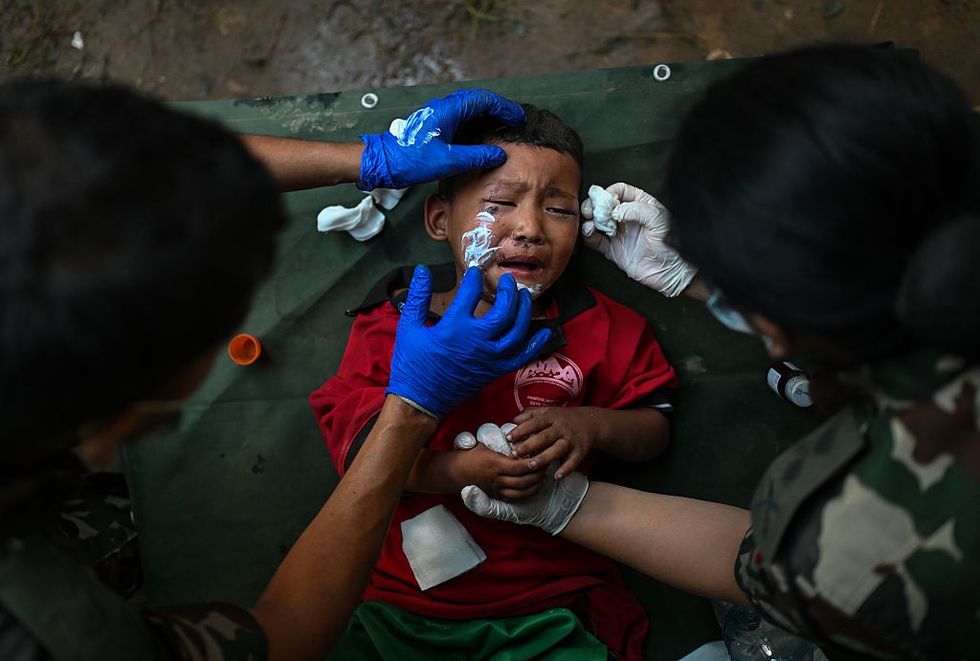 Rescue personnel provide medical treatment to a child at an army rescue camp in Trishuli Batar, Nepal, on August 27, 2026. A sudden flood swept through the Bhote Koshi River basin in northern Rasuwa on August 26, damaging settlements, roads and energy infrastructure, as rescue teams searched for residents and foreign travellers reported out of contact. Hundreds were reported missing as the death toll began to climb. Getty Ima
For Tulsi Bahadur Bhandari, survival was almost entirely a matter of chance.
He was trying to flee when a torrent of black mud and floodwater tore through his settlement.
Houses began collapsing around him as he ran.
Then the current struck.
The force of the water and mud threw Bhandari toward a hillside.
That unexpected movement saved his life.
“If the current had not thrown me towards the slope, I would not be alive today,” Bhandari told The Kathmandu Post from his hospital bed.
For survivors like Bhandari, there was no carefully planned escape. There was simply a moment when the flood decided who would be swept away and who would remain alive.
In Uttargaya village in Rasuwa district, 21-year-old laborer Sujal Thapa was asleep when the water arrived.
He did not hear it coming.
“I was sleeping and was not aware when the flood came. I was swept several metres away from my house, where security personnel found and rescued me hours later,” Thapa told Onlinekhabar.
The flood carried him away from his home and toward the riverbank.
He was eventually found unconscious.
His leg, head and fingers were injured.
His house was gone.
And then came the question that no rescue team could immediately answer: Where was his mother?
Thapa was recovering at Tribhuvan University Teaching Hospital in Kathmandu, but his mother remained missing.
His father was still in a village in Rasuwa.
Thapa could only hope he would see him again.
“The village where I had been staying had already been swept away”
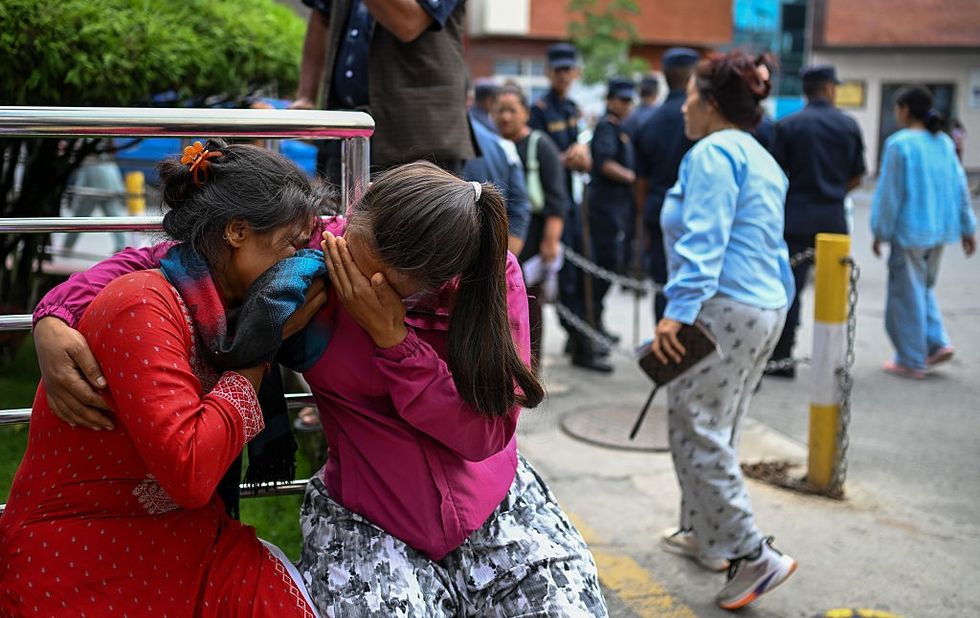 Family members of missing flood victims react at the emergency ward of the Maharajgunj Medical Campus, part of the Tribhuvan University Teaching Hospital, on August 28, 2026 in Kathmandu, Nepal. Authorities said the flash floods were triggered after a mass of ice, mud and rock collapsed into a Himalayan river near the Nepal-China border, leaving hundreds dead or missing and causing widespread damage in affected districts. Authorities continued the gruelling search for victims, many buried under metres of mud, as both China and Nepal issued fresh flooding alerts.Getty Images
For Sachin Khati, 33, the disaster began with a decision that would become painfully significant.
Khati had been staying with his maternal uncle, Raj Kumar Diyali, who operated a jewelry business in Rasuwa. Khati was there with his wife and four-year-old son.
On Wednesday morning, before the flood struck, Diyali sent Khati to Chilime for work.
Then the news came.
A flood had hit.
Khati rushed back.
But when he arrived, the place where his family had been was no longer there.
“When I hurried back after hearing about the flood, the village where I had been staying had already been swept away,” he told the Kantipur newspaper.
His wife was missing.
His four-year-old son was missing.
His uncle was missing.
Khati survived, but survival did not mean relief.
For him, being alive meant confronting the terrible uncertainty of not knowing whether the people he loved were alive or dead.
That uncertainty is being repeated across the flood-ravaged areas of Nepal.
Rescue teams are still searching. Helicopters continue to carry survivors away from isolated areas. Communities are beginning the painful task of looking through destroyed homes and searching for relatives.
And amid the devastation, stories of survival continue to emerge.
There is the 97-year-old woman pulled alive from rubble.
There are the customs agents who spent a night in a forest, waiting for a helicopter.
There is the young laborer who woke only after the flood had carried him away from his home.
There are people who survived because a current pushed them toward a hillside rather than into a river.
And there are survivors like Khati and Thapa who remain trapped in a different kind of waiting — alive, but without knowing whether their families survived.
Nepal's flood disaster is measured in death tolls, missing-person figures and destroyed settlements.
But for those who lived through it, the numbers cannot describe what happened.
They remember the sound.
The darkness.
The mud.
The houses disappearing.
The desperate running.
And the moment, sometimes hours later, when they finally realized they were still alive.









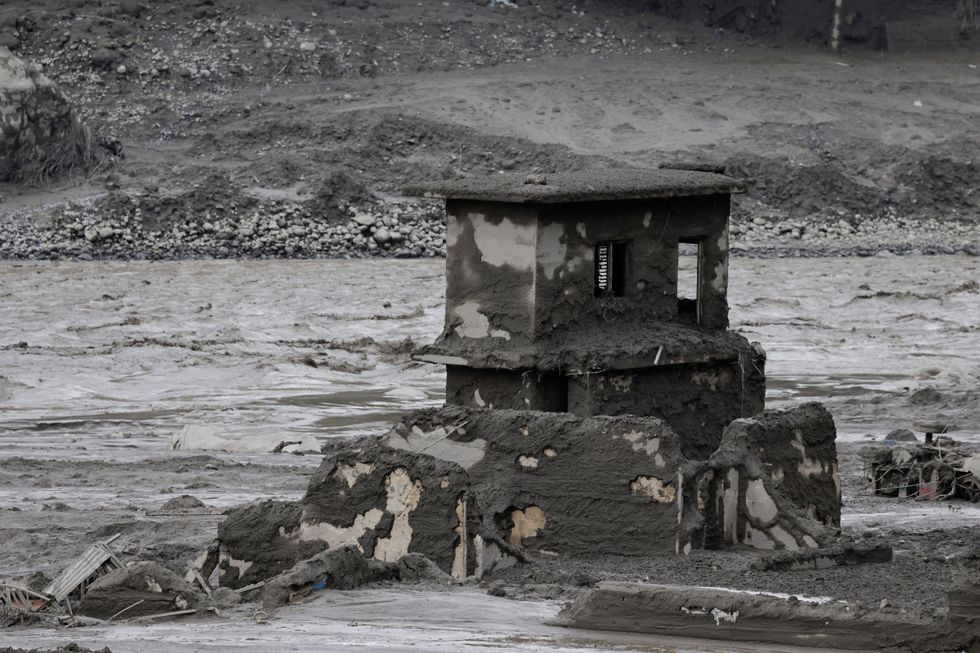 A mud-covered building following a flash flood at Trishuli in Nuwakot district, Nepal, August 26, 2026.Reuters.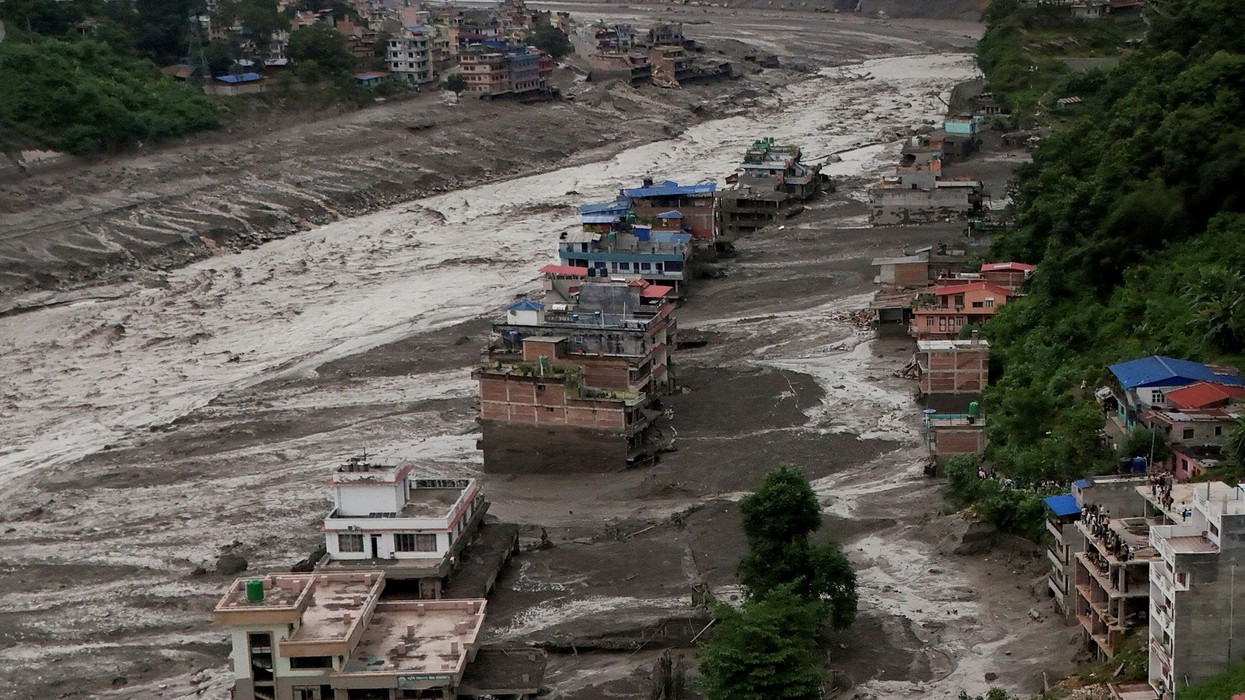
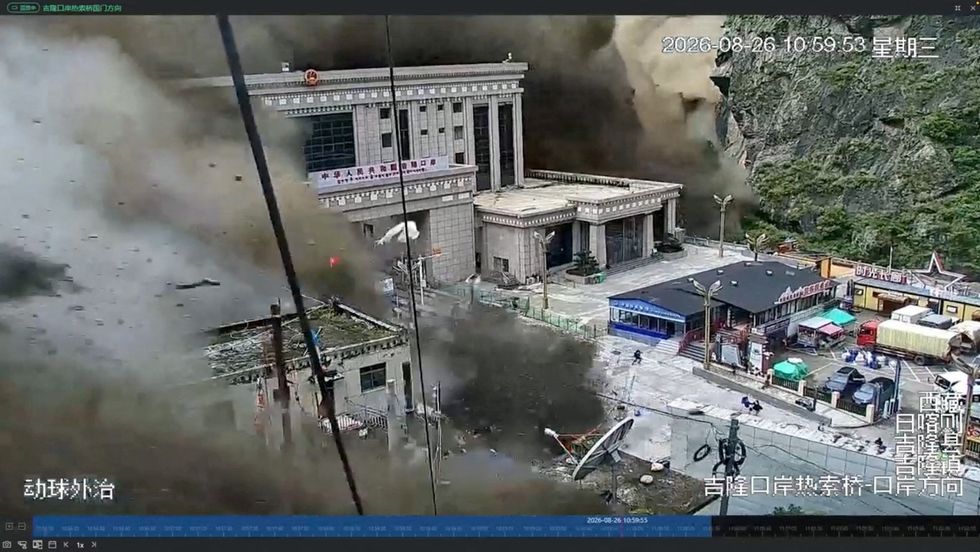 A CCTV footage shows people running away as wall of mud and water destroys buildings in a valley at Nepal-China border, in Gyirong, Tibet region, China August 26, 2026, in this screengrab obtained from a social media video.Reuters