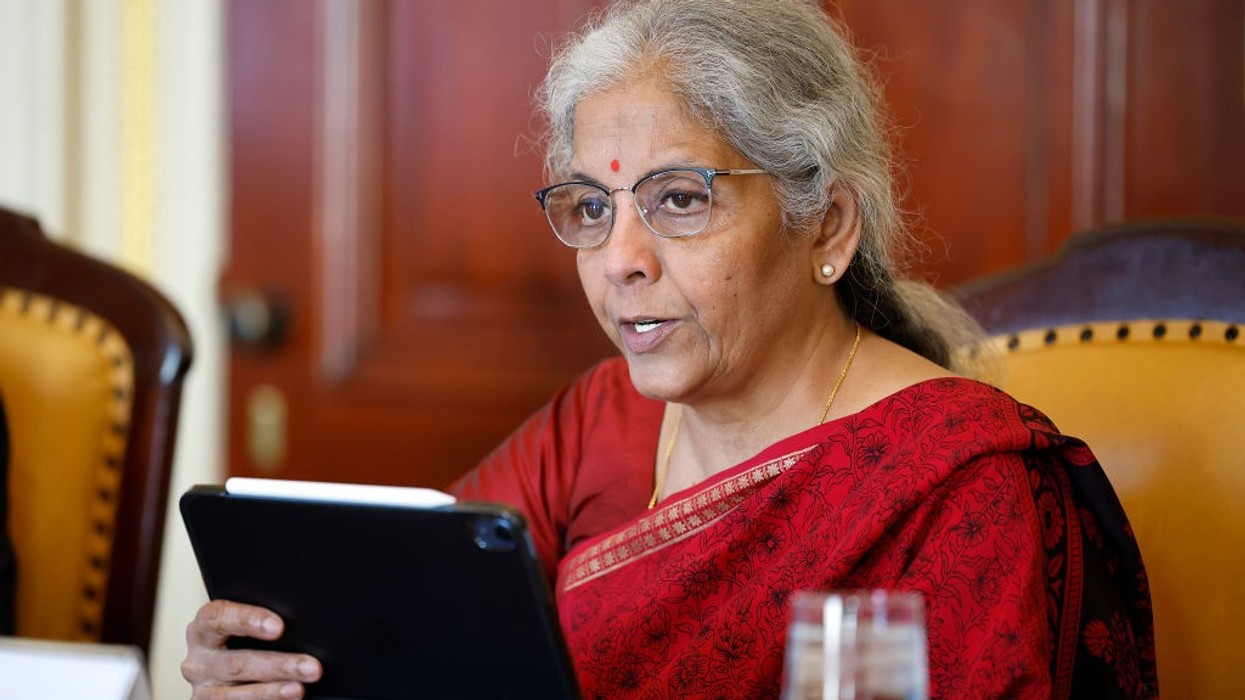

- Sitharaman invited companies to establish manufacturing and innovation bases in India.
- India wants investors to use the country as a platform for global markets.
- Opportunities are expanding in AI, semiconductors, electronics and advanced technologies.
- The financial hub had 1,250 registered entities as of June 2026.
- India is positioning itself as a long-term alternative as global companies reassess supply chains.
India wants to be more than a huge consumer market. It wants to become the place where global companies manufacture, innovate and build products for customers around the world.
Finance Minister Nirmala Sitharaman delivered that message to leading investors and business executives at a high-level Business Roundtable in Chicago on Friday, inviting global companies to establish manufacturing bases, technology centers and innovation operations in India.
The meeting, organized by India's Consulate General in Chicago in association with the US-India Strategic Partnership Forum, focused on “Manufacture in India, for India and for the world.”
Sitharaman highlighted India's economic growth, reform efforts, infrastructure expansion, technology ecosystem and skilled workforce as pillars of its investment proposition.
“The policy environment is increasingly focused on enabling businesses to invest, manufacture, innovate and expand,” she said.
She urged global partners to co-develop, co-produce and build for international markets, saying India should be viewed not simply as a market to serve but as a platform from which companies can build for the world.
India looks beyond assembly lines
Sitharaman said India's opportunity extends across manufacturing, artificial intelligence and digital technology, financial services, infrastructure, food processing, defense and advanced technologies.
“As global companies reassess supply chains and capital allocation, India offers not only scale as a market, but increasing depth as a long-term investment and operating platform,” Sitharaman said.
She pointed to India's Digital Public Infrastructure, including Aadhaar, UPI, DigiLocker, ONDC and India Stack, as examples of technology platforms operating at population scale.
The next opportunity, she said, is to move toward higher-value activities.
“The next opportunity is to build higher-value businesses in AI, engineering, analytics, product development, semiconductors and electronics, with India's Global Capability Centres increasingly becoming global innovation hubs,” she said.
The government is also seeking to deepen India's manufacturing capabilities beyond final assembly, with production-linked incentives and other targeted policies supporting greater domestic production of components, engineering and advanced technologies.
With global supply chains being reconfigured, Sitharaman said India offers a combination of a large domestic market and increasingly competitive manufacturing capabilities.
GIFT city and infrastructure offer new opportunities
Sitharaman also highlighted the expansion of India's financial and infrastructure ecosystems.
GIFT City, India's emerging international financial center, had 1,250 registered entities as of June 2026, according to the minister. The hub offers opportunities in banking, fund management, reinsurance, aircraft and ship leasing, sustainable finance and other cross-border financial services.
She invited global institutions to explore GIFT City as a gateway to India's financial ecosystem and a link between international capital and Indian opportunities.
Infrastructure is another major area of potential investment.
India's build-out of dedicated freight corridors, railway modernization, electrification and high-speed rail is creating opportunities across engineering, technology, materials and specialized equipment, while also opening space for long-term institutional investment.
Sitharaman pointed to the National Investment and Infrastructure Fund as a commercially driven platform through which international investors can participate.
From food processing to advanced technology
The investment pitch also extends beyond traditional manufacturing and infrastructure.
India's agricultural base, rising incomes and changing consumer patterns are creating opportunities in food processing, automation, packaging, logistics and cold-chain infrastructure.
Sitharaman said companies can build businesses serving both India's growing domestic market and customers overseas.
Defense and emerging technologies are another part of the government's strategy.
Through initiatives such as Atmanirbhar Bharat and iDEX, India is seeking to strengthen domestic capabilities in areas including drones, autonomous systems and other advanced technologies.
The broader message from Chicago was clear: India wants global companies to see the country not simply as a destination for sales, but as a place to design, manufacture, innovate and export.
As companies rethink where they source, manufacture and invest, New Delhi is positioning India's combination of talent, scale, infrastructure and technology as a long-term global opportunity.
Sitharaman is on a six-day visit to the United States. She is scheduled to attend the G-20 Finance Ministers' meeting in Asheville, North Carolina, and visit New York.





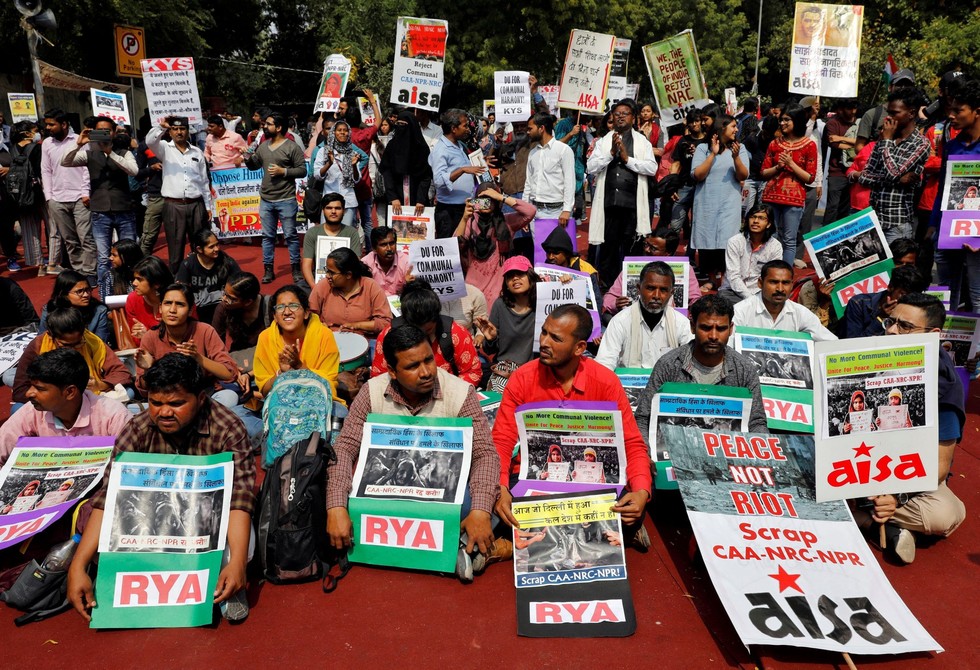


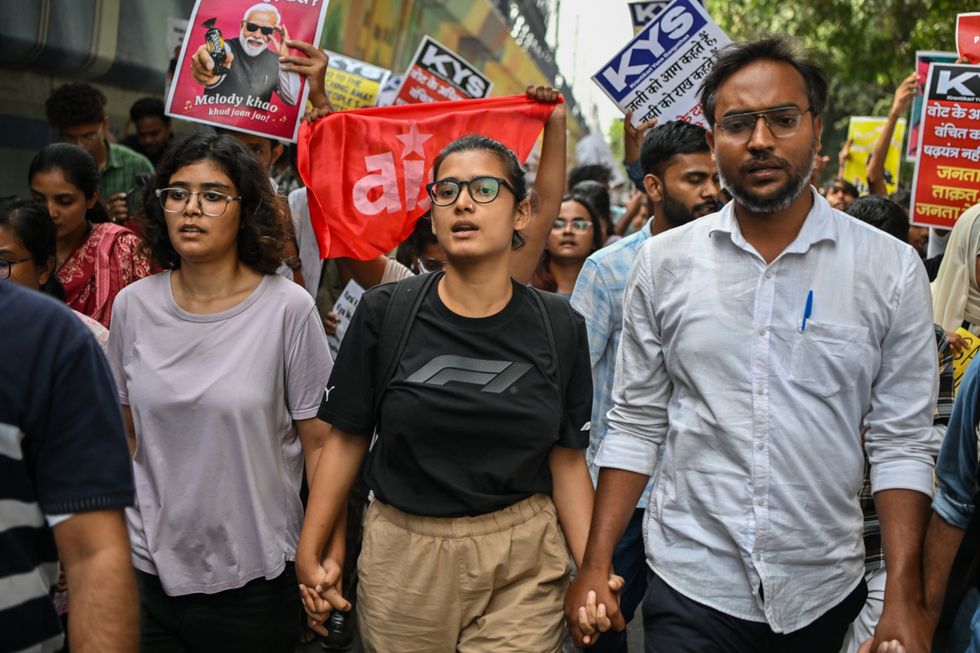 All India Students Association president Neha Bora, wearing a black shirt, takes part in a march during a protest on October 11, 2026 in New Delhi,.Getty
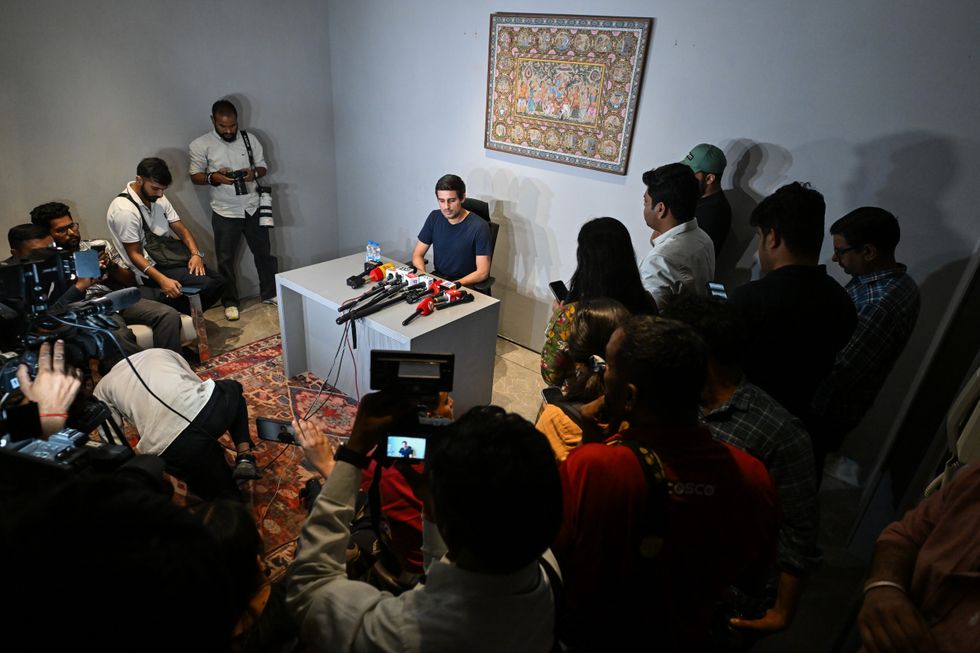 Youtuber Dhruv Rathee speaks during a press conference following his release from police detention on October 11, 2026 in New Delhi.Getty