
Highlights:
- Rebeca Grynspan received the highest support in the first informal UN Security Council straw poll.
- Guyana's Carolyn Rodrigues Birkett finished second, followed by IAEA chief Rafael Grossi.
- The Security Council will hold additional straw polls in the coming months.
- The UN General Assembly will appoint the next Secretary-General based on the Security Council's recommendation.
- The United Nations has never had a woman serve as Secretary-General in its 80-year history.
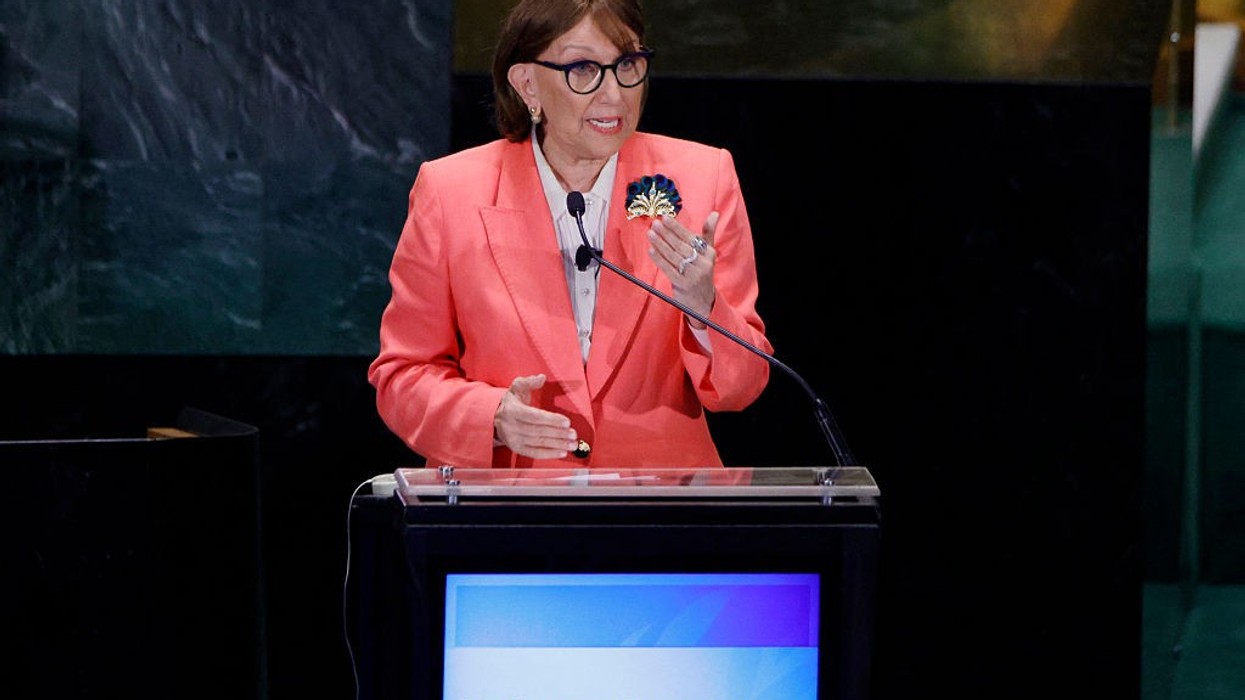
Former Costa Rican vice president Rebeca Grynspan has emerged as the leading candidate to become the next United Nations Secretary-General after securing the strongest support in the first informal "straw poll" conducted by the UN Security Council.
The 15-member Security Council held the closed-door vote on Thursday (30) to gauge the level of support for candidates seeking to replace Antonio Guterres, whose second five-year term will end in December 2026. The straw poll is non-binding and serves as an early indicator of where candidates stand before formal voting begins.
According to sources, Grynspan, who currently serves as the Secretary-General of the United Nations Conference on Trade and Development (UNCTAD), received 10 "encourage" votes, one "discourage" vote, and four "no opinion" votes. Her result placed her at the top of the field in the first round of voting.
Guyana's Permanent Representative to the United Nations, Ambassador Carolyn Rodrigues Birkett, ranked second. She received nine "encourage" votes, two "discourage" votes, and four "no opinion" votes.
International Atomic Energy Agency (IAEA) Director General Rafael Grossi placed third. He secured seven "encourage" votes, two "discourage" votes, and six "no opinion" votes.
The remaining candidates in the race include former Chilean President and former UN High Commissioner for Human Rights Michelle Bachelet, former president of the UN General Assembly Maria Fernanda Espinosa Garces, former UN Under-Secretary-General Virginia Gamba, former Senegalese President Macky Sall, and Ugandan politician Olara Otunnu.
Following the straw poll, Security Council President for July, Congo's Permanent Representative Ambassador Zenon Mukongo Ngay, said candidates would receive their results through the permanent representatives of the countries that nominated them.
Ngay also said the Council had not yet decided when the next informal straw poll would take place. He added that the decision would be made during Denmark's presidency of the Security Council in August.
When asked why the results were not officially released, Ngay said, "The thinking behind it is to keep everything close, and we want transparency at the same time, efficiency, but we don't want speculations on that.”
Speaking after the meeting, US Ambassador to the United Nations Mike Waltz said the Security Council would reach its conclusions "in the coming months" and emphasized the need for a Secretary-General who would reform the organization, make it "leaner and more fit for purpose", and "more relevant on the international stage".
Waltz also called for consolidating UN agencies and directing more resources toward field operations instead of headquarters.
The UN Secretary-General is appointed by the 193-member UN General Assembly based on a recommendation from the Security Council. The process gives significant influence to the Council's five permanent members—China, France, Russia, the United Kingdom, and the United Stateseach of which holds veto power.
The United Nations has never had a woman serve as Secretary-General during its 80-year history. A UN General Assembly resolution adopted in September last year acknowledged this "with regret" and encouraged member states to "strongly consider nominating women as candidates" for the organization's top position.
Although there is no formal regional rotation for the post, many diplomats have argued that the next Secretary-General should come from Latin America. As the selection process moves forward, both the United States and China have publicly expressed support for electing a woman to lead the United Nations.