
- Thousands returned to protest despite police action the previous day.
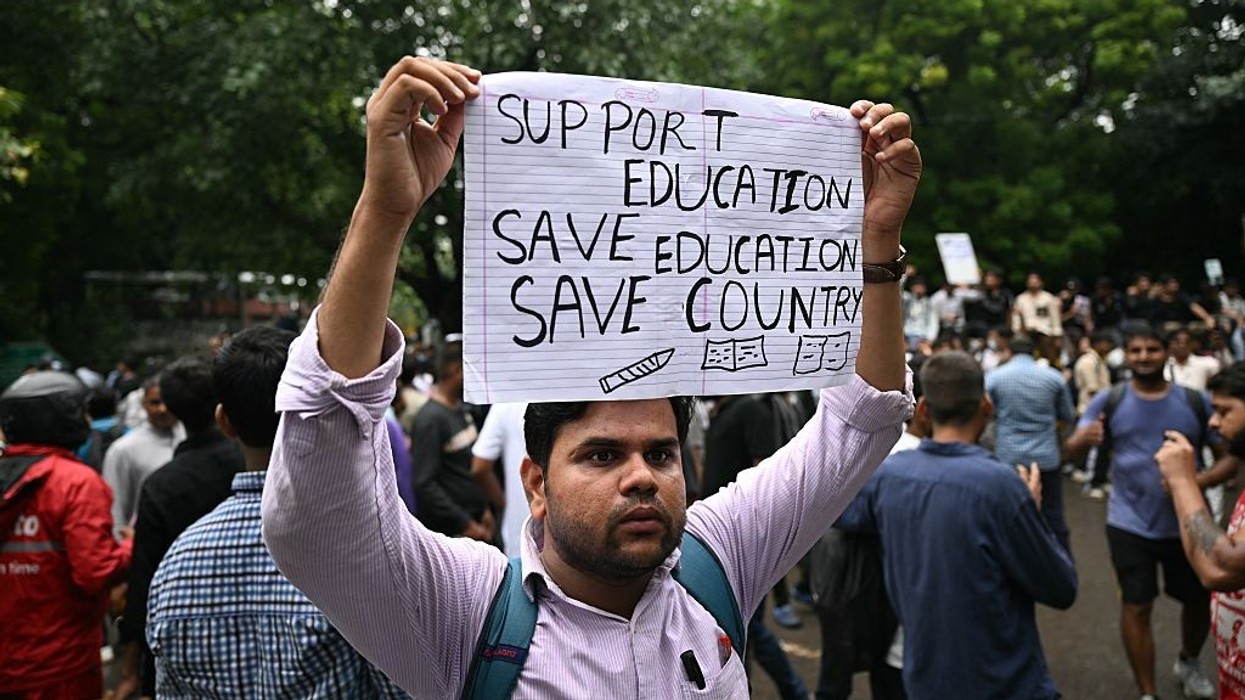
- The youth-led Cockroach Janta Party is demanding education reforms.
- Protesters accuse police of using excessive force, including tear gas and batons.
- Dozens of demonstrators were held at Delhi's Chhatrasal Stadium after being detained.
- Many protesters say the movement has grown beyond education into a broader demand for accountability.
Thousands of protesters filled the streets of India's capital, New Delhi, on Tuesday (21), refusing to back down after a police crackdown on one of the country's biggest youth-led demonstrations in recent years.
The protests are being led by the Cockroach Janta Party (CJP), a new political movement that has gained support among students and young adults frustrated by repeated exam paper leaks, allegations of corruption in the education system, and a lack of accountability from the government.
The movement is demanding the resignation of India's Education Minister, Dharmendra Pradhan, along with major reforms to the country's education system.
Many demonstrators also say the protests have now become about much more than education.
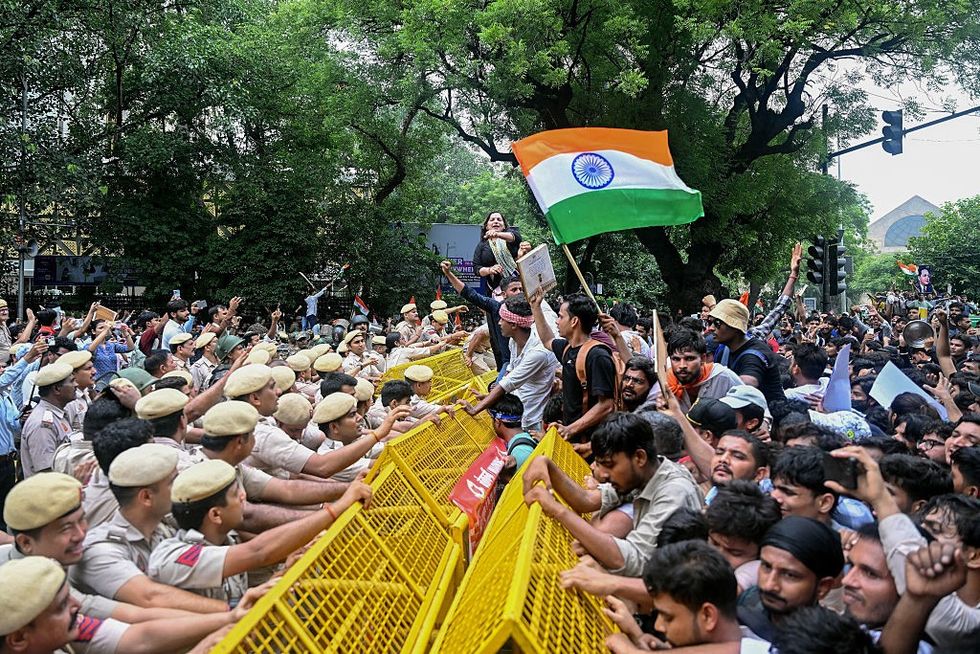 Activists and supporters of the Cockroach Janta Party (CJP) clash with police personnel during a protest demanding the resignation of India's Education Minister Dharmendra Pradhan over alleged NEET examination irregularities in New Delhi on July 20, 2026. India's riot police baton-charged protesters in New Delhi as they tried to march to parliament on July 20, escalating a protest over irregularities in major examinations.Getty Images
Twenty-five-year-old Taru came prepared for another day on the streets. In one hand she carried an anti-government poster. In the other, she held a bicycle helmet.
"We need to have protection in case Delhi police beat us up again," she said. "We are not scared of them and we won't run away, no matter what they do. We'll stay here till they listen."
On Monday (20), organizers estimated that more than 50,000 people gathered in central New Delhi. The crowd was largely made up of students and young professionals in their late teens and twenties.
The demonstration began peacefully. Protesters shared food and water, helped each other cope with the intense summer humidity, and chanted slogans calling for education reform.
But tensions escalated after authorities prevented the crowd from marching toward India's Parliament. Police blocked roads with barricades, restricted internet access in parts of the city, and confined protesters to a designated area before using batons and tear gas to disperse the gathering.
Police said they acted after protesters became disruptive. Organizers and witnesses strongly disputed that account, saying officers launched unprovoked attacks against demonstrators, including women and children.
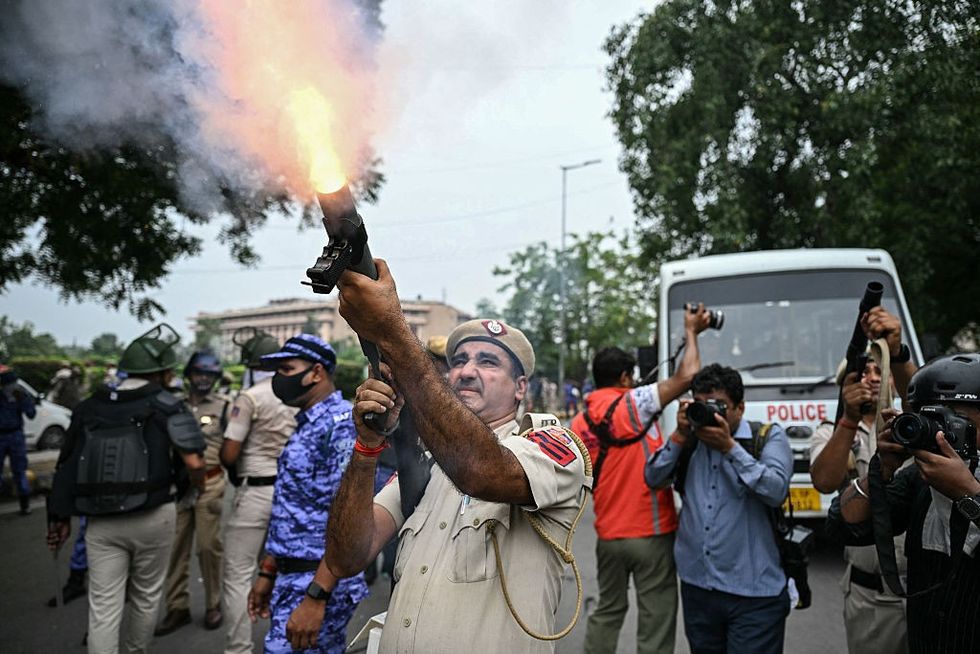 A police personnel fires tear gas shells to disperse activists and supporters of the Cockroach Janta Party (CJP) during a protest demanding the resignation of India's Education Minister Dharmendra Pradhan over alleged NEET examination irregularities in New Delhi on July 20, 2026. India's riot police baton-charged protesters in New Delhi as they tried to march to parliament on July 20, escalating a protest over irregularities in major examinations.Getty Images
Around 60 people were reportedly injured, and at least one protester remained on a ventilator in intensive care.
"The day was so wholesome to start with, there was so much love," said Taru. "But after 3pm the police started attacking us. They were bashing us like anything. I saw them come up and hit people on the head as they were sitting down on the pavement doing nothing. And then as we were running, they opened up teargas on us."
Taru described the police response as "a big mistake. Now we are more agitated than ever."
Despite the violence, protesters returned Tuesday (21) to Jantar Mantar, a historic protest site in New Delhi that has long served as a gathering place for public demonstrations. Many said they planned to remain there until the government addressed their demands.
"The government needs to understand: we are not going anywhere," said 23-year-old Ranjit Verma.
India's main opposition Congress party also staged a protest Tuesday, accusing Prime Minister Narendra Modi's government of failing the country's young people.
For many participants, the movement now represents a broader push for political change in a country where more than 600 million people are under the age of 25.
"The solidarity on the streets yesterday filled my heart," said Kuhoo Kaushik, 26, a content creator from Delhi. "How the government responded was really sad, police beating up 14-year-olds is horrible. But personally, I feel like it's really awoken something in me.
"That's why I've come back today: we won't be moved until the government listens to us. It's become about so much more than education – but one step at a time."
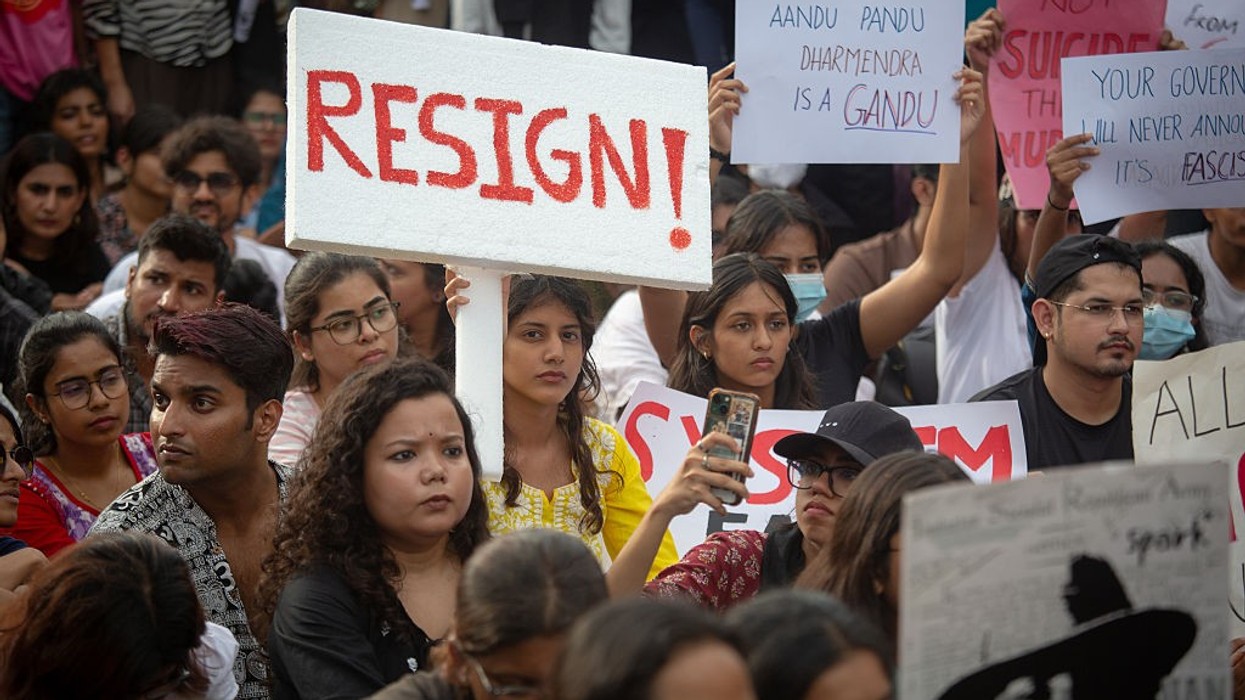
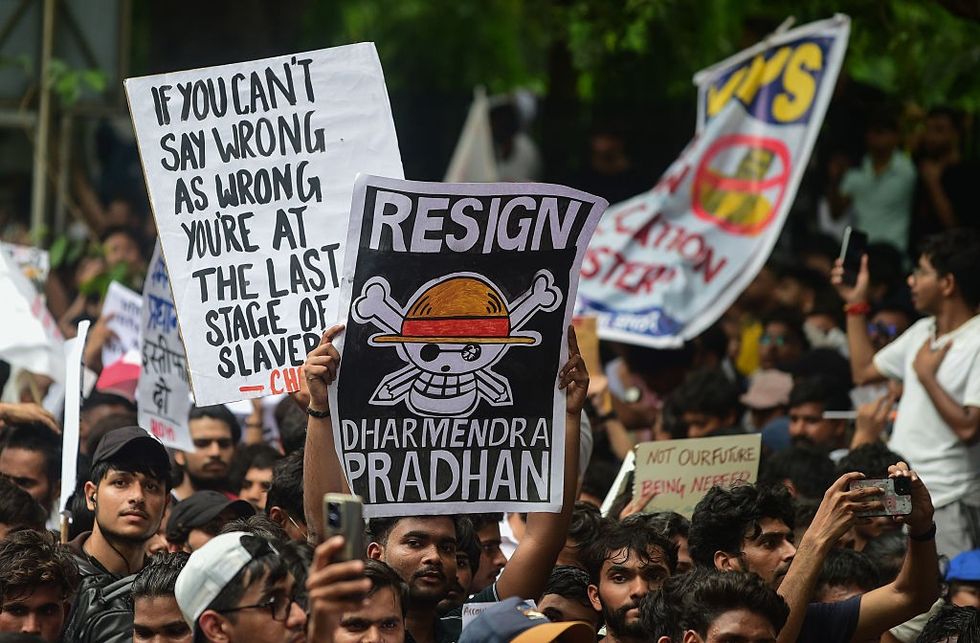 Protesters gather as they take part in a demonstration organised by the Cockroach Janta Party (CJP) at Jantar Mantar during the opening day of Parliament's Monsoon Session on July 20, 2026 in New Delhi, India. A mix of protesters gathered in New Delhi on Monday as discontent bubbled over myriad issues, and as Sonam Wangchuk, an activist who was fasting in protest, was forcibly taken to hospital on Sunday. Getty Images
CJP founder Abhijeet Dipke said the protests would continue but did not announce the movement's next steps.
Spokesperson Ratna Singh said activists understood the risks of challenging the government.
"Anyone who has tried to speak up against this government has faced terrorism charges or tax raids or jail and there is so much fear," she said. "But I am very proud at how many people have showed up and come out on the streets. The police showed us no mercy, but no matter what barbaric treatment they give us, we will not be silenced."
While one senior government minister met with CJP representatives on Monday, Singh said there had been no further response from the government and that Prime Minister Modi had not publicly addressed the clashes.
Meanwhile, many protesters who were detained during Monday's march described spending hours inside Chhatrasal Stadium, a major sports complex in northwest Delhi that police temporarily converted into a detention center.
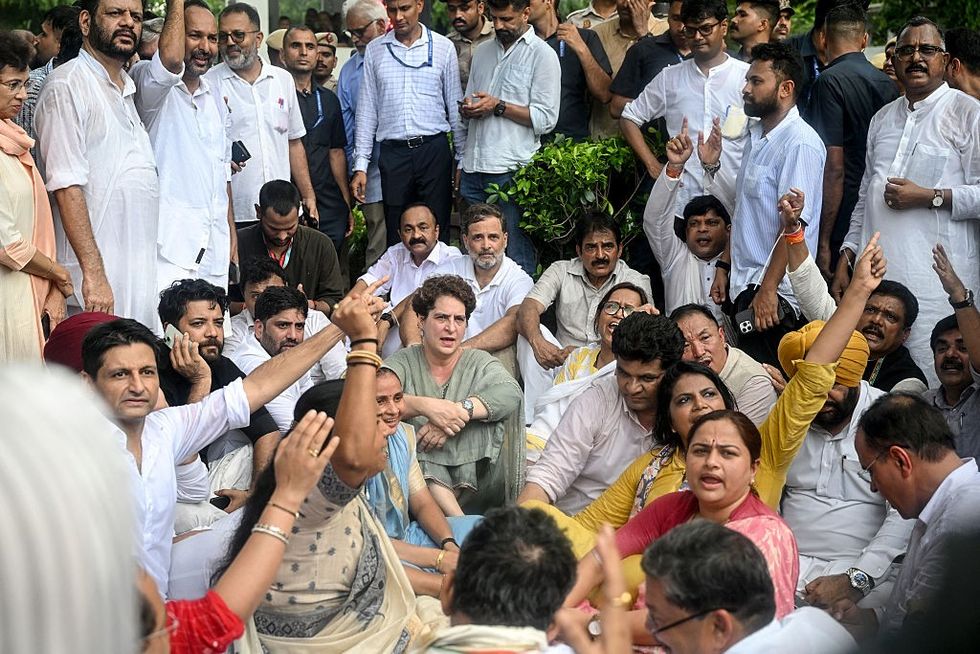 Opposition leaders of the Indian National Congress (INC) party Rahul Gandhi (C back) and his sister Priyanka Gandhi Vadra (C) stage a sit-in protest calling for Prime Minister Narendra Modi's resignation outside the latter's residence in New Delhi on July 21, 2026, a day after police crackdown against the protesting Cockroach Janta Party (CJP) supporters demanding the Education Minister Dharmendra Pradhan step down over alleged NEET examination irregularities.Getty Images
Among them was 29-year-old teacher Ishaan Deor from Nashik in western India.
"I had two more days left in Delhi and am also not working right now. So, it felt I was in a much better position than most to participate in the march. A march to Parliament felt more meaningful than a protest at Jantar Mantar, so I decided to join," he said.
By Tuesday evening, athletes had returned to the stadium for regular training, but for dozens of demonstrators, the venue had briefly become a symbol of the government's response to one of India's fastest-growing youth protest movements.


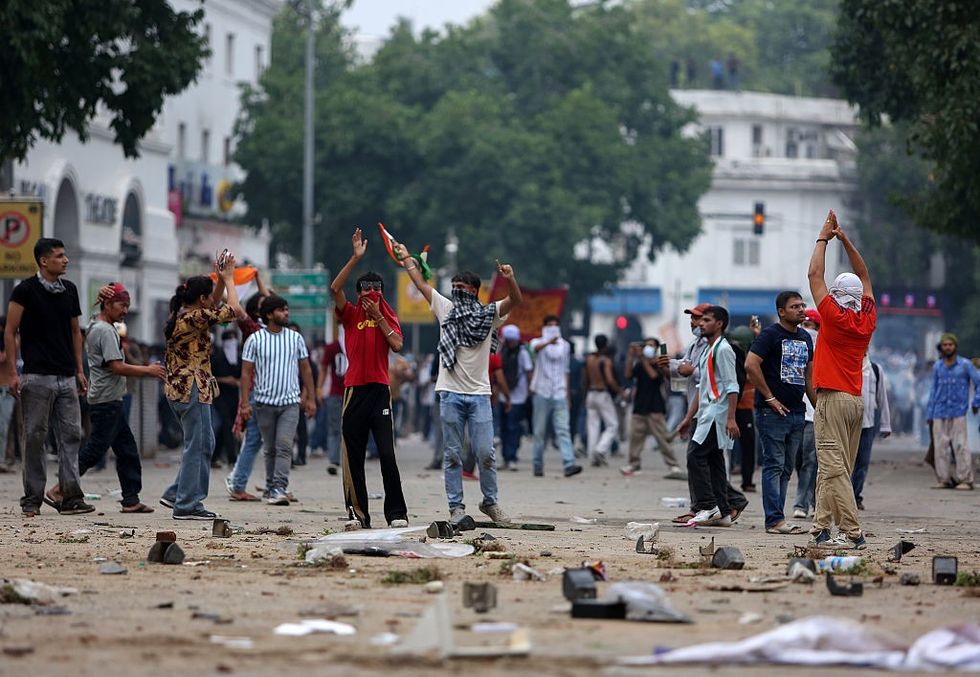 Protesters stand amid debris strewn across a road during clashes with police at a demonstration organised by the Cockroach Janta Party (CJP) on the opening day of Parliament's Monsoon Session on July 20, 2026 in New Delhi, India. A mix of protesters gathered in New Delhi on Monday as discontent bubbled over myriad issues, and as Sonam Wangchuk, an activist who was fasting in protest, was forcibly taken to hospital on Sunday.Getty Images