
Highlights:
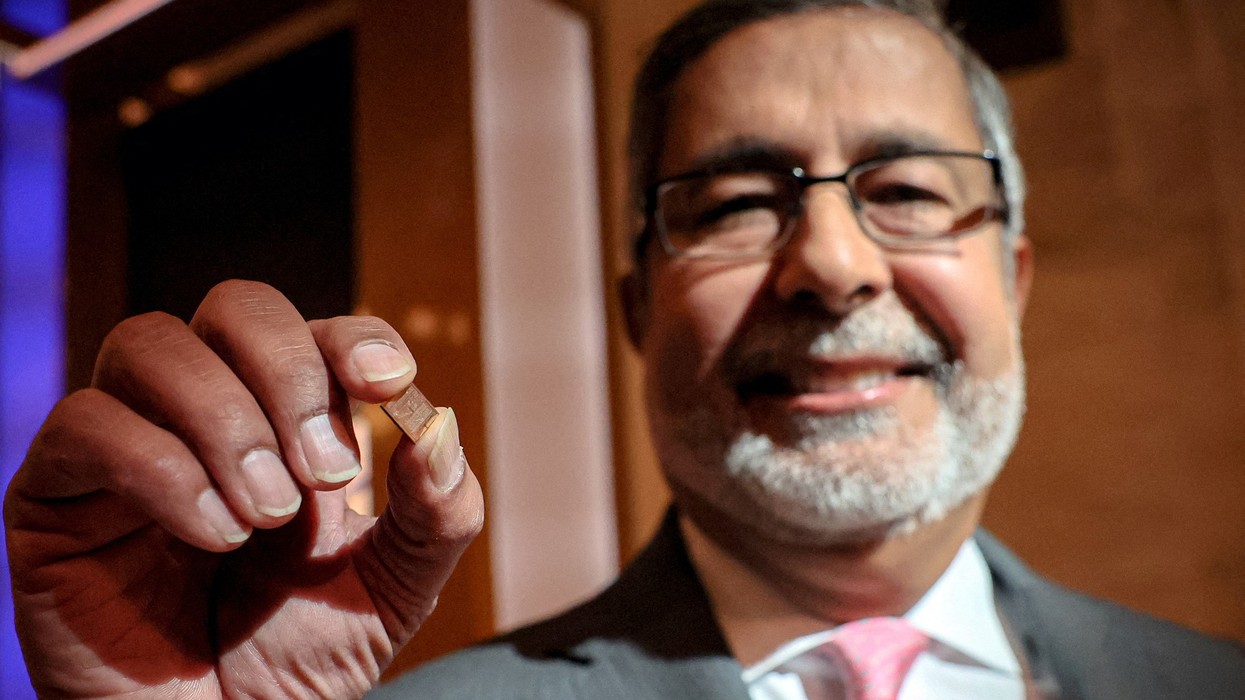
MICRON Technology’s rise toward a $1 trillion valuation followed a major shift in strategy by chief executive Sanjay Mehrotra after Nvidia pushed the memory chipmaker to move deeper into the artificial intelligence market.
For years, Micron operated with a cautious business model built around keeping costs low and avoiding expensive technology bets. The Idaho-based company survived repeated downturns in the memory chip business by carefully managing spending, using second-hand equipment and staying disciplined during volatile market cycles.
That approach helped Micron remain one of only three major global memory suppliers alongside Samsung Electronics and SK Hynix. But the company’s traditional strategy also left it moving slower than rivals in the race for high-bandwidth memory chips used in AI systems.
The turning point came about three years ago when Nvidia chief executive Jensen Huang met Mehrotra and outlined how he believed the memory market would change as AI systems expanded.
Huang said in a media interview last month that Nvidia and Micron aligned their plans closely as AI demand accelerated.
“I was really grateful that Micron and Nvidia really lined up all of our road map,” Huang said.
Huang had long argued that memory chips would become one of the most important parts of AI systems, not just processors. That forced Micron to rethink how it approached technology development, production and long term investment.
Under Mehrotra, the company shifted its focus toward high-bandwidth memory, or HBM, chips designed specifically for AI processors. Unlike traditional memory chips that could be sold broadly across customers, HBM products are tailored for individual companies and integrated directly into AI systems.
Micron’s products for Nvidia differ from those made for Advanced Micro Devices and others.
The closer alignment with Nvidia changed Micron’s business model. Instead of relying mainly on short-term contracts tied to swings in memory prices, the company moved toward longer-term supply agreements linked to AI demand.
Micron said in March that it had signed its first five-year supply agreement, marking a major change for an industry historically driven by shortterm pricing cycles.
Analysts believe Nvidia is likely central to those arrangements, although neither company has confirmed it publicly.
“They are seeing long-term customer demand, with real commitment,” said Ben Bajarin of Creative Strategies. “That is the key driver getting them to spend money.”
Micron’s memory chips are now integrated into Nvidia’s upcoming Vera Rubin AI platform, further strengthening the relationship between the two companies.
The strategy shift has reshaped Micron’s financial position. The company recently reported a $14 billion profit for the latest quarter after posting a $5.8bn loss in 2023 during a downturn in the memory market.
Micron’s stock has climbed roughly ten-fold over the past year. The company crossed the $1tr market capitalization mark on May 26, joining companies including Samsung. SK Hynix reached the same level one day later.
Micron now expects the HBM market it serves to grow to about $100bn by 2028. The broader AI boom has also lifted other chipmakers. Marvell Technology shares reached a record high on Tuesday after Huang described the company as the next “trillion-dollar company” during Computex week in Taipei.
Even as Micron adapts to the AI market, parts of its old operating style remain in place.
Under Mehrotra, the company has focused on shortening development timelines and responding faster to production issues, an important factor in AI supply chains where delays or technical failures can affect customer deals.
Micron also benefits from being the only major US-based memory chip supplier as governments and companies seek to diversify supply chains away from South Korea.
Analysts say the next challenge for Mehrotra and Micron will come during the next downturn in the chip market.
While AI is expected to make the memory industry larger over time, analysts do not expect the market to become immune to slowdowns. If demand weakens again, Micron’s longstanding discipline on spending and operations may again become one of its biggest advantages.
“In the early days, nobody gave Micron a chance,” said Dan Hutcheson, vice-chair of technology consulting firm TechInsights. “They’ve always had that back-against-the-wall attitude. If they lose that, like Intel lost it, they’ll die.”














 Amazon
 Amazon
 Amazon
 Amazon
 Amazon
 Amazon
 Amazon
 Amazon
 Amazon
 Amazon
 Amazon
 Amazon
 Amazon
 Amazon
 Amazon
 Amazon
 Amazon
 Amazon
 Amazon
 Amazon