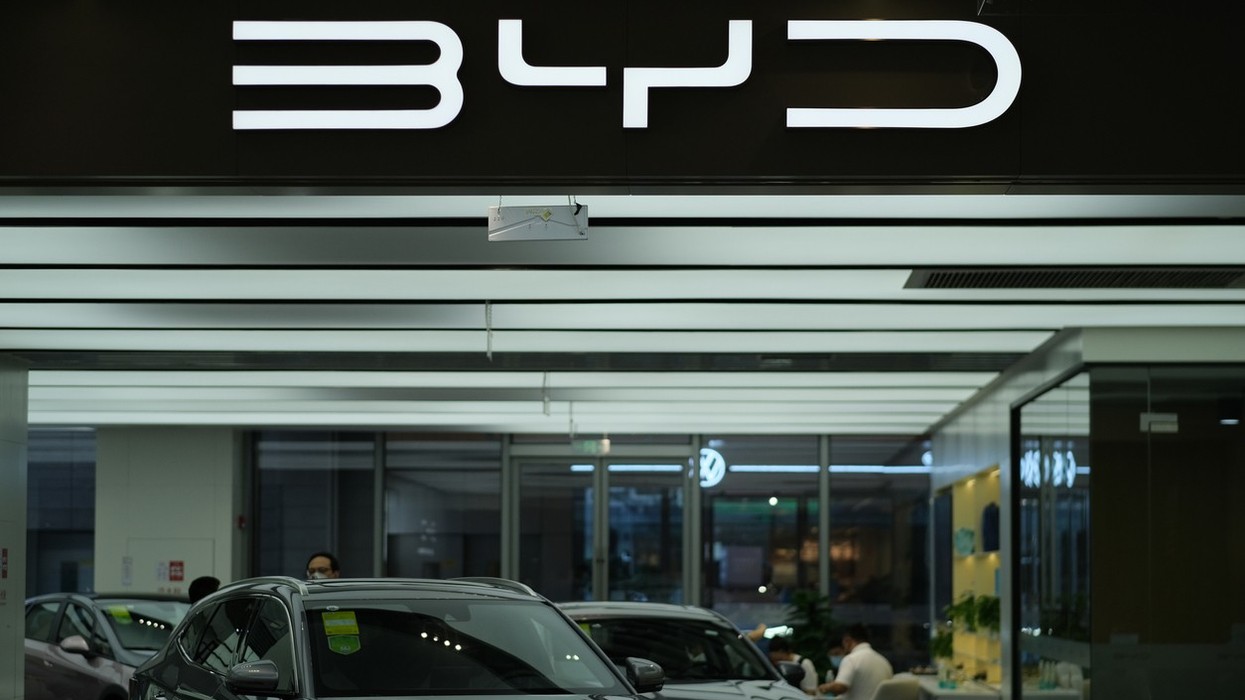

- BYD delivered 463,561 new energy vehicles in September, up 17 per cent from a year earlier.
- Overseas deliveries jumped 153 per cent to 180,700, while domestic sales fell 13 per cent.
- Tesla is due to report its third-quarter delivery figures on Friday as competition in the global EV market intensifies.
BYD delivered 463,561 new energy vehicles in September, a 17 per cent increase from a year earlier, as a sharp rise in overseas sales helped offset weaker demand in China.
The figure includes battery electric vehicles, plug-in hybrids and commercial vehicles. Passenger vehicles accounted for 456,713 of the total, with battery electric vehicle sales rising 33 per cent while plug-in hybrid sales fell by more than 2 per cent.
The September figures come as the global electric vehicle market enters another closely watched period. Tesla is due to report its third-quarter delivery numbers on Friday, with analysts expecting its global deliveries to fall by around 7 per cent from the same quarter last year.
BYD is looking beyond China
The biggest change in BYD's latest figures is where its vehicles are being sold.
The company delivered 180,700 vehicles outside China in September, a 153 per cent increase from the same month last year. Overseas sales have now exceeded the previous year's level in every month since May, helping BYD's third-quarter deliveries rise 19 per cent year on year.
The picture at home was very different. BYD's domestic sales fell 13 per cent in September to 282,861 vehicles, although that was an improvement on the 30 per cent decline recorded across the first nine months of the year.
The contrasting figures underline the growing role of overseas markets for Chinese carmakers as competition in their home market remains intense.
BYD has also been increasing production of newer battery technology designed to support faster-charging vehicles. The company is continuing to expand its international presence as it looks to offset pressure in China.
Despite the strong September and third-quarter figures, BYD's overall deliveries for the first nine months of the year were down 4 per cent at 3.13 million vehicles.
The company therefore faces a mixed picture: its international business is expanding rapidly, but its domestic market remains under pressure.
Tesla waits while rivals report
BYD is not the only Chinese EV maker posting significant numbers.
Leapmotor delivered 105,656 vehicles in September, up 59 per cent year on year and marking its third consecutive month above 100,000. Its deliveries for the first nine months reached 666,539, already exceeding the 596,555 vehicles it delivered during the whole of 2025.
That leaves Leapmotor at around two-thirds of its one-million-vehicle target for 2026, meaning it would need to average roughly 111,000 deliveries a month during the final quarter to reach the goal.
Xiaomi also reported its strongest month of the year, with deliveries exceeding 40,000 vehicles in September. The company has expanded its electric vehicle range with models including the SU7 saloon and YU7 SUV, both of which compete in segments where Tesla has established models.
XPeng delivered 41,256 vehicles, down about 1 per cent year on year, although its third-quarter deliveries rose 2 per cent to 118,390. Li Auto delivered 31,817 vehicles in September, down 6 per cent, while its third-quarter total increased 7 per cent. Nio reported 37,408 deliveries, up 7.7 per cent, with third-quarter deliveries rising 25 per cent.
The mixed results show how uneven the Chinese EV market has become. Some manufacturers are expanding rapidly, particularly overseas, while others are seeing monthly declines even as their quarterly numbers remain higher.
Against that backdrop, Tesla's upcoming delivery figures will provide another measure of how the global EV market is shifting. The company does not separately report China deliveries, meaning local industry data will be needed to assess its performance in the world's largest EV market.














 President of Iran Masoud Pezeshkian holds up a poster of a girl's school that was attacked while addressing the 81st session of the United Nations (U.N.) General Assembly at U.N. Headquarters on September 23, 2026 in New York City. World leaders have gathered in New York for the annual session of the United Nations General Assembly, with this year's global issues ranging from the threat of artificial intelligence to the continued wars in Ukraine and Gaza. Getty Images