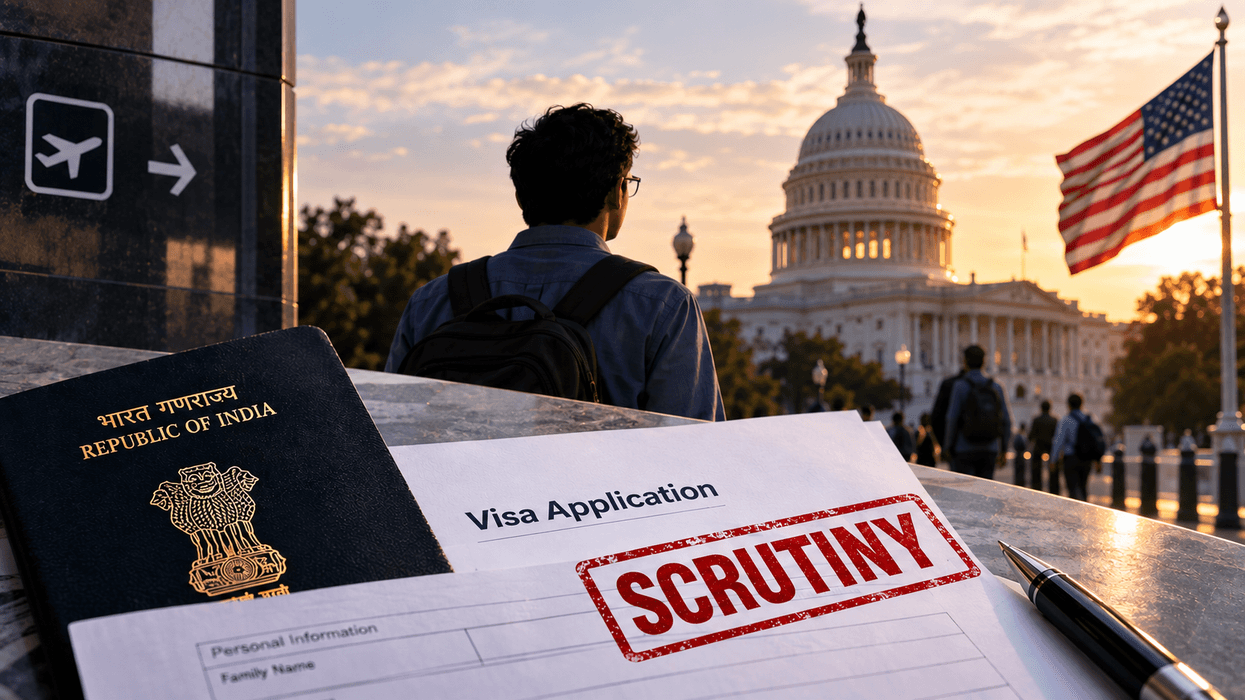

THE TRUMP administration is tightening the H-1B visa system on several fronts at once, putting greater scrutiny not only on foreign workers but also on the companies that sponsor them.
A new executive order signed on September 18 directs the US departments of State, Labor and Homeland Security to consider an employer’s recent or planned layoffs of similarly situated US workers when reviewing H-1B applications. It also gives the Labor Department 30 days to begin reviewing data from previously submitted labor-condition applications to determine whether further action against sponsoring employers is warranted.
On the same day, president Donald Trump extended for another 12 months a separate restriction on the entry of certain H-1B workers outside the US unless the relevant petition is accompanied or supplemented by a $100,000 payment. The extension runs until September 21, 2027, with exceptions where the Homeland Security secretary determines that hiring is in the national interest.
The administration says the 2025 measure had resulted in a 92 per cent decrease in H-1B registrations by large IT outsourcing firms. Those are administration figures.
For India, the changes matter far beyond immigration paperwork. USCIS data show that beneficiaries born in India accounted for 283,755, or 71 per cent, of 399,378 approved H-1B petitions in fiscal 2024. China was second at 46,722, or 11.7 per cent.
Marco Rubio targets birth tourism, visa 'fixers' in new US crackdown
That puts Indian technology companies, professionals working in the US and international students hoping to move from American universities into the workforce at the centre of the changes.
And for some Indian families, the issue has become more immediate: whether planned travel can go ahead without creating uncertainty about returning to the US.
Employers under scrutiny
The September 18 order adds a new layer of scrutiny to companies that use the H-1B system.
Agencies must consider whether a sponsoring employer has directly or indirectly engaged in layoffs during the previous year, or plans future layoffs, affecting similarly situated US workers. The Labor Department’s Wage and Hour Division has 30 days to begin reviewing data from previously submitted labor-condition applications and determine whether further action is warranted.
The order does not say that every company carrying out layoffs is automatically barred from H-1B sponsorship. It directs federal agencies to consider layoffs when reviewing H-1B-related applications.
Trump said the H-1B program had been “widely abused by certain employers, third-party placement groups, and outsourcing firms to undercut and displace the supply of skilled United States labour.”
The administration argues that some employers have used H-1B workers to suppress wages and replace US workers. Business groups and companies have argued that the program remains important for recruiting highly skilled professionals and addressing areas where qualified workers are not readily available in the US.
For employers, that creates another layer of uncertainty around sponsorship decisions. A company may now have to consider not only the qualifications of a foreign worker and the job being offered, but also how recent workforce reductions could be viewed by federal agencies.
The lottery has changed
The employer scrutiny comes as another major change has already taken effect.
For the fiscal 2027 cap season, DHS introduced a weighted selection process that gives higher-wage positions greater representation in the selection pool. A beneficiary associated with a Level I wage receives one entry, Level II two, Level III three and Level IV four. The rule took effect on February 27, 2026.
Workers at all four wage levels can still be selected, but higher wage levels carry more weight.
The White House says registrations for beneficiaries with at least a US master’s degree rose from 45.1 per cent of total registrants in FY2026 to 66.1 per cent in FY2027. It also said positions corresponding to the two highest wage levels accounted for about 46.3 per cent of selections, while the lowest level accounted for 17.8 per cent. Those are White House figures.
The change means the salary attached to a position now has a direct bearing on its representation in the H-1B selection pool. For employers, that can affect decisions about how positions are structured and what salaries are offered when sponsorship is being considered.
Indian H-1B worker reveals the money moves behind his million dollar net worth
For Indian professionals, especially those seeking entry through technology and other specialized occupations, the new system could make wage levels a more important part of the H-1B process than they were under the previous lottery.
The $100,000 issue
The legal position around the $100,000 payment is complicated.
Trump first imposed the measure in September 2025 and extended it through September 21, 2027. But on June 8, 2026, a federal judge in Massachusetts vacated the government policy implementing the payment requirement. The administration appealed, and on July 24 the US Court of Appeals for the First Circuit denied the government’s request to stay that judgment.
The payment is therefore currently blocked from collection while the litigation continues.
The measure is also different from normal H-1B filing costs. Reuters has reported that the earlier fee structure generally ranged from about $2,000 to $5,000 depending on the circumstances.
Current H-1B holders and foreign graduates already in the US are exempt from the $100,000 restriction, Reuters reported.
That distinction is important because the new payment requirement has generated considerable confusion among workers and employers. The proclamation concerns certain H-1B workers outside the United States, while people already living and working in the US can face different circumstances.
Another six-figure fee proposed
DHS has also proposed a separate $103,265 fee for each H-1B cap-subject petition, including petitions eligible for the advanced-degree exemption.
It remains a proposal. The public-comment period closed on September 24.
DHS estimates that 85,000 cap-subject petitions a year would be subject to the proposed fee and projects annual revenue of about $8.78 billion. Those are agency estimates, not money currently being collected.
The proposed charge is separate from the $100,000 payment requirement.
US-India trade deal faces fresh pressure as business group pushes for year-end agreement
The distinction matters because the two measures would affect different parts of the H-1B process and are based on different legal authorities. One concerns an entry restriction imposed through a presidential proclamation and currently blocked from collection by court action. The other is a proposed DHS fee that has not yet become final.
India at the centre
Nasscom said the restrictions would affect Indian nationals on H-1B visas as well as Indian technology services companies.
“A one-day deadline creates considerable uncertainty for businesses, professionals, and students across the world. Policy changes of this scale are best introduced with adequate transition periods, allowing organisations and individuals to plan effectively and minimise disruption,” it said.
India’s External Affairs Ministry also expressed concern. Spokesperson Randhir Jaiswal said the measure was likely to affect families.
“This measure is likely to have humanitarian consequences by way of the disruption caused for families,” Jaiswal said.
“The government hopes that these disruptions can be addressed suitably by the US authorities,” he added, saying the full implications were being studied.
Jaiswal said skilled talent mobility had contributed to technology development, innovation, economic growth, competitiveness and wealth creation in both countries.
The H-1B program was established by Congress in 1990 and allows US employers to temporarily hire foreign workers in specialty occupations. H-1B workers are generally admitted for up to three years initially, with a potential extension of up to another three years. The annual statutory cap is 65,000, with another 20,000 places for qualifying beneficiaries with advanced US degrees.
Technology companies have been among the biggest users of the program, and Indian IT-services companies have historically featured prominently among H-1B sponsors.
The changing rules could therefore affect not only individual professionals but also the way Indian technology companies structure their US operations and recruitment.
The student pipeline
For Indian students in the US, H-1B can be an important route from education into professional employment.
USCIS data show that among 73,571 approved petitions for new employment that requested a change of status inside the US in fiscal 2024, 52,385, or 71.2 per cent, involved beneficiaries whose prior status was F-1 or F-2.
That makes the H-1B system particularly important for international students hoping to remain in the US after completing their education.
The different measures affect different parts of that pipeline. The $100,000 restriction focuses on covered H-1B workers outside the US. The weighted selection system applies to the annual cap process. The proposed $103,265 fee would apply to cap-subject petitions if finalized.
The effect on Indian students therefore cannot be reduced to one fee.
Their prospects can depend on the salary of the position they are offered, whether their employer sponsors them, whether the position is subject to the cap and how the new selection system treats the wage level.
For someone already in the US, the rules surrounding travel and re-entry raise a different set of concerns.
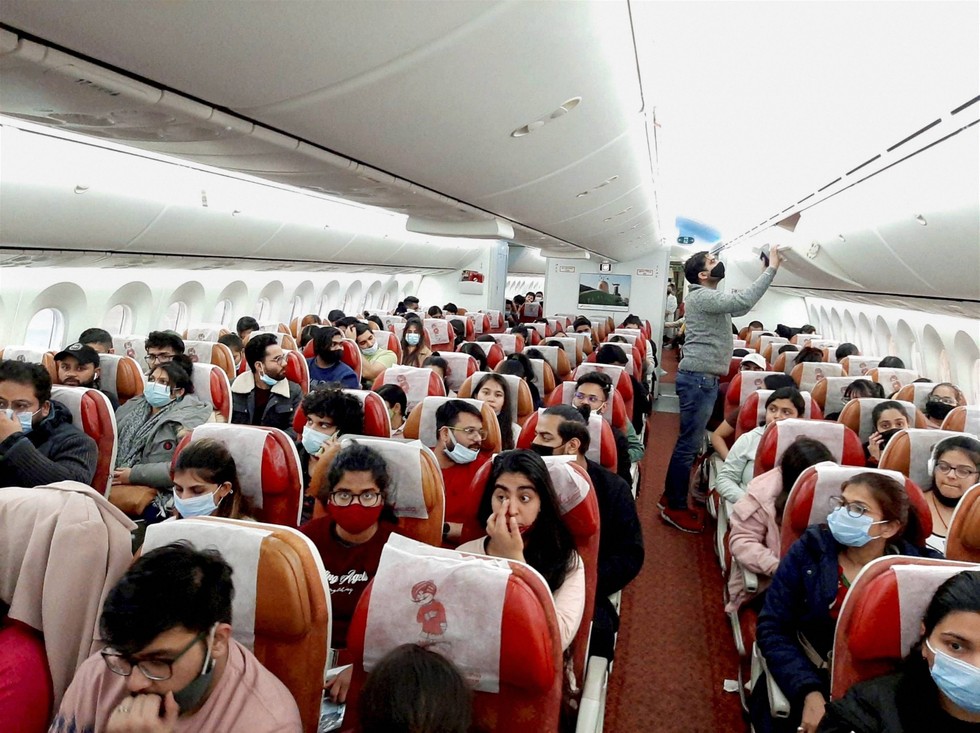
PTI reported confusion among H-1B workers after the September announcement, with some cancelling planned trips to India and others already outside the US trying to return.
One person described the mood as a “crazy sense of panic.”
Another said: “People who are standing in boarding lines at airports, people who are leaving for their own wedding tomorrow, things like that. They are cancelling because they don't know what to do.”
For Indian families, the timing was particularly sensitive because many had already planned travel for Diwali and the year-end holiday period.
A changing calculation
The administration says its goal is to protect American workers and restore the H-1B program’s focus on highly skilled workers.
Trump said the extension would “continue to protect the economic and national security interests of the United States, improve labour market access for American workers and graduates, and ensure that employers recruit only the most highly-skilled and essential alien workers when needed in line with the original intent of the program.”
The Foundation for India and Indian Diaspora Studies has backed tighter scrutiny while cautioning against policies that make it harder to attract specialized talent.
Khanderao Kand, FIIDS chief of policy and strategy, said fields such as artificial intelligence, cybersecurity, advanced semiconductors, cloud infrastructure and specialized data engineering can involve skills gaps that cannot always be filled immediately from the domestic labor pool.
The result is a more complicated calculation for employers.
The H-1B question is no longer only whether a worker is selected. Companies are also facing questions about the wage attached to the job, recent layoffs, sponsorship costs and whether a worker is already in the United States.
For Indian professionals, students and employers, the old question of whether they will get an H-1B is increasingly being joined by another: what kind of job, employer and immigration circumstances will allow them to get one?
(With inputs from agencies)