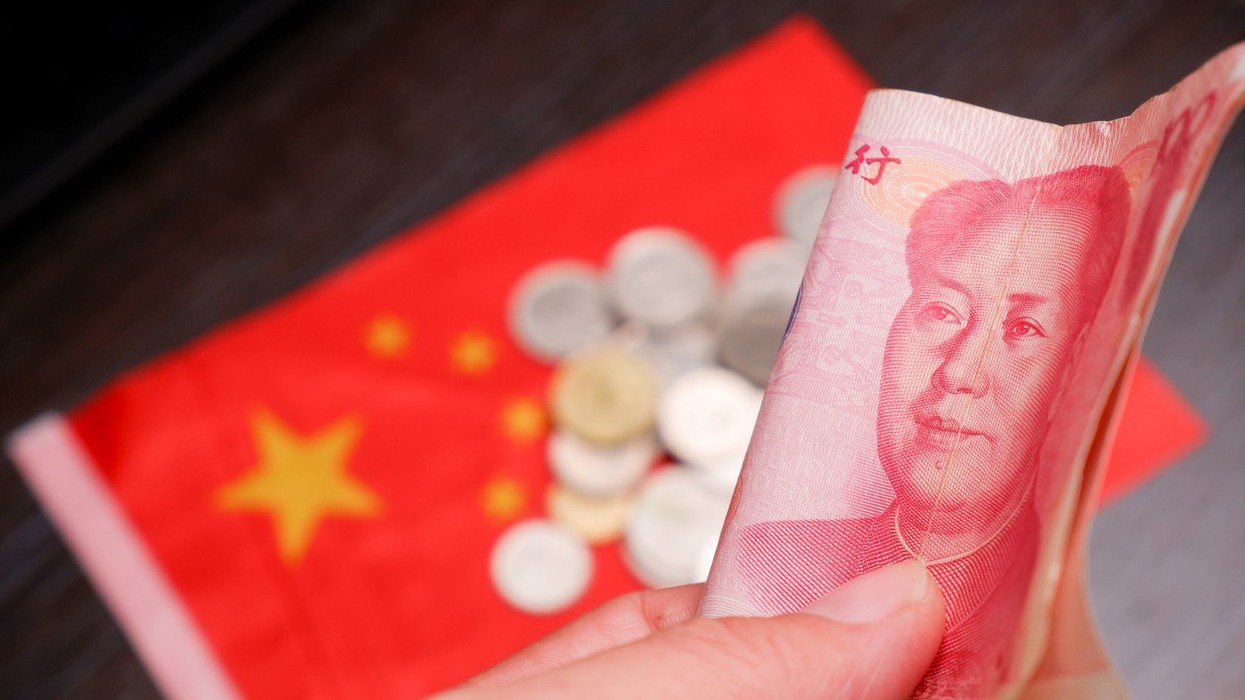

- China's producer price index rose 5.7 per cent in October, the fastest annual increase since June 2022.
- Consumer inflation slowed to 0.7 per cent, missing economists' expectations.
- Weak property markets and cautious household spending continue to complicate the country's economic recovery.
China's industrial sector is experiencing a sharp rise in production costs, but the latest inflation figures reveal a more complicated picture for the world's second-largest economy. While factory prices accelerated to their fastest pace in more than four years in October, consumer inflation slowed, highlighting the gap between manufacturing activity and household spending.
The producer price index (PPI), which tracks prices charged by manufacturers and other producers, increased 5.7 per cent year over year, according to China's National Bureau of Statistics. The reading was higher than September's 5 per cent rise and exceeded the 5.3 per cent increase expected by economists surveyed by Reuters.
It was the strongest annual increase since June 2022, when producer prices rose 6.1 per cent.
The acceleration was largely driven by higher global energy costs, with the conflict in the Middle East keeping oil prices elevated during October. Coal mining, oil and natural gas extraction, petroleum processing and chemicals were among the industries facing significant price increases.
However, the improvement in factory-gate prices has not translated into stronger consumer inflation. China's consumer price index (CPI) rose just 0.7 per cent in October, slowing from 0.9 per cent in September and missing economists' expectations of 0.8 per cent.
Core inflation, which excludes food and energy prices, also eased to 0.8 per cent from 1 per cent in the previous month.
The contrasting figures point to an economy where external demand and rising industrial costs are supporting parts of the business sector, while households remain reluctant to increase spending.
Why are factory prices rising while consumer inflation slows?
Higher energy prices have been a major contributor to the increase in producer inflation. The Middle East conflict has pushed up the cost of oil and other commodities, affecting industries that depend heavily on energy and raw materials.
China's coal mining and washing prices rose 36.6 per cent year over year in October, while prices for oil and natural gas extraction increased 35 per cent, according to the National Bureau of Statistics. These increases have raised costs for manufacturers across several industries.
Strong external demand has also supported industrial activity. Zhang Zhiwei, president and chief economist at Pinpoint Asset Management, told CNBC that overseas demand was a significant factor behind the increase in producer prices.
But companies are finding it difficult to pass all their higher costs on to domestic customers. Weak household spending means manufacturers and retailers have limited room to increase prices without risking lower sales.
Food prices were a particular drag on consumer inflation in October. While gasoline prices contributed to the overall increase, falling food costs offset some of the pressure. China's official statistics showed that food prices declined 2.9 per cent year over year, while gasoline prices increased 22.4 per cent.
The gap between producer and consumer inflation is important because it can affect business profitability. If input costs rise faster than the prices companies can charge customers, profit margins come under pressure.
Nguyen Hoang Nam, China economist at Capital Economics, said the price shock linked to the Middle East conflict could keep inflation elevated over the coming months, although its impact was expected to fade next year.
He also forecast a return to producer-price deflation and average consumer inflation of 0.4 per cent in 2027.
Can exports compensate for China's weak domestic demand?
China's recent economic performance has shown a clear divide between its export strength and domestic consumption.
The economy grew faster than expected in the third quarter, expanding 4.6 per cent year over year, supported by resilient exports and manufacturing activity. September also brought stronger-than-expected retail sales, offering some evidence of improvement in consumer activity.
However, economists remain cautious about the sustainability of the recovery. The property market continues to weigh on household confidence, while uncertainty over housing values and employment prospects has encouraged consumers to remain careful with their spending.
Zhang said domestic demand remained weak, partly because of the property sector.
"There’s no clear sign of stabilization [in that sector] yet," he said, adding that the prolonged downturn was affecting household consumer confidence and local government revenue.
He also said low consumer inflation reflected the weakness in domestic demand, while strong export growth could explain why Beijing had not rushed to introduce further significant stimulus.
The imbalance is creating a difficult policy challenge. Strong exports and industrial production can support economic growth, but they cannot fully replace household consumption as a source of demand. Continued reliance on overseas markets also leaves Chinese businesses exposed to trade tensions and changes in global demand.
The country's stock market has faced additional pressure, with some AI-related shares retreating from high valuations amid concerns about future demand and export restrictions. Such uncertainty could further affect household confidence and spending.
The yuan's recent gains have also created difficulties for exporters by squeezing margins, even as overseas shipments remain relatively strong.
For policymakers, the challenge is to encourage households to spend more while maintaining industrial growth and managing external risks.
The October figures do not necessarily signal a broad-based recovery in China's economy. Instead, they show how rising global commodity prices and overseas demand can lift factory prices without producing a comparable improvement in domestic consumption.
If household spending remains subdued, manufacturers may struggle to pass on higher costs, leaving the economy dependent on exports and external conditions. The next test for Beijing will be whether it can turn industrial momentum into a more sustained recovery in consumer confidence and domestic demand.












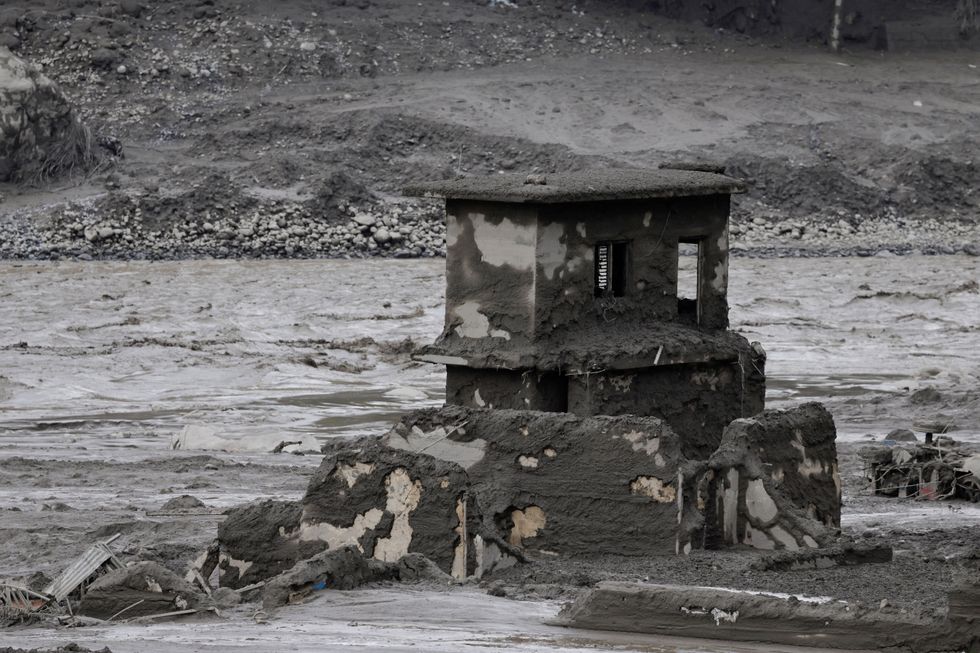 A mud-covered building following a flash flood at Trishuli in Nuwakot district, Nepal, August 26, 2026.Reuters.

 Sergio Gor and Brendan LynchX/Sergio Gor
 Jamieson GreerReuters
 Ajay SrivastavaLinkedin