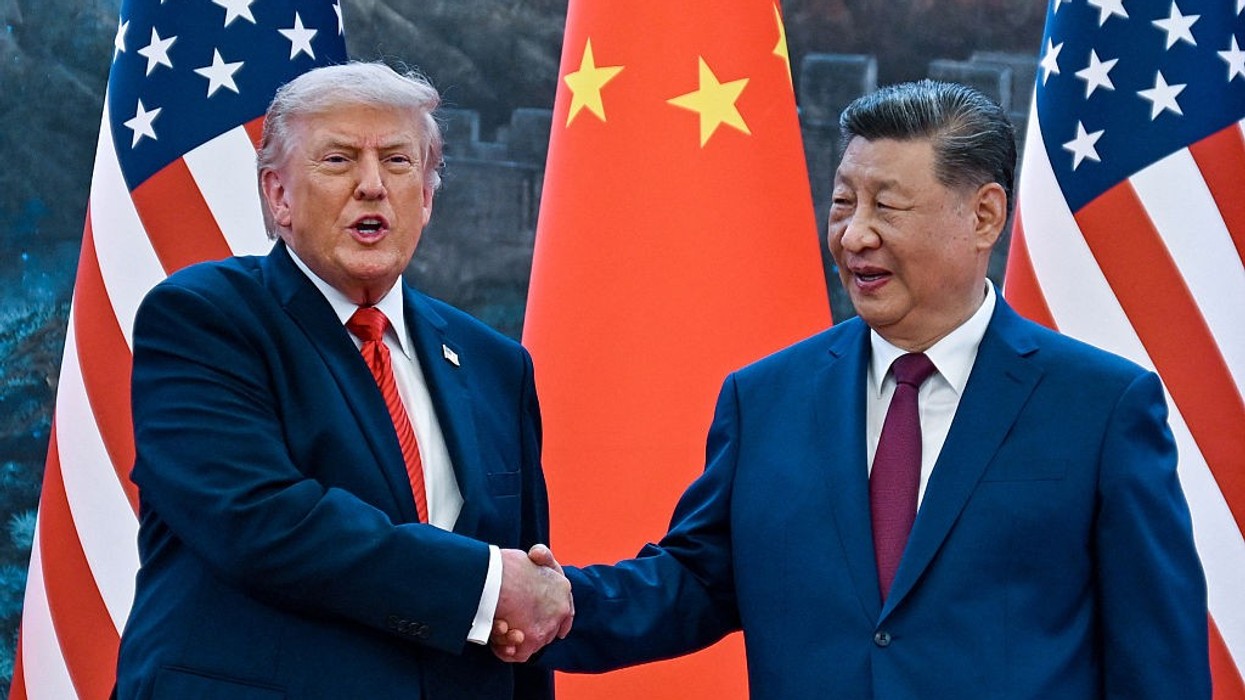

- Donald Trump and Xi Jinping met in Beijing for two days.
- The visit helped strengthen the U.S.-China trade truce.
- Taiwan and Iran were key topics during the talks.
- US business leaders joined Trump during the visit.
- Another Trump-Xi meeting is planned for September.
President Donald Trump met Chinese president Xi Jinping in Beijing on Thursday (14) and Friday (15) during a closely watched summit aimed at improving relations between the United States and China.
The trip helped strengthen a fragile trade truce reached in October. However, both countries have not yet announced many detailed agreements.
The visit was originally delayed for more than a month because of the Iran war. Trump’s two-day summit with Xi ended on Friday with plans for another meeting later this year.
One of the main topics during the talks was Taiwan. According to official English-language Chinese state media, Xi warned Trump that mishandling Taiwan would place the US-China relationship into “great jeopardy.”
Oil prices also increased after Trump said in a prerecorded interview with Fox News that China had agreed to buy American oil and would help with negotiations involving Iran. Trump did not say when the oil purchases would begin or how much oil China would buy.
China has not officially confirmed plans to purchase U.S. oil. The United States has also not released any official statement about Taiwan following the meeting.
“I do think each side has delivered. There was no substantive discussion on Taiwan, though, which is not surprising,” said Yue Su.
“More discussion on Iran highlighted that they do have common ground. The fact that both sides want to describe the meeting as a win shows goodwill, at least.”
“There are limits to what China can realistically do, as the Iranian regime is operating in survival mode and will prioritize its own interests and agenda above all else,” she said.
The summit also helped maintain the trade truce between the two countries. The agreement, reached in October 2025, lowered tariffs and reduced restrictions on rare earth exports after tensions increased earlier in 2025.
Trump invited Xi to visit the United States on September 24. The planned meeting would allow the two leaders to meet again before the one-year trade truce expires.
According to Chinese state media, Xi said both countries agreed to work toward constructive “strategic stability” over the next three years.
“Strategically, Beijing appears to be trying to turn Trump’s transactional willingness to stabilize ties into a longer-term operating framework for US-China relations,” said Jack Lee.
He added that the framework could become a starting point for future U.S. administrations dealing with China.
Business ties were also an important part of the visit. Trump said China would order 200 Boeing aircraft. He said the number was higher than the 150 jets expected by the company, although it was lower than earlier reports suggesting up to 500 aircraft.
Nvidia also reportedly received approval from the U.S. government to sell H200 chips to major Chinese companies. The news helped technology stocks move higher.
Kelly Ortberg and Jensen Huang joined Trump during the Beijing visit.
More than a dozen American business leaders, including Tim Cook and Elon Musk, also attended a meeting with Chinese Premier Li Qiang on Thursday.
China repeated its promise to continue opening its market to foreign businesses.
“I don’t think the purpose was to have every CEO sign a deal,” said Gary Dvorchak.
“I think the purpose was just to kind of flex America’s muscles and just show from an economic standpoint what a powerhouse we are.”
“It also shows a high level of unity amongst the American government and private sectors,” he said.