
MORE than 100 members of Congress have urged the FBI to investigate an alleged attempted mass shooting at a Hindu temple in Aurora, Illinois, as a possible federal hate crime.
The appeal, led by Indian-American congressman Raja Krishnamoorthi, comes as Hindu American organizations raise concerns about anti-Hindu rhetoric, reported Hinduphobic incidents and the security of places of worship.
The developments include a congressional letter dated October 20, a meeting between Hindu American leaders and White House officials on November 18, and terrorism-related charges against a 19-year-old man accused of planning an attack on the Sri Venkateswara Swami (Balaji) Hindu temple in Aurora on October 11, the first day of Navaratri.
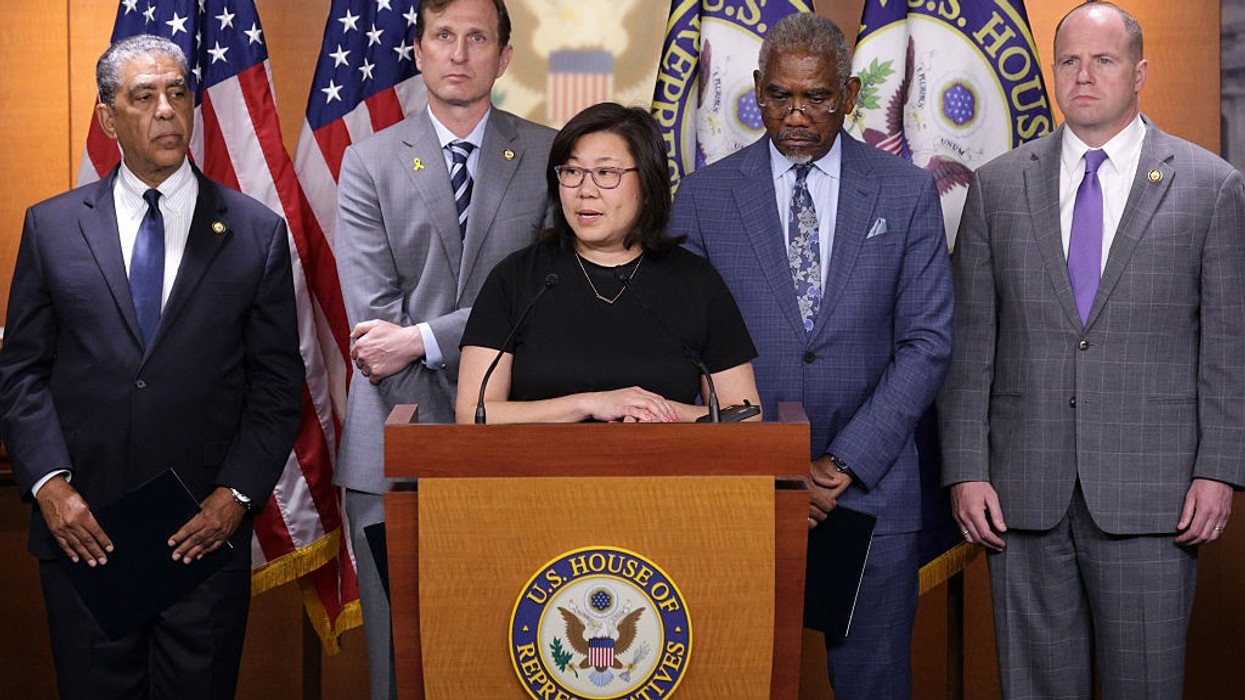
Krishnamoorthi led 105 members of Congress in writing to FBI director Kash Patel. The signatories included the entire Illinois House Democratic delegation, every Indian-American member of Congress, and senators Dick Durbin, Tammy Duckworth, Andy Kim and Chris Van Hollen. Krishnamoorthi and his family were worshipping at the temple on the day of the alleged plot.
“The alleged combination of targeted racial hatred, a religious setting, and preparations for mass violence demands a comprehensive federal response. We appreciate the FBI’s reported assistance to local investigators and urge the Bureau to ensure that potential hate-crime violations receive explicit attention,” the letter said.
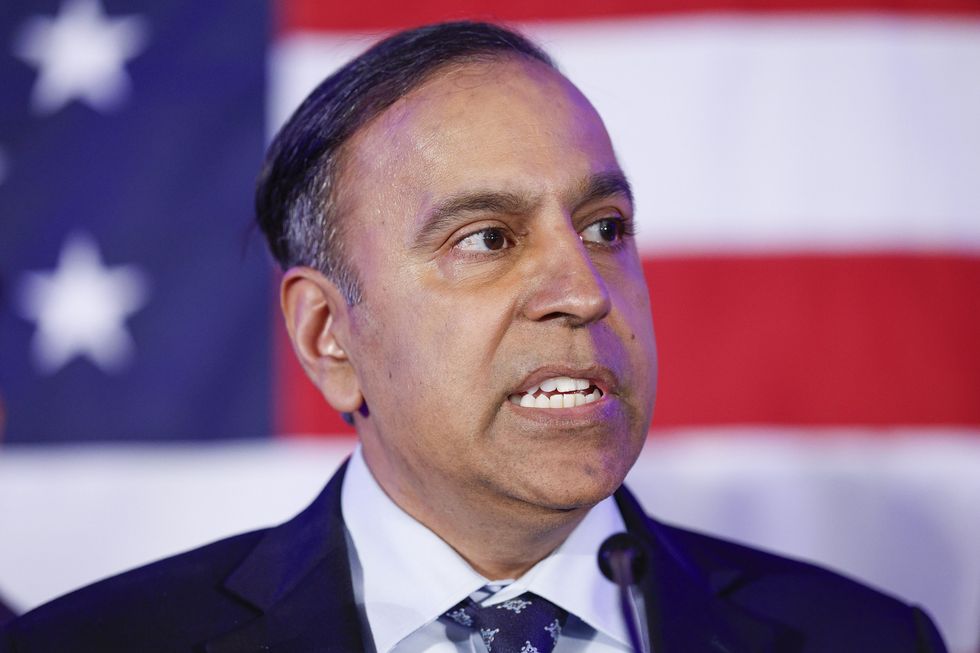 Raja Krishnamoorthi Getty Images
The lawmakers asked the FBI to examine possible racial, ethnic and religious bias, including whether online platforms or others had facilitated the alleged plot. They also sought information about credible online threats against Indian Americans, Hindu Americans, Sikhs and other south Asian communities, and how the bureau distinguishes protected expression from threats that warrant investigation.
The letter further sought details on coordination with local law enforcement and places of worship, the sharing of threat information, and the FBI’s capacity to investigate such cases. It requested a written response by October 29.
The lawmakers also raised concerns about government messaging that they said could encourage racial or religious stereotyping. The letter cited a Department of Homeland Security social media post depicting a Sikh man with the caption “Get off our roads, you don’t know how to drive Mr. Singh,” and an Education Department post reading “Make College Football Great Again” after a Texas Republican complained about south Asians attending a University of Texas football game.
“We believe such messaging risks lending governmental legitimacy to racial and religious stereotyping. Federal agencies should make clear that debates over immigration or public safety never justify collective suspicion of Indian, Sikh, Hindu, or other South Asian communities,” the letter said.
On November 18, a White House delegation led by faith director Jennifer Korn visited Keshavam, a Hindu community center and temple in Washington. Korn was accompanied by Belsis Romero, senior advisor and faith liaison at the US Department of State.
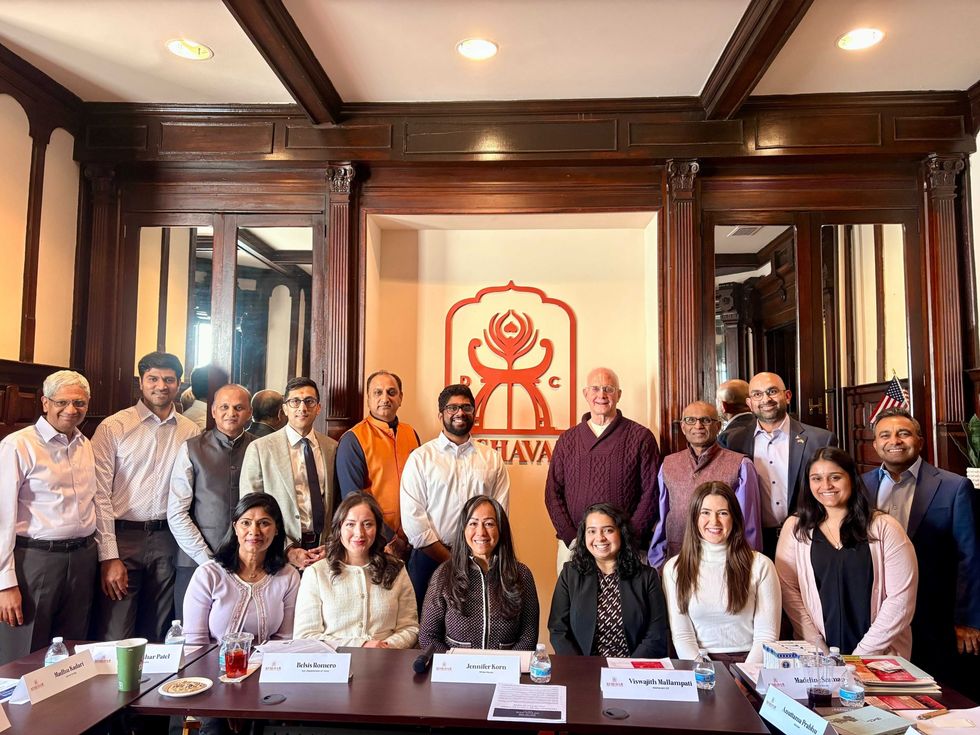 White House officials visit Keshavam, a Hindu temple in Washington, on Wednesday (18) X/ @HinduAmerican
Representatives of the Hindu Swayamsevak Sangh-USA, Sewa International, BAPS, Hindu Yuva, ISKCON, Chinmaya Mission, Art of Living, Isha Foundation, VHP of America and Shrimad Rajchandra Mission attended.
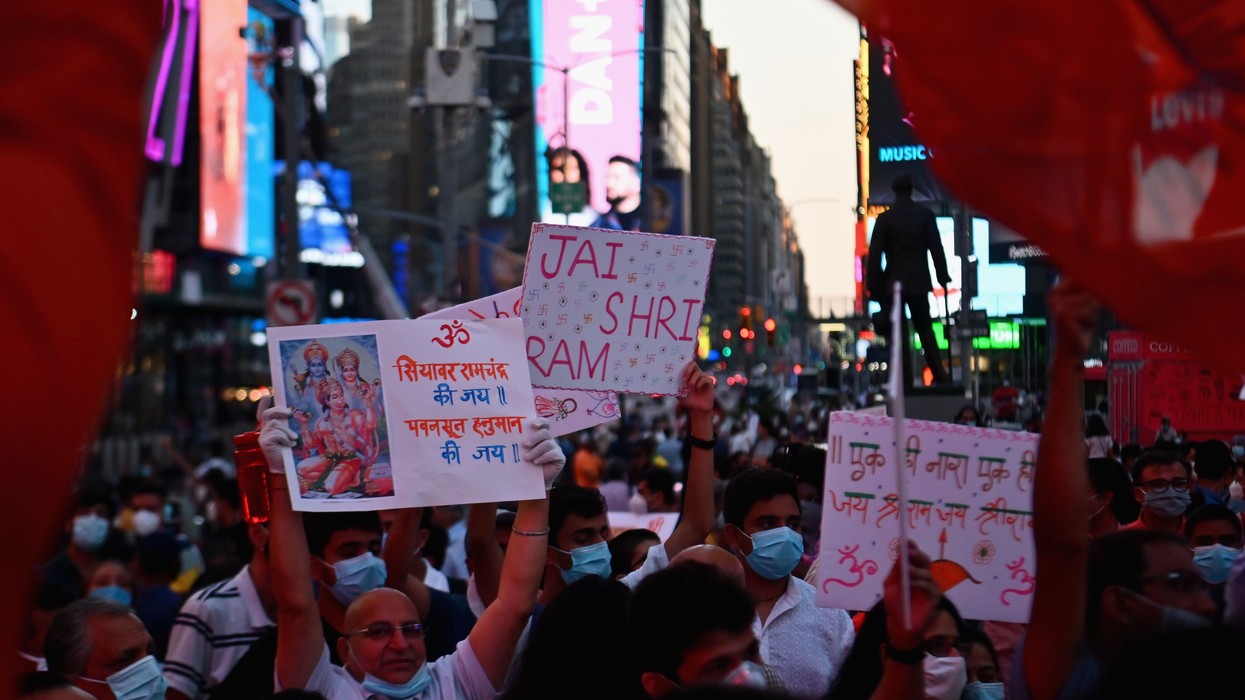
The Hindu American representatives highlighted community contributions through disaster relief, meditation and wellness programs, and initiatives such as the Sewa Diwali food drive. They also raised concerns about anti-Hindu rhetoric on social media and Hinduphobic incidents, and urged officials to explore better security at temples and strengthen interfaith dialogue.
Greater Hindu American representation and the inclusion of the commun ty’s perspectives in federal policy discussions were also raised.
“The meeting provided an opportunity for Hindu American leaders to share our community’s contributions, raise concerns, and discuss ways to strengthen engagement with the White House and federal agencies,” a person who attended the meeting said.
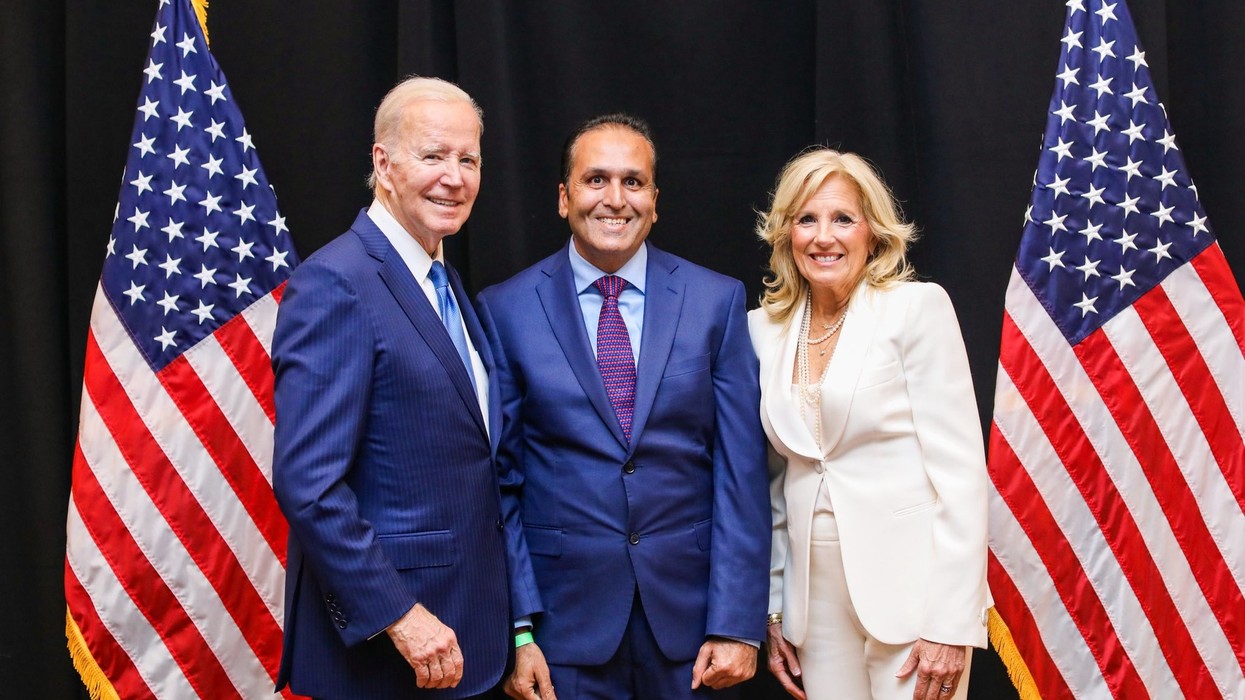
Keshavam president Viswajith Mallampati had also participated in the White House Diwali celebrations earlier in November. No specific policy decision or new security commitment was announced in the meeting report.
The discussions took place as the case against Alexandros Paporakis moved forward. Police said the 19-yearold, from Palatine, Illinois, was arrested in October after an individual reported receiving concerning electronic communications from him. Authorities allege he planned a mass shooting at the Aurora temple on October 11.
According to prosecutors, Paporakis drove to the temple with a loaded firearm, pointed it at an individual and tried to fire, but the gun jammed. His co-workers at a Taco Bell reported to authorities that he had said he planned to “kill Indian people”.
A Cook County grand jury returned an indictment on November 5. The charges, made public later in the month, include six counts of terrorism, two counts of attempted terrorism and two counts of armed violence. The grand jury also added nine further counts of making a terrorist threat. The indictment includes additional weapons-related charges.
Police said a search of Paporakis’ residence recovered a rifle, ammunition, a tactical vest containing body armor and a patch displaying imagery associated with white supremacist extremism. “Among the recovered items was a tactical vest containing body armor and a patch displaying imagery associated with white supremacist extremism,” Palatine police said.
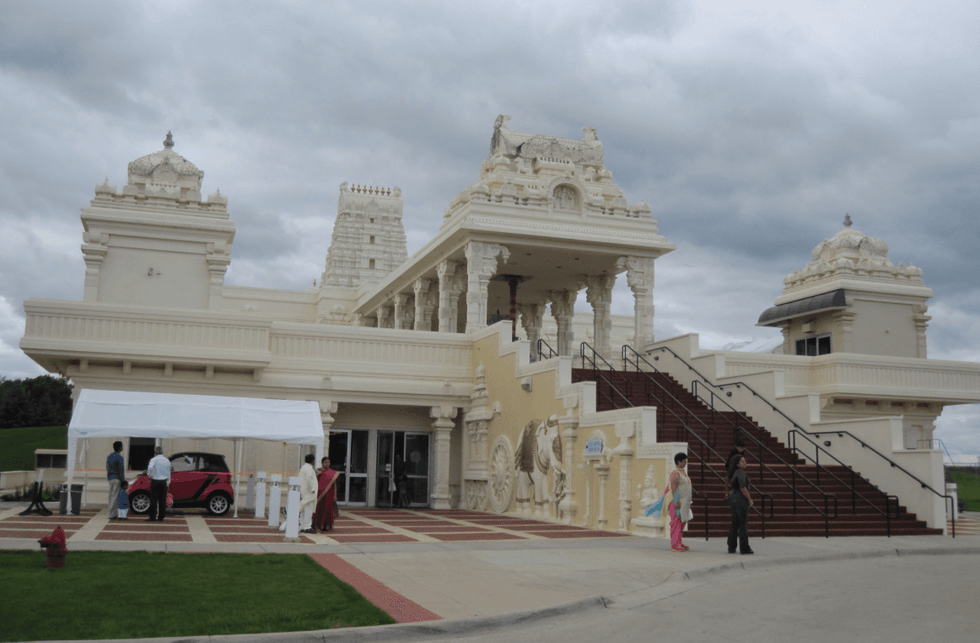 Sri Venkateswara Swami (Balaji) Hindu temple in Aurora, IllinoisWikimedia Commons
Detectives also examined a document attributed to Paporakis titled “Why I Fought: A.K.A.: (Aurora Shooter’s Manifesto)”. Police said it expressed white supremacist and extremist ideologies, including references to violence against people of south Asian heritage, particularly those of Indian descent.
Paporakis pleaded not guilty on November 19 and remains in custody. His next court date is January 7, 2027. No hate-crime charge had been announced as of November 19, although Krishnamoorthi and other lawmakers have called for the FBI to investigate the possibility of one. The Indian Ministry of External Affairs said it was “deeply concerned” by the incident and its “racist nature”.
The case has sharpened concerns about threats directed at Hindu places of worship, while the congressional letter and White House meeting have brought questions of protection and federal engagement into focus.
A 2026 Indian American Attitudes Survey by the Carnegie Endowment for International Peace, conducted with YouGov, offers wider context on discrimination reported by the community.
It surveyed 1,000 Indian American adults between November 25, 2025, and January 6, 2026, with a margin of error of plus or minus 3.6 percentage points.
Forty-eight per cent said they had encountered racist social media posts targeting Indians or Indian Americans very or somewhat often since the beginning of 2025. Another 41 per cent said they encountered such posts not often or rarely, while 11 per cent said they did not use social media. One in four said they had been called a slur; 9 per cent reported being physically threatened, 8 per cent receiving hate mail, 6 per cent property damage and 4 per cent physical assault. The survey also found that 31 per cent had avoided political engagement on social media because of fears of discrimination. Other respondents said they had avoided leaving and re-entering the United States or displaying political signs or bumper stickers (21 per cent for each), wearing Indian dress publicly (19 per cent), and attending political rallies or protests (18 per cent).
These figures relate to experiences reported by Indian American adults. They do not measure anti-Hindu incidents specifically or the number of attacks on temples.


 US Tariffs on Key CountriesChatGPT