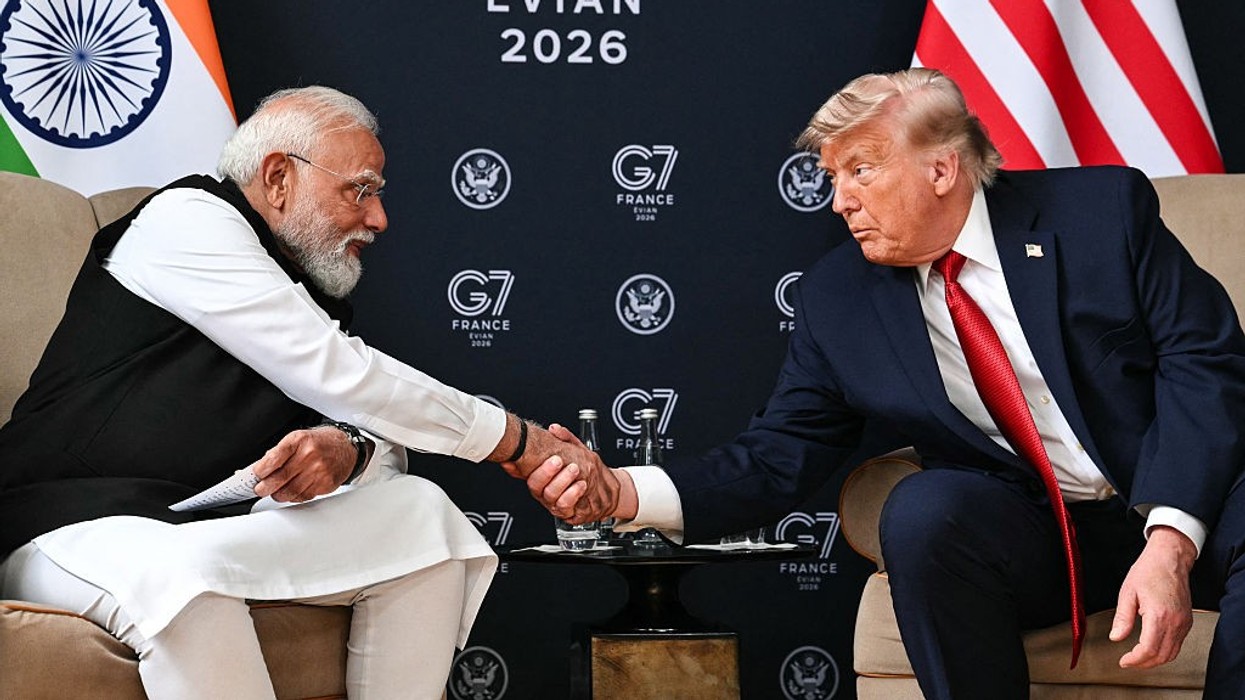

India could gain a competitive advantage over several Asian manufacturing rivals in the US market if New Delhi and Washington finalize a long-pending trade agreement. The Trump administration has proposed a 17 per cent tariff on Indian imports under a potential deal, compared with higher rates for several competing countries. However, without an agreement, Indian goods could face duties of 25 per cent.
The difference matters because the United States is India's largest export market. A lower tariff could make Indian products relatively more competitive against goods from countries such as Bangladesh, Cambodia, Indonesia and Vietnam, particularly in sectors where exporters compete for the same American buyers.
How would India's proposed 17 per cent tariff compare with other countries?
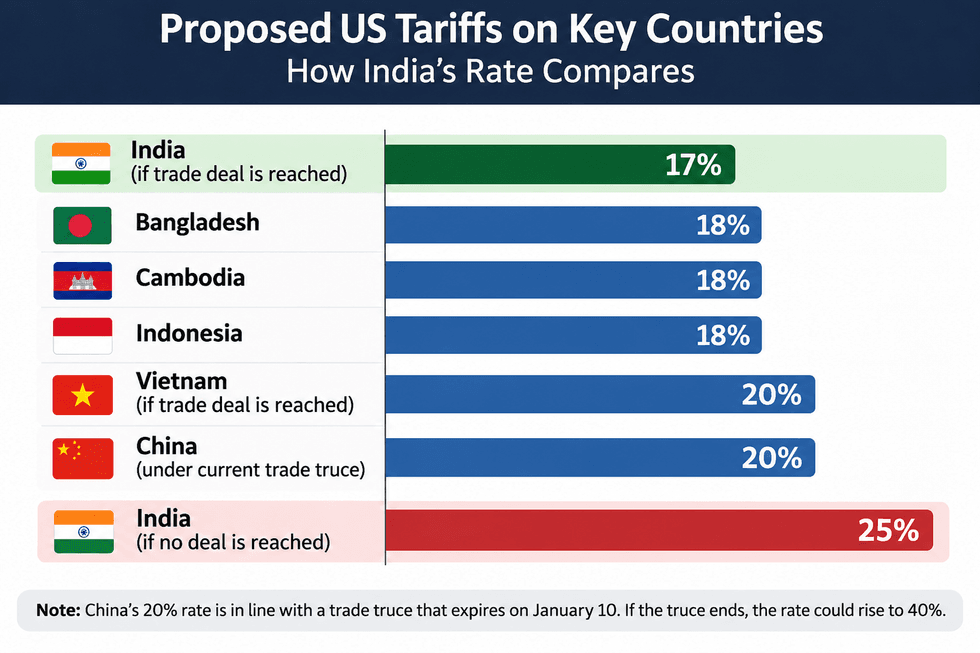
Under the US proposal, India could receive a 17 per cent tariff rate if it reaches a trade agreement with Washington. This is lower than the proposed 18 per cent rate for Bangladesh, Cambodia and Indonesia. Vietnam could face a 20 per cent rate, provided it reaches a trade deal with the US.
China also faces a 20 per cent rate under its current trade truce with Washington, which is due to expire on January 10. However, if the agreement collapses, the rate could increase to 40 per cent. The 20 per cent rate is also separate from additional duties of approximately 25 per cent imposed on Chinese goods during president Donald Trump's first term.
The proposed 17 per cent rate would also be slightly lower than the 18% framework agreed upon by India and the US in February. However, the US Supreme Court subsequently invalidated Trump's use of emergency powers to impose sweeping global tariffs, resulting in a 10 per cent baseline tariff.
Why does a lower tariff matter for Indian exporters?
Tariffs increase the cost of imported goods, potentially making them more expensive for American buyers. When competing countries face higher duties, exporters from a country with a lower tariff may have an advantage in pricing and attracting orders.
For India, the proposed 17 per cent rate could therefore help businesses competing with suppliers from Vietnam, Bangladesh and Indonesia. However, this advantage would depend on the final tariff structure, product categories and the terms of any trade agreement.
India's exports to the US have remained resilient despite trade uncertainty. Goods exports increased 14.5 per cent to $59.5 billion during April-October, according to the report. New Delhi has also said that major export categories, including generic pharmaceuticals and smartphones, are not covered by the current 10 per cent levy.
 US Tariffs on Key CountriesChatGPT
Why have India-US trade negotiations stalled?
India and the US began negotiations for a trade agreement in February 2025, but have yet to finalize a deal. Differences over market access, labor protections, industrial policies and agricultural imports have complicated discussions.
Washington has accused India of unreasonable trade practices, including financial repression, inadequate labor protections and barriers to market access. It has also questioned India's role in addressing global industrial overcapacity.
India's Trade Ministry said it was examining the latest notice from the US Trade Representative's office. During the investigation, New Delhi maintained that it did not have structural excess capacity in any sector.
Agriculture remains another sensitive area. India wants dairy, poultry, rice, wheat and other farm products excluded from market-opening commitments, reflecting concerns about exposing domestic farmers and producers to greater international competition.
What happens if India fails to secure a deal?
The consequences could extend beyond higher import duties. Analysts warn that failure to reach an agreement could hurt businesses, weaken investor sentiment and put additional pressure on the Indian rupee, which approached record lows in October.
Trade relations have also been affected by disagreements over Russian oil purchases and Trump's repeated claims that he helped broker a ceasefire between India and Pakistan, which New Delhi has rejected.
Ultimately, the proposed 17 per cent tariff offers India a potential pricing advantage over several competitors. But securing that advantage depends on reaching an agreement with Washington. Without one, the proposed 25 per cent rate could make Indian exports less competitive and add uncertainty for businesses relying on the American market.