
Highlights:
Twenty-five years after its release, Gadar: Ek Prem Katha continues to hold a rare place in Hindi cinema history. Even today, the film trends on social media whenever it is discussed, rewatched, or celebrated. For a film released in 2001, that kind of cultural staying power is unusual, especially in an era where audience tastes change quickly and new content arrives every day on streaming platforms.
At first glance, this may seem surprising. The film is set during the 1947 Partition of India, a historical event that younger generations know mainly through textbooks, documentaries, or family stories. Unlike the audiences of earlier decades, many viewers today have no direct emotional or lived connection to Partition-era trauma, migration, or separation. So the question naturally arises: why does Gadar still matter?
The answer is that Gadar was never just a Partition film. It used history as a backdrop, but its emotional core was something much more universal.
- YouTube youtu.be
A story that was bigger than history
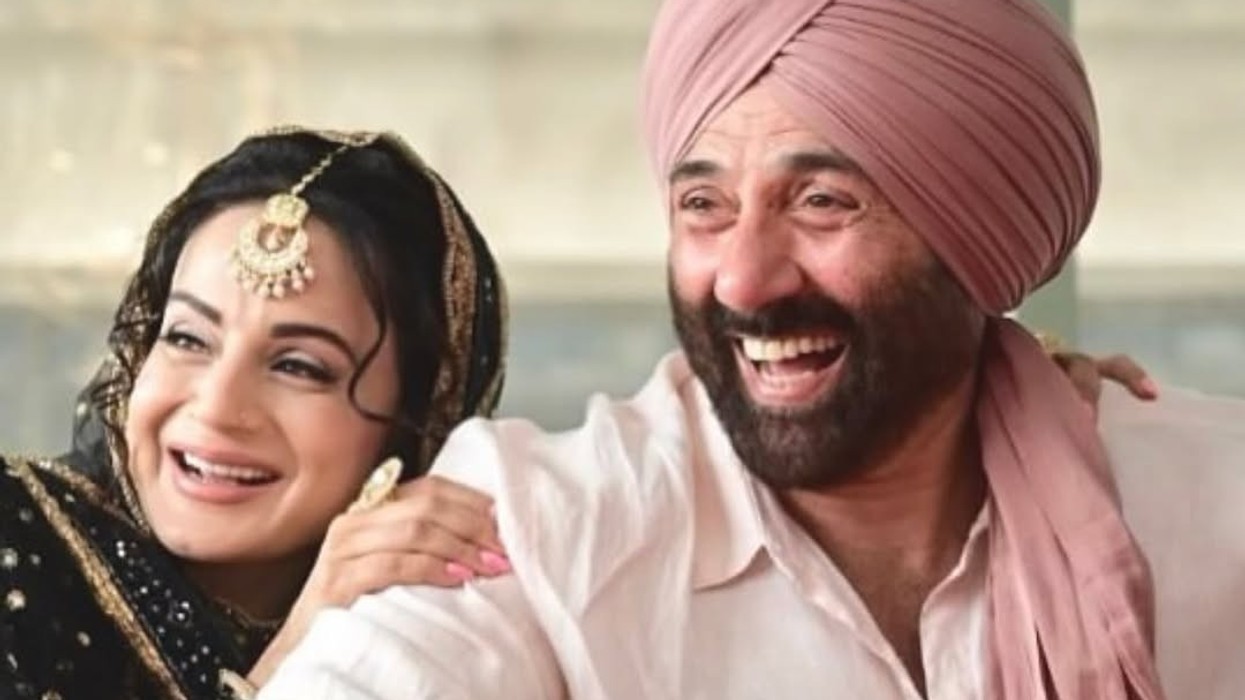
At its heart, Gadar: Ek Prem Katha is a love story between Tara Singh and Sakina. They come from different religions, different countries, and families who do not accept their relationship. Their love story unfolds against violence, political conflict, and forced separation.
But the emotional idea is simple and timeless: two people trying to stay together against all odds.
As the film itself suggests through its emotional storytelling approach, “the emotional idea is simple and timeless: two people trying to stay together against all odds.”
That is why the film continues to connect with audiences even today. Viewers do not need to understand Partition history in detail to understand love, sacrifice, or separation. These emotions remain the same across generations.
The Partition setting gave the film intensity and scale, but it is not the only reason it worked. The story is designed to make audiences feel emotionally invested in Tara and Sakina’s journey, not just observe historical events.
As the narrative tone of the film reflects, “The story is designed to make audiences feel emotionally invested in Tara and Sakina’s journey, not just observe historical events.”
A film that spoke to a different India
When Gadar released in 2001, Hindi cinema was going through a shift. Many mainstream films at the time were focused on urban romance, global settings, and polished storytelling styles that appealed to multiplex audiences.
Gadar went in the opposite direction.
It embraced rural India, strong emotional expression, loud dramatic moments, and mass-market storytelling. It was made for audiences in small towns, single-screen cinemas, and families who wanted larger-than-life entertainment.
As the film’s philosophy of storytelling suggests, “The film did not ask viewers to analyze it. It asked them to feel it.”
This difference is important. Gadar did not try to modernize itself to fit global trends. Instead, it doubled down on traditional Bollywood storytelling, emotion first, logic later, and spectacle at every step.
That approach created a deep connection with audiences who felt underrepresented in mainstream cinema.
The power of emotional cinema
One of the defining features of Gadar is its unapologetic emotional style. The film does not hold back on drama, dialogue, or action. Every major scene is designed to create a strong reaction in the theater.
Audiences did not just watch Gadar; they participated in it. People clapped during dialogues, whistled during action scenes, and reacted loudly during emotional moments.
The famous hand-pump scene became a symbol of this style of filmmaking. Even people who have never seen the full film recognize it instantly. It has become part of Bollywood’s cultural memory.
As often reflected in audience response to such cinema, “audiences did not just watch Gadar; they participated in it.”
This kind of storytelling may feel exaggerated by today’s standards, but it is also what gave the film its identity. It created a shared viewing experience that is increasingly rare in modern entertainment.
Why younger audiences still connect
One of the most interesting aspects of Gadar’s continued popularity is that many of its modern viewers were not even born when the film released.
Yet Gadar 2’s success in 2023 proved that the story still works for younger audiences. The sequel introduced a new generation to Tara Singh and Sakina, and many went back to watch the original film afterward.
The reason is simple: emotional stories do not age the same way as trends.
As the article’s central idea suggests, “emotional stories do not age the same way as trends.”
While fashion, filmmaking styles, and dialogue delivery change over time, themes like love, family, separation, and reunion remain constant. Gadar focuses heavily on these themes, which makes it accessible even decades later.
The cultural impact of Tara Singh and Sakina
Over time, Tara Singh and Sakina have become more than just film characters. They have turned into cultural symbols.
Tara Singh represents strength, loyalty, and protective love. Sakina represents emotional resilience and sacrifice. Together, they form a pair that audiences still remember as one of Bollywood’s most iconic on-screen couples.
This cultural memory is powerful. It means that even people who have not watched the film recently still recognize its characters and emotional beats.
That kind of recall is one of the reasons Gadar continues to trend online.
Gadar 2 reinforced the legacy
When Gadar 2 released more than two decades later, many expected it to rely only on nostalgia. Instead, it became one of the biggest commercial successes in recent Hindi cinema.
The film’s performance showed that the audience for Gadar had not disappeared. It had expanded. Older viewers returned out of nostalgia, while younger audiences discovered the story for the first time.
The success of the sequel brought renewed attention to the original film. Clips, dialogues, and scenes from Gadar resurfaced on social media, reminding audiences why it became a phenomenon in the first place.
Why Gadar still trends today
In today’s digital world, content trends quickly and disappear just as fast. But Gadar is different.
It trends not because of marketing campaigns or algorithm boosts, but because of emotional memory. People share scenes, dialogues, and reactions because they still feel something when they think about the film.
It also benefits from being part of Bollywood’s collective identity. Alongside films like Lagaan and Kabhi Khushi Kabhie Gham, Gadar represents a specific era of Hindi cinema that was larger-than-life, emotionally direct, and deeply theatrical.
Most importantly, it proves that storytelling does not always need to be modern to be relevant. Sometimes, the simplest emotional ideas—love, separation, sacrifice—are the ones that last the longest.
Even 25 years later, Gadar continues to remind audiences that while times change, emotions do not.