The Supreme Court of India on Wednesday (10) gave a big relief to former Bharatiya Janata Party (BJP) spokesperson Nupur Sharma by agreeing to her request to club all police cases filed against her so that she could avoid the challenge of defending herself in different states of the country.
Sharma was suspended by India's ruling party in June following her controversial remarks made against Prophet Muhammad on a live television debate in May. The episode had a major consequence as a number of Muslim nations, including some of New Delhi's allies in the Gulf, strongly objecting against Sharma's remarks.
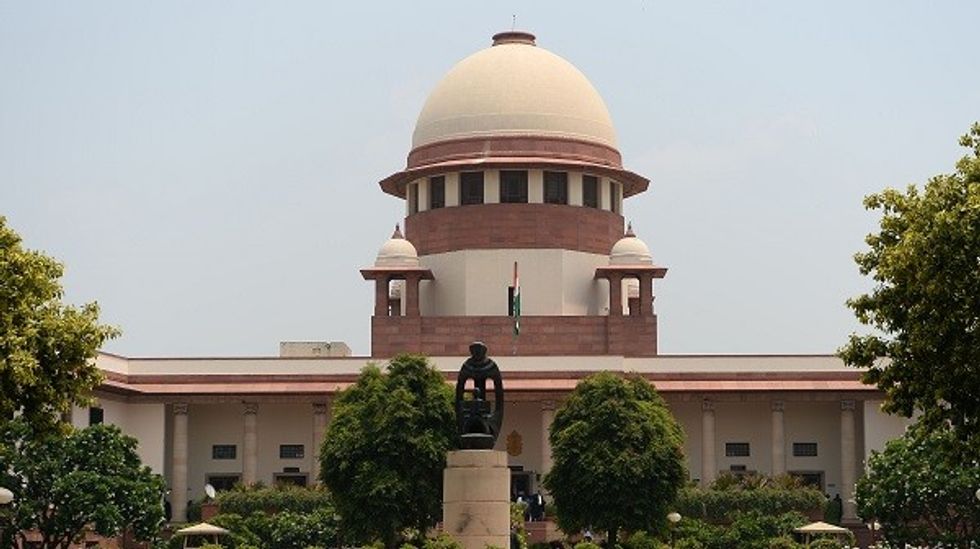 The Supreme Court of India (Photo: SAJJAD HUSSAIN/AFP/Getty Images)
In India, too, there were noisy protests against Sharma and first information reports were also filed in several states. Violence also broke out in various parts of the country.
There were also incidents in India where people from the majority Hindu community were fatally attacked allegedly for backing Sharma.
Sharma had urged the apex court to collate all the reports that were filed against her. The judges agreed, saying they have taken into consideration death threats to Sharma.
The court said all police cases against Sharma would be clubbed and handed over to police in Delhi where the latter lives. The police unit in the national capital, a Union Territory, comes under the Indian home ministry headed by home minister Amit Shah.
Last month, Sharma found a less sympathetic Supreme Court as two of its judges slammed her over the Prophet Muhammad controversy saying she was "single-handedly responsible" for the violence that broke out in various parts of India. The court also came under criticism from former judges and bureaucrats over its take on Sharma.