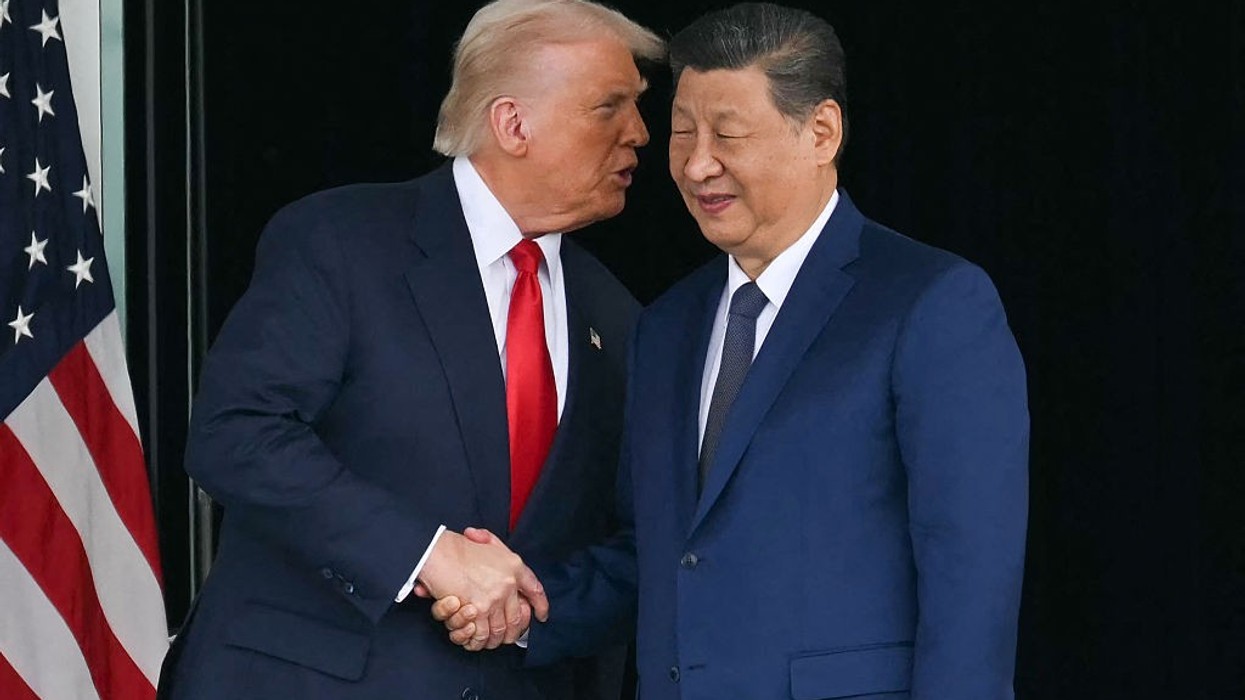

- Trump will visit Beijing on Wednesday (13) and meet Xi on Thursday (14) and Friday (15).
- US officials say Iran will be a major topic during the summit.
- Washington is concerned about China’s economic ties with Tehran.
- Iran called the latest US peace proposal unacceptable.
- Nobel laureate Narges Mohammadi was moved to a Tehran hospital.
President Donald Trump is expected to press Chinese president Xi Jinping on Iran during their upcoming summit in Beijing. Senior US officials said Washington remains concerned about China’s economic and technological ties with Tehran.
Trump is scheduled to arrive in Beijing on Wedbnesday (13) in the evening. He will meet Xi on May 14 and May 15 before leaving China. Principal Deputy Press Secretary Anna Kelly confirmed the schedule during a White House press call previewing the trip.
A senior administration official said Trump and Xi had discussed Iran several times before. The official said the issue would again play a major role during the meetings in Beijing.
“The [US] president has spoken multiple times with General Secretary Xi Jinping about the topic of Iran,” the official said.
The official added that Washington remains worried about “the revenue that China provides” to Tehran. The United States is also concerned about the transfer of dual-use goods, industrial parts, and the possibility of weapons-related exports.
The official said recent US sanctions linked to Iran-related activity would likely be discussed during the summit.
When asked whether Trump would seek more Chinese pressure on Tehran during unresolved nuclear talks, another senior official said the president had raised the issue before and would likely do so again.
“I would expect the president to apply pressure,” the official said.
The White House also dismissed suggestions that tensions involving Iran should stop Trump from traveling to China.
“I don’t think he has the luxury to focus on just one sort of issue for weeks and weeks on end,” one senior official said.
The official added that the administration had delayed the trip about six weeks earlier during what was described as a more active period in the Iran situation. However, the official said conditions had changed and the White House was now moving ahead with the visit.
“I think the question would be, 'Why wouldn’t he go on this trip at this point?'” the official said.
In another development, jailed Iranian Nobel Peace Prize winner Narges Mohammadi was transferred to a hospital in Tehran on May 10. Her foundation said she was moved amid reports that she was in critical condition because of harsh prison conditions.
The foundation said Mohammadi received a temporary suspension of her sentence after a large bond payment was made.
Mohammadi, 54, had been receiving treatment at a hospital in the northwestern city of Zanjan, where she had been imprisoned.
Her lawyer, Mostafa Nili, said she is now being treated at Tehran’s Pars Hospital by her own medical team.
Mohammadi’s husband, Taghi Rahmani, who lives in Paris, said on May 9 that her condition remained critical. He said she had suffered a severe drop in blood pressure and was struggling to speak.
On May 2, her brother Hamidreza Mohammadi told Radio Farda that she was on the “brink of death.”
"She is dying," Hamidreza said. "Because of the harsh conditions of prison and the damage that has been done to her, she is on the brink of death. The responsibility for Narges's life, and the lives of all prisoners, rests directly with [judicial authorities and the security apparatus]."
Mohammadi won the 2024 Nobel Peace Prize for her work supporting women’s rights in Iran.
She has spent much of the past decade in prison because of her activism. In December 2025, she was arrested again during a memorial ceremony in the northeastern city of Mashhad.
After her arrest, she received a new prison sentence of 7½ years and has been held in Zanjan prison, around 330 kilometers west of Tehran.
Meanwhile, Trump rejected Iran’s latest response to a US peace proposal.
On May 10, Trump wrote on social media that Tehran’s response was “totally unacceptable,” though he did not explain what parts of the proposal he opposed.
"I have just read the response from Iran’s so-called “Representatives.” I don’t like it — TOTALLY UNACCEPTABLE!" he wrote on Truth Social.
The message came shortly after Iran’s semiofficial Tasnim news agency reported details of Tehran’s response. According to the report, Iran demanded the removal of long-standing sanctions, the end of the US naval blockade, and guarantees against future attacks.
Tasnim also said Tehran wanted an end to fighting on “all fronts,” including Lebanon and Iran.
After Trump’s rejection, Iranian state media reported that Iran also demanded compensation for war damages and official recognition of Tehran’s control over the Strait of Hormuz.
State media said accepting the US proposal would amount to "surrender" for Iran.
Earlier on May 10, Trump criticized previous US administrations for their Iran policies. He said Iran for 47 years “has been ‘tapping’ us along, keeping us waiting, killing our people with their roadside bombs, destroying protests, and recently wiping out 42,000 innocent, unarmed protestors, and laughing at our now GREAT AGAIN Country.”
Several reports said the US proposal was written in a one-page memorandum. The proposal reportedly called for an end to fighting and the reopening of the Strait of Hormuz, while leaving other major issues, including Iran’s uranium enrichment rights, for later talks.