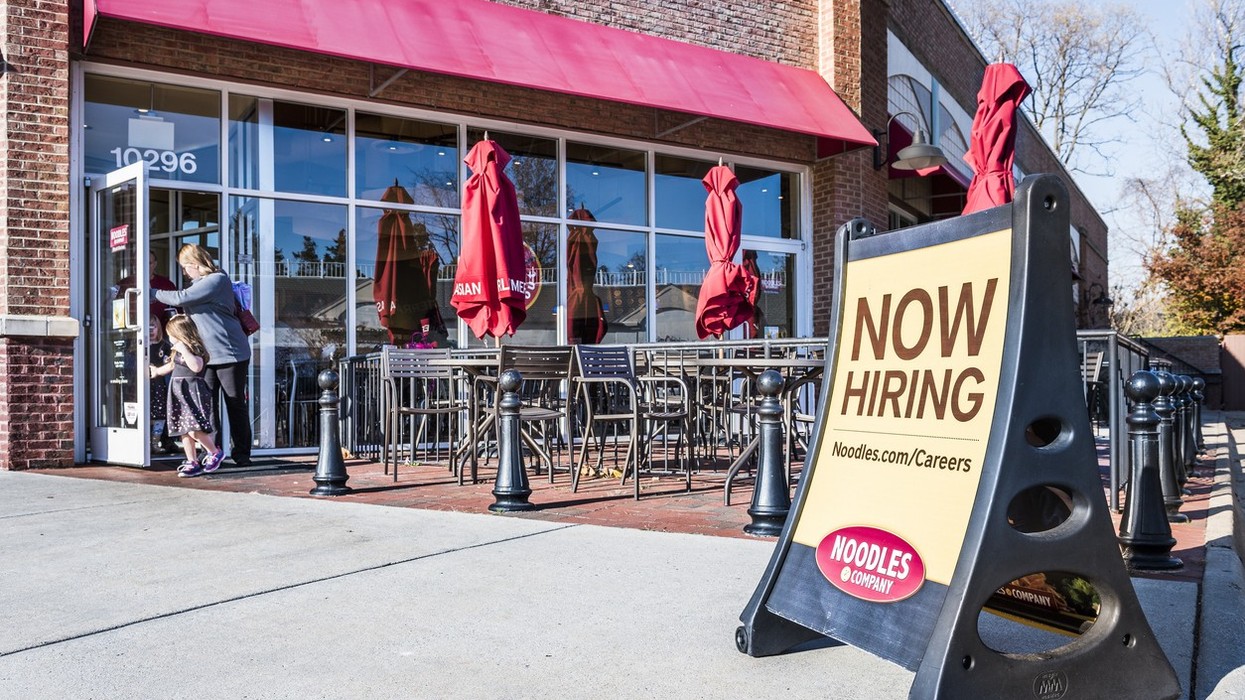

- Areas with increased ICE enforcement saw lower immigrant employment.
- US-born workers did not experience higher employment or wage growth.
- Researchers found a strong "chilling effect" among immigrant workers.
- Consumer spending and economic activity declined in some affected areas.
- Construction was among the sectors most impacted by labor shortages.
President Donald Trump returned to office promising to strengthen the labor market, with immigration enforcement at the center of that effort. His administration pledged to carry out what it described as the largest deportation campaign in US history, arguing that reducing unauthorized immigration would improve opportunities for American workers.
Treasury Secretary Scott Bessent reflected that position in July 2025 when he wrote on X: “For too long, Washington ignored how mass illegal immigration artificially suppressed wages, hurting working-class Americans – especially young men. But under President Trump, we now have a secure border, a blue-collar wage boom, and major investments from trade deals.”
However, according to research by scholars Chloe N. East and Elizabeth Cox, labor market data from the first year of Trump's second term presents a different picture. They found that while employment among immigrants fell in areas with increased immigration enforcement, there was no corresponding increase in employment or wages for US-born workers.
A Chilling effect on immigrant workers
The researchers analyzed employment and wage data from October 2023 through November 2025. They compared areas that experienced sudden increases in arrests by US Immigration and Customs Enforcement (ICE) with areas where enforcement activity remained relatively stable.
Their findings showed a significant decline in employment among likely undocumented immigrants, including many who were not detained or deported. The effect was particularly visible in industries where immigrant workers make up a large share of the workforce.
In sectors such as agriculture, construction, manufacturing, and wholesale markets, employment among likely undocumented immigrants declined by about 4 per cent.
According to the researchers, many immigrants appeared to withdraw from the labor market because of fear rather than direct removal. They cite a summer 2025 survey by Pew Research in which 43 per cent of foreign-born respondents said they feared deportation for themselves or someone close to them.
The authors describe this as a "chilling effect." Rather than being physically removed from jobs, many workers changed their behavior because of increased enforcement activity.
The researchers note that this chilling effect was about twice as large as the one they identified in earlier work examining the Secure Communities program implemented during president Barack Obama's first term.
They suggest that one reason may be the visibility and scale of enforcement activities during Trump's second term. The average number of daily ICE arrests exceeded levels seen at any point during the previous decade.
In addition, the share of arrests occurring in public places increased sharply. Arrests carried out on streets, at workplaces, courthouses, and school parking lots rose from about 19% of all apprehensions to nearly 50 per cent. The researchers argue that this made the impact of enforcement more visible and potentially increased fear within immigrant communities.
Economic effects beyond immigrant communities
Trump campaigned in 2024 on a pledge to focus immigration enforcement on criminals, particularly violent offenders. However, the researchers found that the share of immigrants arrested by ICE who had criminal convictions declined significantly during the period they studied.
According to their findings, the percentage fell from roughly 60 per cent in January 2025 to less than 30 per cent by the end of the year.
The economic effects extended beyond immigrant workers. Other studies cited by the researchers suggest that increased enforcement activity affected broader economic behavior, including consumer spending.
Research from other scholars found that cities experiencing expanded ICE raids in 2025 also saw declines in economic activity. In February 2026, officials in Minneapolis estimated that the local economy lost approximately US$203 million because of lower revenues in restaurants, hotels, and retail businesses, along with lost wages.
Another study found that states with increased ICE enforcement experienced a decline in aggregate credit- and debit-card spending. Spending dropped by 1.7 per cent points compared with states that did not experience similar enforcement increases.
Researchers have also documented declines in foot traffic in areas where immigration enforcement intensified.
A study released by Wharton in May 2026 estimated that foot traffic in heavily affected areas fell by 2.7 per cent, while spending declined by 6.2 per cent per week.
Together, these findings suggest that the economic effects of immigration enforcement reached beyond workers directly affected by arrests or deportations.
Why US-born workers did not benefit
A central argument behind the deportation campaign was that removing undocumented workers would create more jobs for American citizens. The researchers found no evidence that this occurred.
Instead, employment among US-born workers also declined in areas where ICE activity increased. At the same time, employers did not raise wages to attract more American workers. Rather than increasing hiring, businesses appeared to reduce their demand for labor.
The researchers argue that this outcome challenges the idea that immigrant and US-born workers are direct competitors for the same jobs.
Instead, they point to evidence showing that immigrant and native-born workers often perform complementary roles within the economy.
The construction industry provides a clear example. Undocumented workers frequently perform labor-intensive tasks that support larger projects. When fewer of those workers are available, projects may slow down or stop altogether.
As a result, electricians, roofers, supervisors, and other workers—jobs more commonly held by US-born workers—may also experience fewer employment opportunities because projects are not moving forward.
The researchers note that the stagnation seen in the construction sector during 2025 is consistent with this pattern. They also point to earlier studies showing that deportations during the Obama administration reduced homebuilding activity and contributed to higher new-home prices.
Historical examples show similar results. During the early 1930s, President Herbert Hoover expelled approximately 400,000 Mexican workers. According to the researchers, those removals did not lead to higher wages or greater employment for US-born workers.
Likewise, previous studies of Obama's Secure Communities program found no significant labor market gains for native-born workers.
Based on their latest research, the authors conclude that mass deportations did not create new employment opportunities for American citizens. They argue that policymakers seeking to strengthen the labor market will need to pursue other approaches to achieve that goal.












 Chazzy Patel with his electric bike and the memories captured in frames.Google Drive
 Chazzy Patel with his friends he made while circumnavigating on electric bike.Google Drive
 Chazzy Patel's setup in ThailandGoogle Drive