
Highlights:
- Progressive Hindu groups say "values matter more than identity"
- Hindu Americans are divided over Hindutva and caste politics
- Right-wing Hindu organizations are gaining political influence
- Progressive activists back anti-caste and immigrant rights policies
- Hindu Americans are becoming a major political voting bloc
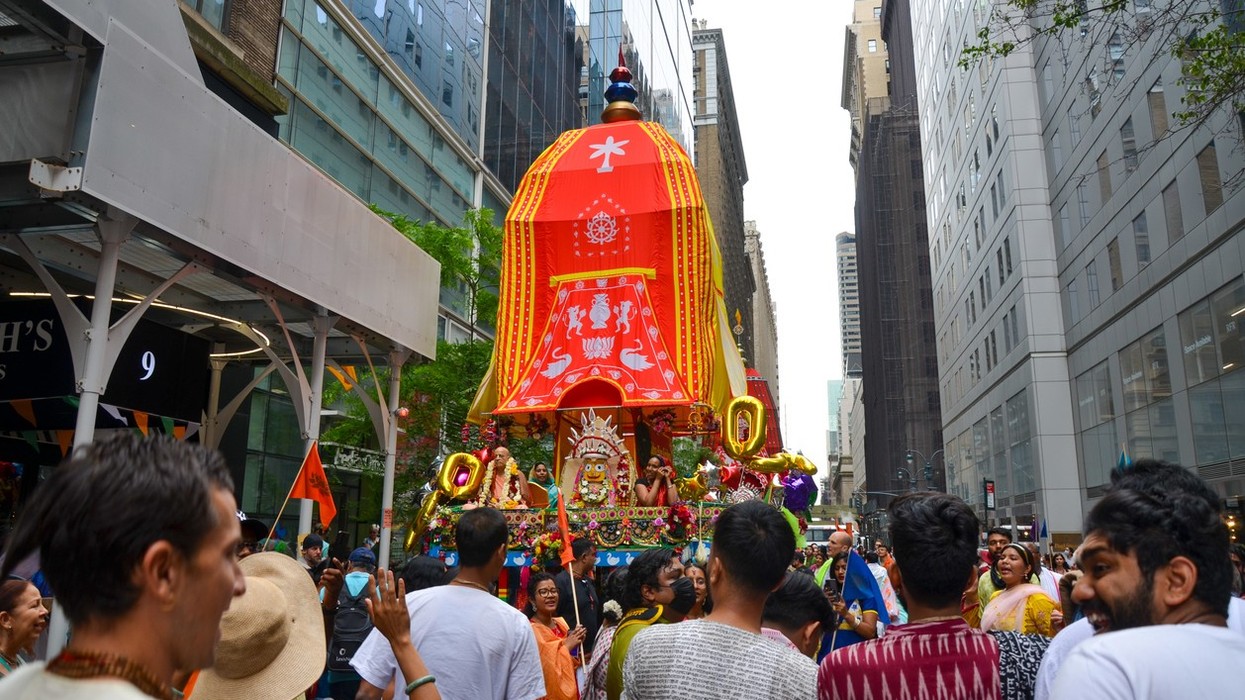
For years, Hindu Americans were often viewed as a politically quiet and economically successful immigrant community in the United States. But today, Hindu Americans are becoming more visible and more divided in American politics. Debates around identity, Hindu nationalism, caste discrimination, immigration, Gaza, and political representation are now shaping the community’s role in elections across the country.
The divide has become especially visible between right-wing Hindu organizations and a growing group of progressive Hindu and South Asian activists who say Hindu identity should not automatically be linked to Hindu nationalism or conservative politics.
At the center of this debate are questions about what Hindu Americans want politically, who speaks for them, and how they want to shape their identity in public life.
“We focus on values, not identity”
One of the clearest examples of this shift is happening in New York, as mentioned in New Lines Magazine. David Orkin, an immigrant rights attorney, organizer, and democratic socialist, is running for a seat in Assembly District 38 in Queens. The district includes Richmond Hill, Woodhaven, Ozone Park, Ridgewood, and Glendale, areas with large South Asian populations.
Orkin has received support from Hindus for Human Rights Action (HFHRA), the political wing of Hindus for Human Rights, a progressive Hindu advocacy organization formed in 2019.
The group says it supports candidates based on political values rather than religion or ethnicity.
“We focus on values, not identity,” said Ria Chakrabarty, who leads HFHRA. “We don’t assume that a candidate should be supported simply because they are Hindu or Indian. We evaluate their positions, their alliances, and their track record.”
Progressive Hindu organizations say they support candidates who oppose Hindu nationalism, back anti-caste discrimination laws, support immigrant rights, and resist what they describe as transnational repression linked to right-wing Hindu politics.
The rise of progressive Hindu politics
While we saw a political shift in Trump's first presidential term, with the Hindu Americans organizing an event in Texas, 'Howdy Modi', and later in his second presidential term, many Indian American leaders are surfacing in the main White House members. There was a shift from a right-wing to a progressive approach.
The progressive Hindu political movement gained national attention during Zohran Mamdani’s mayoral campaign in New York. Mamdani, an Indian-origin Muslim politician, faced opposition from some Hindu groups, especially in New Jersey, after publicly criticizing Indian Prime Minister Narendra Modi and Hindu nationalist politics.
In response, a group called “Hindus for Zohran” formed to show that not all Hindu Americans opposed Mamdani.
“There was a gross generalization and flattening,” said Lavanya DJ, co-founder and co-lead of the group. The campaign organized temple visits, interfaith events, and community outreach to build support among Hindu voters. According to progressive organizers, these efforts gave many Hindu Americans a political space that had not existed before.
“The campaign gave many people ‘an opportunity’ to participate in resisting the Hindu right and their influence. ‘Before that, we just didn’t have the space to do it,’” Lavanya DJ said. Groups like HFHRA say they are now trying to build long-term political influence across several states, including California, Illinois, Georgia, Michigan, and Texas.
Their priorities include:
- Supporting anti-caste discrimination legislation
- Opposing Hindu nationalism
- Rejecting funding linked to the RSS
- Defending pluralism
- Supporting immigrant and workers’ rights
Chakrabarty mentioned in the interview with News Lines Magazine that anti-caste legislation remains one of their central issues. “We make it a requirement for endorsements that candidates commit to combating caste discrimination. These are civil rights issues,” she said. “It’s important to have a Hindu voice clearly stating that anti-caste laws are not anti-Hindu.”
The movement also includes many people who are not traditionally religious. “Our community includes religious Hindus, atheists, cultural Hindus, and everything in between,” Chakrabarty said. “We’re trying to move away from that rigidity because that’s often what fuels exclusionary politics.”
Right-wing Hindu groups and political influence
At the same time, right-wing Hindu-American organizations have grown stronger and more politically organized in recent years. Groups such as the Hindu American Foundation (HAF), Coalition of Hindus of North America, Hindu American PAC, Americans4Hindus, and the Republican Hindu Coalition have become increasingly active in lobbying, elections, and public campaigns.
These groups often present themselves as defenders of Hindu identity and claim that criticism of Hindu nationalism unfairly targets Hindus. They have pushed against anti-caste legislation, arguing that such measures discriminate against Hindus. They have also campaigned against what they call "Hinduphobia."
The political visibility of Hindu Americans increased sharply after the 2021 "Dismantling Global Hindutva" conference, organized by academics from universities including Harvard, Stanford, and Princeton. The conference aimed to examine Hindu nationalism globally, but it triggered strong backlash from conservative Hindu organizations.
Academics involved in the conference later said harassment campaigns increased significantly after the event. Public Hindu nationalist events in the United States have also attracted controversy. Critics have pointed to rallies featuring bulldozers and symbols linked to Hindu nationalist politics in India.
Progressive Hindu groups have organized protests against several such events, including appearances by Sadhvi Ritambhara and Kajal Shingala. The divide has also affected politicians.
California Congressman Ro Khanna recently distanced himself from an event featuring RSS general secretary Dattatreya Hosabale. Khanna later said he did not support the RSS.
Earlier, in 2019, Khanna said it was "the duty of every American politician of Hindu faith to stand for pluralism" and to "reject Hindutva." The statement led to protests from right-wing Hindu-American groups.
A political community still defining itself
The growing divide inside Hindu-American politics reflects larger debates about identity, religion, and political power in the United States. Some Hindu Americans support conservative organizations that focus on protecting Hindu identity and opposing what they see as attacks on their religion. Others are trying to create a different political identity centered around pluralism, anti-caste activism, immigrant rights, labor rights, and opposition to Hindu nationalism.
As of 2025-2026 estimates, around 3.6 million Hindus live in the United States, making the country home to the world’s eighth-largest Hindu population. Hindus now make up roughly 0.9 per cent to 1 per cent of the US adult population, a major rise from 0.4 per cent in 2007. Most Hindu Americans, around 84 per cent to 94 per cent, are of Indian origin, though the community also includes Hindus from Nepal, Sri Lanka, the Caribbean, and Southeast Asia.
Hindu Americans are among the most successful socioeconomic groups in the country. A 2026 Pew Research Center report found that nearly 70 per cent of Hindu adults hold at least a bachelor’s degree, far above the national average. Indian-headed households, many of them Hindu, report median annual incomes between $151,200 and $176,200, nearly double the US median income. Poverty levels within the community remain relatively low.
The population is concentrated in states such as New Jersey, California, Texas, and New York, especially in technology and medical hubs. Politically, Hindu Americans have historically leaned Democratic, but recent surveys show growing Republican support after the 2024 election cycle. The community also has increasing political representation, with Hindu lawmakers serving in Congress, including Ro Khanna, Raja Krishnamoorthi, Shri Thanedar, and Suhas Subramanyam.
As Hindu Americans become more politically visible, the debate inside the community is no longer only about representation. It is increasingly about values, ideology, and what kind of political future Hindu Americans want to build in the United States.







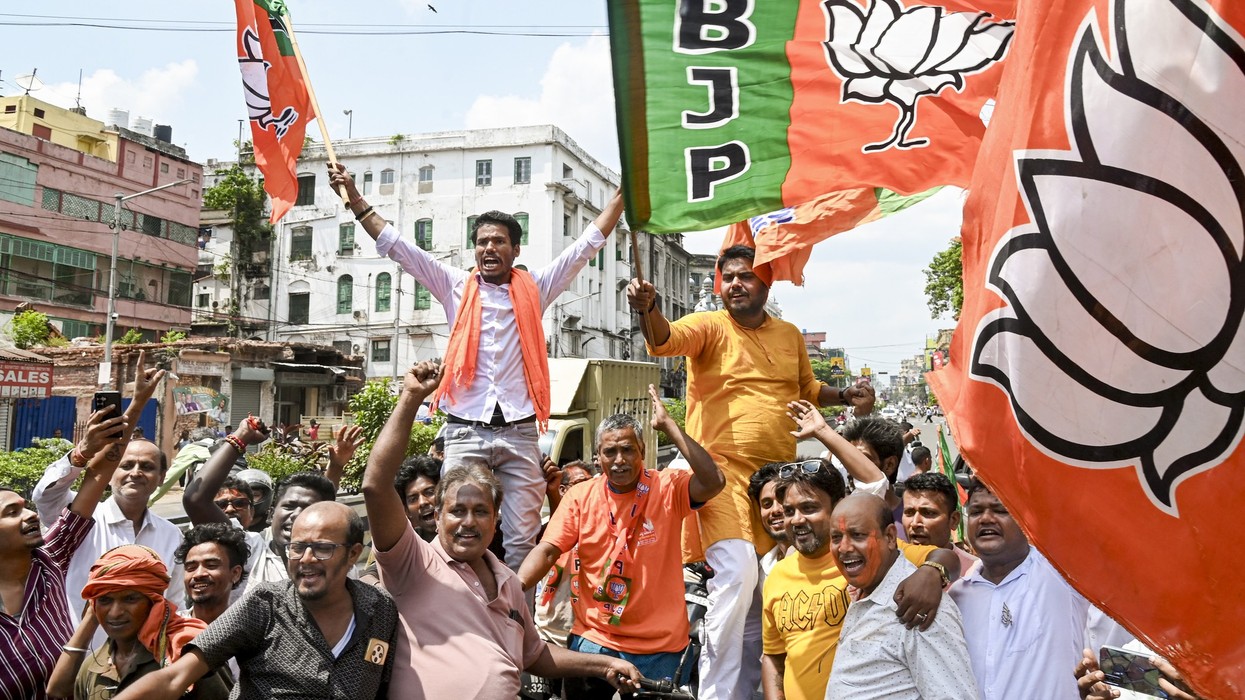
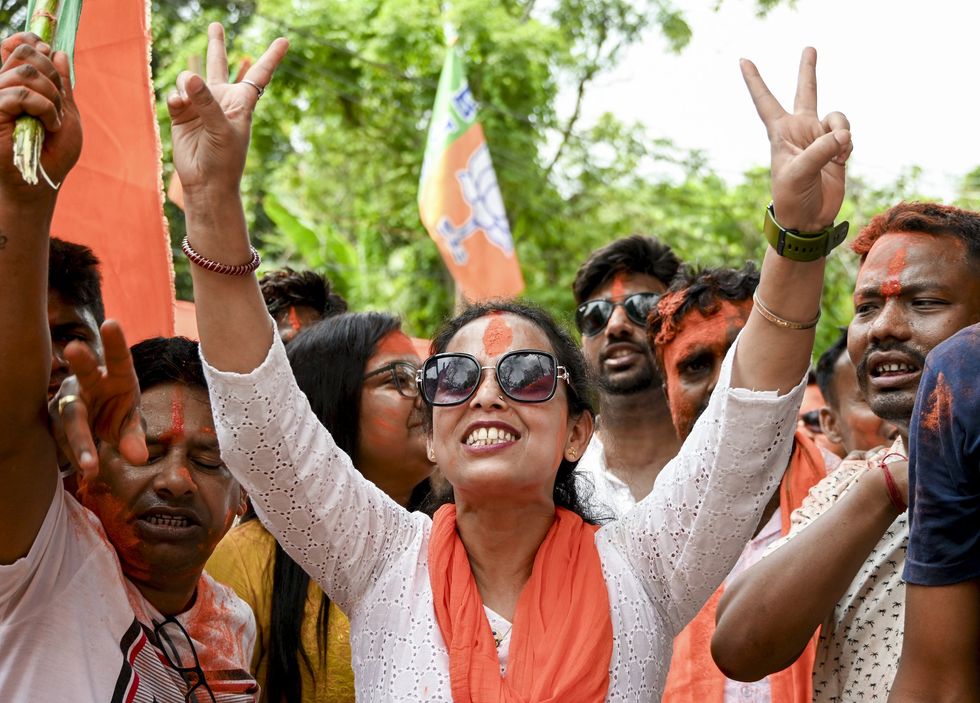 BJP supporters celebrate as the party takes lead during the West Bengal Assembly elections result day, at Raiganj, in Uttar Dinajpur district, Monday, May 4, 2026.PTI
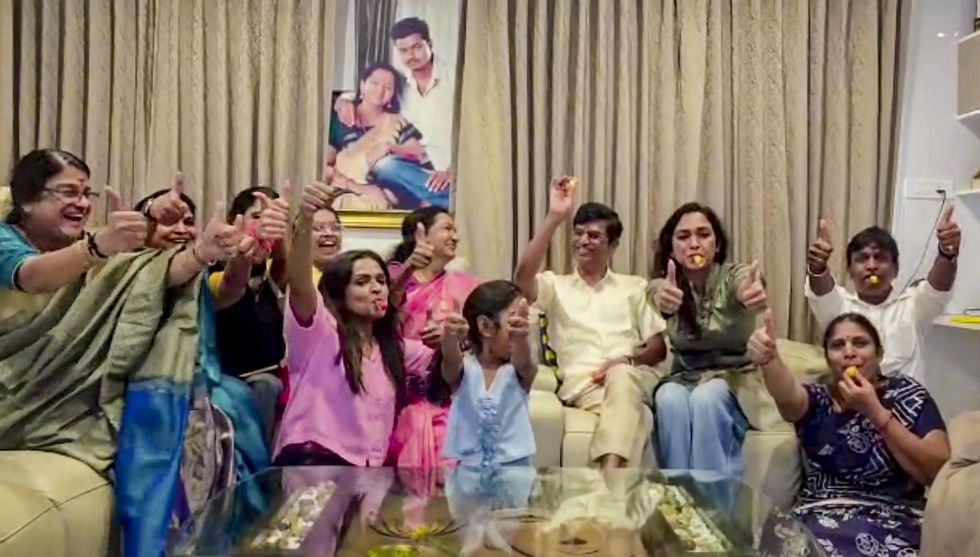 In this screengrab from a video posted on May 4, 2026, Family members of Tamilaga Vettri Kazhagam (TVK) chief Vijay, including S A Chandrasekhar and Shoba, celebrate as early trends show the party leading in the Tamil Nadu Assembly elections, in Chennai. PTI
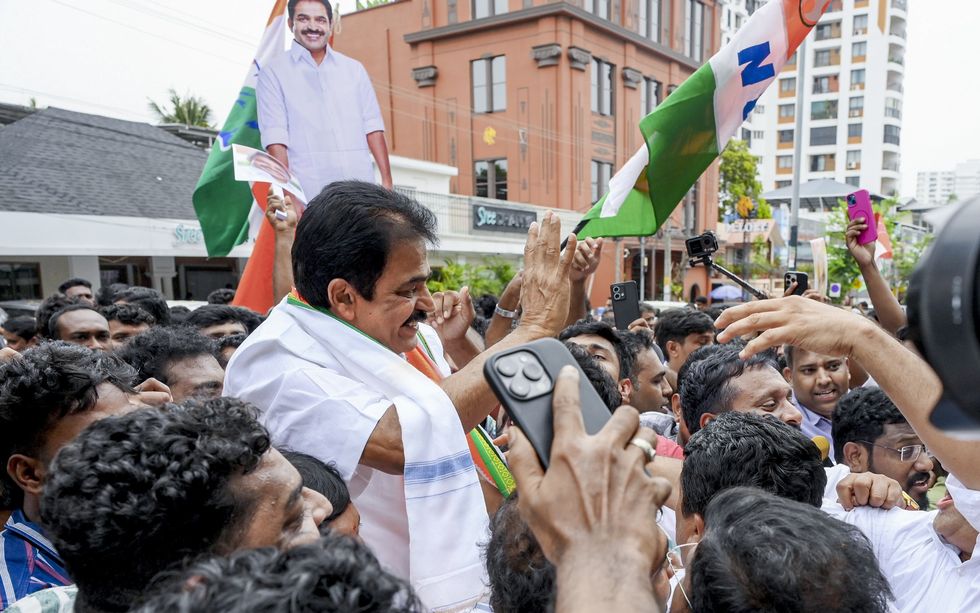 Congress MP KC Venugopal celebrates with party workers as the party takes lead during the Kerala Assembly elections result day outside KPCC office, in Thiruvananthapuram, Monday, May 4, 2026. PTI
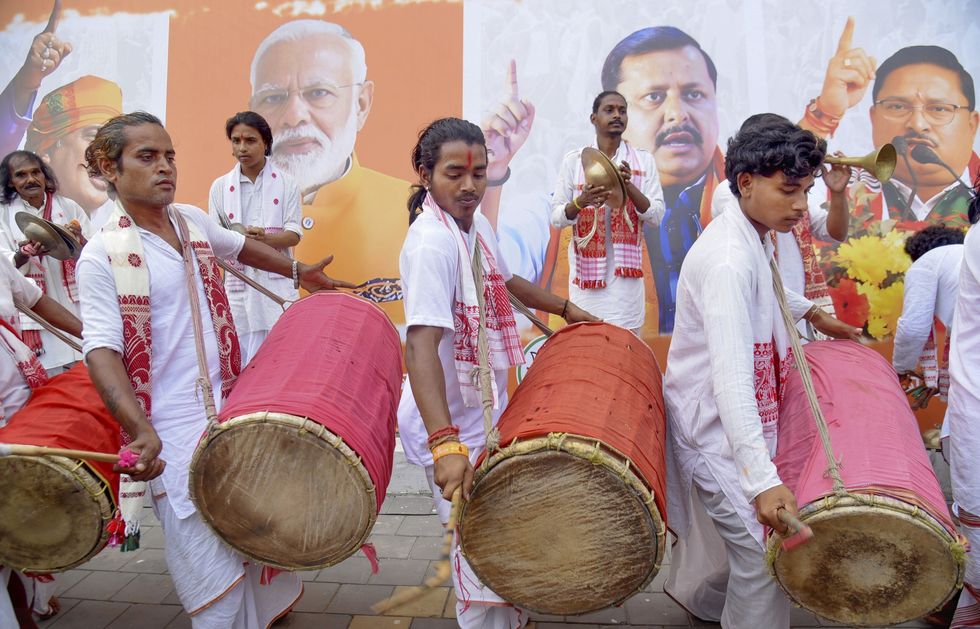 Artists play traditional drums as BJP workers celebrate the party taking lead during the Assam Assembly elections results day, at party headquarters, in Guwahati, Monday, May 4, 2026. PTI
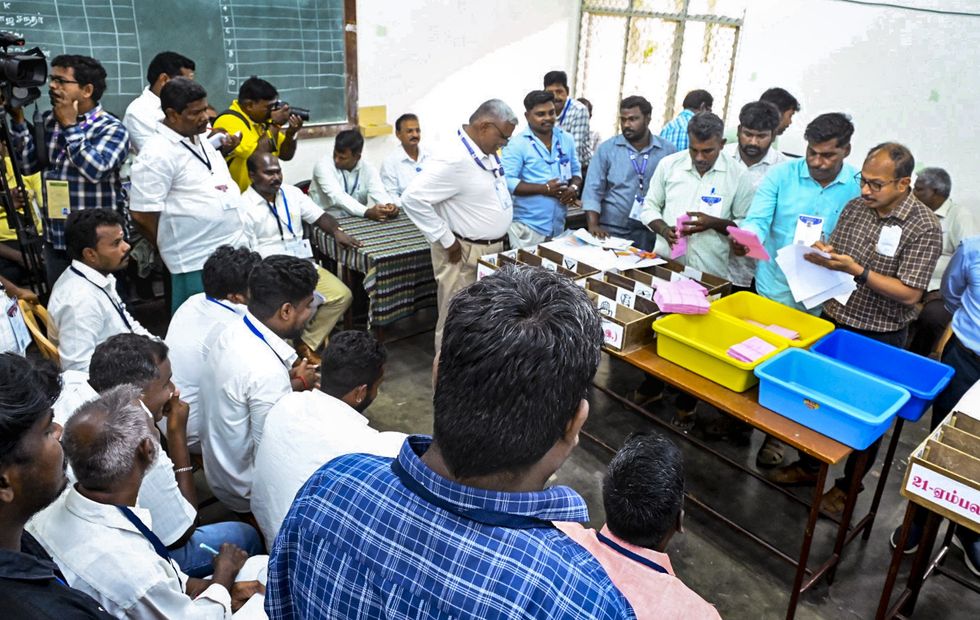 Puducherry: Poll officials during the counting of votes for the Puducherry Assembly elections at a counting centre, in Puducherry, Monday, May 4, 2026. PTI