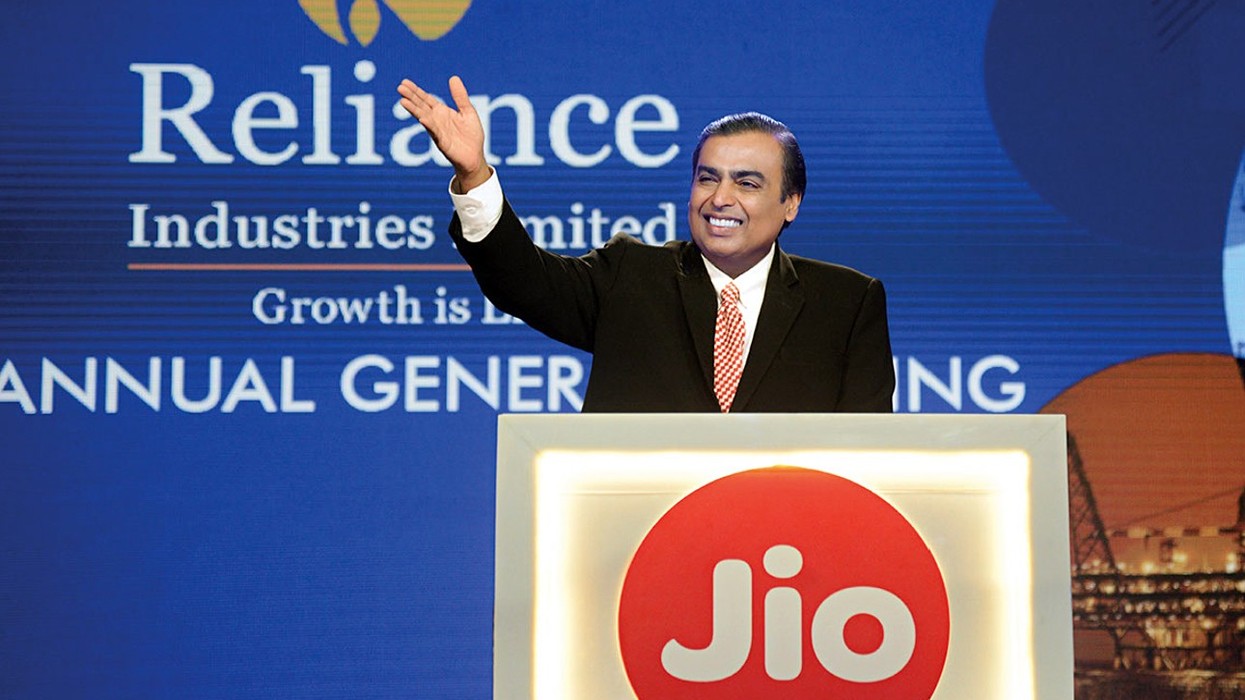

- ₹37,700 crore is expected to be raised through the Jio Platforms IPO
- 27 crore fresh shares will be issued through the offering
- ₹27,500 crore of the proceeds will be used to repay debt
Jio Platforms is finally moving closer to the stock market, with Reliance Industries’ digital and telecom arm receiving clearance from the Securities and Exchange Board of India to proceed with its much-anticipated initial public offering.
The proposed IPO could raise around ₹37,700 crore, or nearly $4 billion, making it potentially the largest public issue in India so far.
Jio Platforms had filed its draft IPO papers with SEBI in June. The regulator's final observations on August 28 clear an important hurdle, allowing the company to move ahead with preparations for the offering, subject to the remaining regulatory requirements.
Where will the IPO money go?
The company plans to issue 27 crore fresh equity shares, each with a face value of ₹10. The final issue price will be determined through the book-building process.
A large portion of the money raised will go towards reducing Jio Platforms' debt.
Around ₹27,500 crore of the proceeds is earmarked for debt repayment, while the remainder will be used for general corporate purposes, subject to a limit of 25 per cent of the issue proceeds.
At least 35 per cent of the net issue will be reserved for retail individual investors.
The fresh shares are expected to represent around 2.9 per cent of Jio Platforms' total equity base after the issue.
Jio has become one of India's most important telecom and digital businesses since entering the market in 2016.
Its aggressive pricing strategy helped transform India's telecom industry, while heavy investment in network infrastructure accelerated the country's shift towards 4G and 5G services.
The company now has more than 524 million subscribers across India.
Its 5G customer base reached 268 million by March 2026, with 5G accounting for about 55 per cent of total wireless traffic, according to the company.
But Jio Platforms is much more than a telecom operator. Its ecosystem spans digital services, entertainment, payments and other consumer-facing technology businesses, making the IPO a closely watched event for investors looking for exposure to India's expanding digital economy.
Meta and Google are already investors
Jio Platforms' journey towards the public markets has been closely linked to its fundraising drive in 2020, when some of the world's biggest technology companies invested in the business.
Meta invested $5.7 billion in 2020 for a 9.98 per cent stake, while Google also became a significant investor with a 7.73 per cent holding.
Reliance Industries remains the largest shareholder, with a 66.43 per cent stake.
The involvement of global technology companies helped establish Jio Platforms' valuation among India's most closely watched private companies well before its IPO plans emerged.
If the issue raises around ₹37,700 crore, Jio would overtake the country's previous mega IPOs.
Hyundai Motor India raised ₹27,870 crore in October 2024, while Life Insurance Corporation of India raised ₹21,008 crore in 2022.
Other major offerings include Paytm's ₹18,300 crore IPO in 2021 and Coal India's ₹15,475 crore issue in 2010.
Jio's offering could therefore mark a new benchmark for the Indian primary market.
It also comes at an interesting time for India's IPO market, with the National Stock Exchange preparing its own public offering. Market estimates suggest the NSE IPO could raise around ₹30,000 crore through an offer for sale.
Together, the two offerings could bring more than ₹67,000 crore to the market.
For investors, however, the size of the Jio IPO is only part of the story. The bigger question will be how the market values a business that sits at the intersection of India's telecom, technology and digital economy — and whether Jio's next phase of growth can justify that valuation.





 A mud-covered building following a flash flood at Trishuli in Nuwakot district, Nepal, August 26, 2026.Reuters.





 iStock