
Highlights:
- Kareena Kapoor says Animal’s success encouraged Bollywood to copy its violence rather than its storytelling.
- Her remarks came during a Yuvaa town hall focused on young audiences and their changing expectations.
- She argues viewers are becoming smarter and less willing to follow predictable Bollywood formulas.
- But Kareena’s own career has benefited from star power, commercial cinema, and familiar Bollywood formulas.
- Her upcoming Daayra gives her a chance to prove that originality can work without relying on a proven franchise or formula.
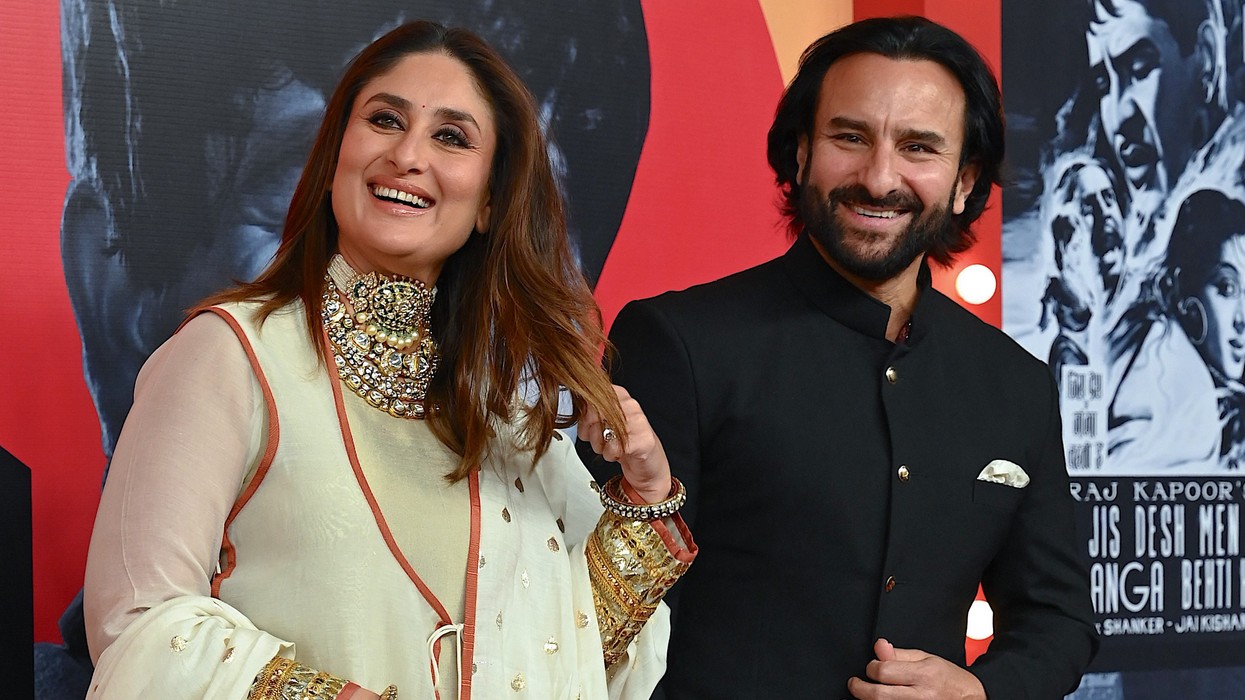
Kareena Kapoor did not criticize Bollywood simply because another film became a blockbuster. Her frustration appears to be with what happened after the blockbuster.
During a town hall interaction with youth-focused platform Yuvaa, Kapoor pointed to Ranbir Kapoor’s Animal as an example of how quickly Bollywood can turn one success into an industry-wide template.
The film crossed ₹900 crore worldwide in 2023, roughly $108 million at the time, but Kapoor argued that the lesson filmmakers seemed to take from its success was not necessarily how to tell a compelling story. Instead, she suggested, the takeaway became much simpler: violence works, so make more violent films.
That is the “herd mentality” Kapoor was calling out: the tendency to see a successful film, identify its most visible ingredients, and reproduce them until audiences move on.
Her criticism comes at a time when audiences have more choices than ever. Viewers can move between Bollywood, Hollywood, Korean dramas, and global streaming platforms almost instantly. A familiar formula may still attract attention, but it faces far more competition than it once did.
What actually triggered Kareena’s criticism
The Animal example is important because the film was never simply a box-office story. Its portrayal of masculinity and women generated substantial criticism alongside its commercial success. Ranbir Kapoor has also said that colleagues privately told him they were disappointed that he had taken the role.
That makes Kareena’s remarks more pointed. She is not denying that Animal worked commercially. She is questioning what the industry learned from that success.
Her larger argument is that audiences can recognize quality for themselves. A movie does not automatically need to reproduce whatever recently delivered approximately $24 million, $36 million, or $60 million, respectively. Assuming audiences will keep responding to the same formula, she suggests, underestimates how quickly viewers are becoming more discerning.
But Kareena may be part of the contradiction
There is an uncomfortable wrinkle in Kareena’s argument: she is criticizing the very star-driven system that helped make actors like her central to Bollywood’s commercial machinery.
For much of her career, Kareena has moved between prestige projects, mainstream entertainers, franchises, remakes, and films whose commercial appeal was closely tied to established stars. That does not make her criticism invalid, but it does make the argument less black-and-white.
Bollywood’s dependence on recognizable actors and proven formulas is not something created by Animal. Stars have long been part of the industry’s business model. The more interesting question is whether someone who has benefited from that system can credibly ask the industry to take bigger creative risks.
That tension is what makes Kareena’s comments more revealing than a straightforward attack on Bollywood.
Daayra puts her argument to the test
Her upcoming film Daayra makes the contradiction even more interesting. The crime thriller, directed by Meghna Gulzar and featuring Prithviraj Sukumaran, is being positioned around an original story rather than an obvious sequel or franchise formula.
That gives Kareena an opportunity to demonstrate the point she is making.
If audiences respond to Daayra, it strengthens her argument that Bollywood can still sell films by offering something different rather than simply reproducing the latest blockbuster’s ingredients. If it struggles commercially, however, the industry’s obsession with recognizable formulas will suddenly look less like a creative failure and more like a response to the economics of filmmaking.
Ultimately, Kareena is asking Bollywood to trust audiences enough to try something different. But audiences will decide whether they are ready to reward that gamble, and whether Bollywood’s biggest stars are willing to make the same leap they are asking everyone else to take.