
Highlights:
For years, American wellness culture has borrowed from Indian traditions—yoga, meditation, Ayurveda, chakras and, increasingly, ideas around manifestation and abundance. Now, social media has given that borrowing a new name: “Lakshmi-maxxing.”
The phrase combines Lakshmi, the Hindu goddess associated with prosperity and auspiciousness, with the internet suffix “-maxxing,” which generally means optimizing or maximizing a particular quality. The broader “maxxing” vocabulary grew through online trends such as looksmaxxing, moneymaxxing and gymmaxxing.
In its emerging wellness incarnation, Lakshmi-maxxing is being used to describe a lifestyle inspired by qualities associated with Lakshmi: beauty, femininity, cleanliness, abundance, gratitude, generosity and prosperity. Some creators are presenting it as a way of creating a more beautiful, intentional and abundant life.
But there is a catch.
Lakshmi is not simply the Hindu version of a “rich girl” or “beauty goddess.”
Her place in Hindu traditions is considerably deeper and understanding that distinction is essential to understanding why the new trend is attracting both enthusiasm and criticism.
What does “Lakshmi-maxxing” actually mean?
The term is still new and appears to be primarily an internet microtrend rather than an established wellness movement. Its language comes from the broader “-maxxing” phenomenon, in which people try to optimize an aspect of their lives.
Lakshmi-maxxing applies that vocabulary to qualities popularly associated with Lakshmi.
For wellness creators, that can mean embracing beauty and femininity, creating a clean and aesthetically pleasing home, wearing gold or traditional jewelry, practicing gratitude, cultivating generosity and adopting an “abundance” mindset.
Some interpretations go considerably further, connecting Lakshmi with manifestation, self-worth, romantic relationships and financial success.
One creator, Reshma Oracle, has built content around what she calls the “Lakshmi frequency,” linking beauty, love and wealth as expressions of a single energy. Her material includes the idea that “beauty = love = money” and describes Lakshmi as a framework for beauty, wealth and receiving.
That interpretation is distinctly modern. It should not automatically be presented as traditional Hindu theology.
And that distinction is where the story gets interesting.
Lakshmi in Hindu tradition is much more than wealth
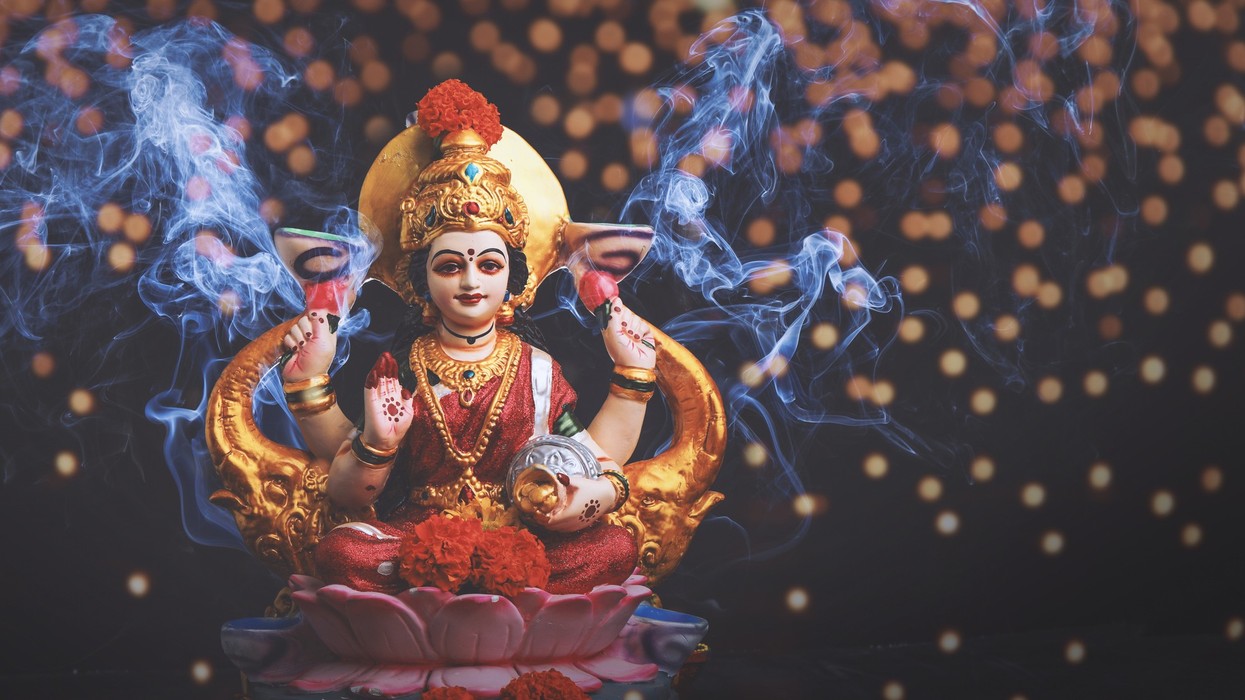
In Hindu traditions, Lakshmi is widely revered as the goddess of prosperity, fortune and abundance and is closely associated with Vishnu, one of Hinduism's principal deities. In Vaishnavism, she is understood not merely as Vishnu's consort but also as his divine energy, or shakti.
Her symbolism is also more expansive than financial wealth.
Lakshmi is traditionally depicted associated with the lotus, abundance and auspiciousness. Her four hands are interpreted in some traditions through the framework of dharma, kama, artha and moksha—four major aims of human life in Hindu thought.
Her mythology also connects her with the Samudra Manthan, or churning of the cosmic ocean. In the Puranic tradition, Lakshmi emerges from the ocean and chooses Vishnu as her consort, linking her presence with cosmic order and prosperity.
And then there is Ashtalakshmi—the eight forms of Lakshmi.
These manifestations broaden the meaning of prosperity beyond a bank balance. They are traditionally associated with different forms of abundance, including material wealth, food and agriculture, knowledge, courage, victory, progeny and spiritual or existential wellbeing.
That makes the modern internet version of Lakshmi-maxxing both recognizable and incomplete.
Keeping your home clean, appreciating beauty, being generous and seeking prosperity can certainly resonate with ideas surrounding Lakshmi. But the goddess herself cannot easily be reduced to a checklist for becoming prettier, wealthier or more feminine.
As one Indian creator, Anushka of @storiesbyanugrah, put it: “So Lakshmi Maxxing is a new wellness-content focused on beauty, gold, aesthetics driven from the Goddess Lakshmi.”
She then raises the central criticism of the trend: “Just aesthetics and content?”
Her larger argument is that Lakshmi's significance extends well beyond the aesthetic version circulating online, pointing to the goddess's multiple manifestations and associations with different forms of abundance.
From sacred tradition to social-media aesthetic
This is not the first time Indian spirituality has been repackaged for global wellness culture.
Yoga became a worldwide fitness and wellness practice. Meditation moved from religious and philosophical contexts into corporate stress-management programs. Ayurveda entered the international wellness marketplace. Chakras became part of mainstream spiritual vocabulary.
Lakshmi-maxxing appears to be following a similar path—but with an especially visual appeal.
Gold jewelry, flowers, lotus imagery, beautiful clothing, clean spaces, feminine beauty and rituals can all translate extremely well to Instagram and TikTok.
That makes Lakshmi particularly compatible with the visual language of contemporary lifestyle content.
The potential problem is that aesthetic borrowing can flatten cultural meaning.
A person lighting a lamp, wearing gold or decorating a home beautifully is not necessarily “appropriating” Hinduism. These practices can exist independently as fashion, design or personal wellness choices. But calling them “Lakshmi-maxxing” attaches a specific Hindu religious figure and tradition to an internet trend whose goals may be very different from devotional practice.
That is why some observers have questioned whether the trend represents genuine interest in Indian philosophy or simply another form of cultural packaging.
The debate has already appeared in online discussions surrounding recent coverage of the phenomenon. Some users question whether Lakshmi-maxxing is actually widespread in the United States at all, while others argue that the trend is simply another example of the internet attaching “-maxxing” to virtually anything.
Is Lakshmi-maxxing really a Western trend or just a viral niche?
This may be the most important reality check.
There is not yet strong evidence that Lakshmi-maxxing has become a mainstream movement among American women. What exists is a growing collection of social-media posts, wellness content and commentary around the phrase.
That distinction matters.
The internet can make a niche trend look enormous. A handful of creators, reposts and media stories can create the impression that “everyone” is doing something when the phenomenon is actually confined to a small online community.
Still, the concept is revealing—even if the trend itself remains small.
It shows how rapidly Indian spiritual symbols are entering the vocabulary of global internet culture, and how easily ancient religious ideas can be translated into the language of self-optimization.
There is also something familiar about the underlying philosophy.
The desire for a beautiful home, financial security, generosity, cleanliness, gratitude and abundance isn't foreign to Hindu households. In many Indian traditions, prosperity has long been connected with how one lives, behaves, gives and maintains one's surroundings—not simply how much money one possesses.
So perhaps the most accurate way to understand Lakshmi-maxxing is not as an ancient Hindu practice suddenly “discovered” by the West.
It is a new internet label being placed on selected ideas associated with an ancient goddess.
And that difference matters.
Lakshmi can certainly inspire conversations about abundance, beauty, generosity and prosperity. But the traditional Lakshmi is considerably larger than the algorithmic version: she represents multiple dimensions of flourishing, and her symbolism sits within a complex religious tradition that cannot be completely captured by an Instagram aesthetic.
For American audiences encountering the phrase for the first time, that may be the most important takeaway:
Lakshmi-maxxing is new. Lakshmi is not.









 Actor Tom Cruise kisses his wife Nicole Kidman at the Sydney premiere of "Mission Impossible 2" May 30, 2000 at Fox Studios in Australia. Cruise and Kidman, one of the Hollywood's best-known couples, announced February 5, 2001 that they are separating after more than a decade of marriage. Getty Images
 Nicole Kidman attends Paramount+'s "Lioness" Season 3 New York Premiere at SVA Theater on July 29, 2026 in New York City.Getty Images
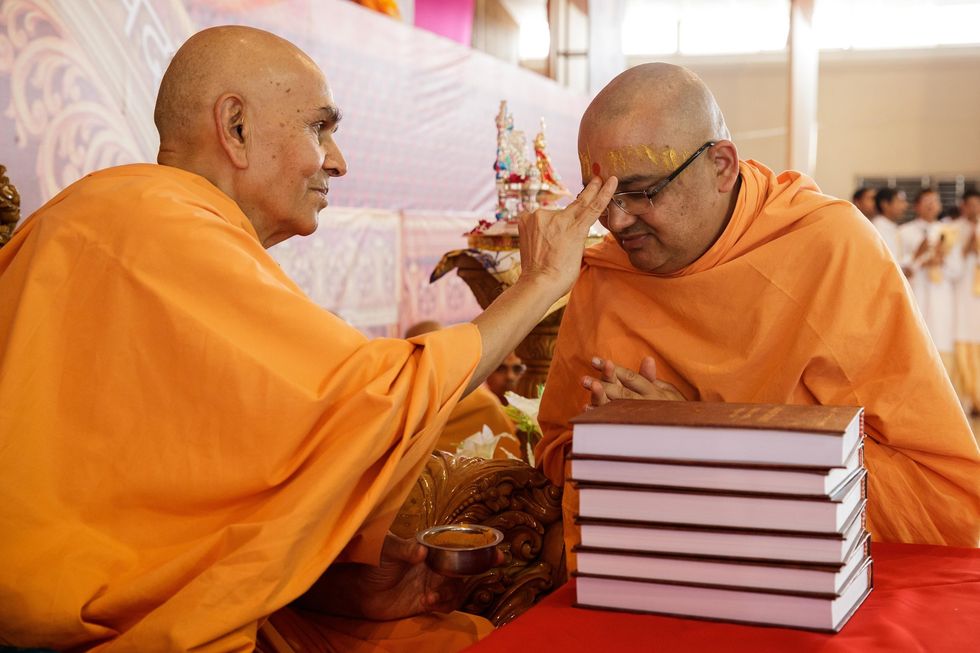 HH Pramukh Swami Maharaj blessing Dr. Bhadreshdas SwamiBAPS