
Highlights:
- Indians in Malaysia fall for scams less often, police say
- Scammers struggle with victims who ask many questions
- Indians are targeted as often as other groups
- Romance scams affect more women than men
- Greed and loneliness are common traits among victims
Penang Commercial Crime Investigation Department deputy chief DSP Pand Menf Tuck shared this insight at a scam prevention forum. The Penang Chinese Town Hall organized the event on Saturday (2). He said police data has consistently shown that Indians are scammed less often than any other ethnic group.
The police official went on to explain that this does not mean scammers ignore Indians. In fact, they are targeted just as often as others. However, scammers often fail to deceive them. This is because many Indian victims respond with a series of questions that the scammers cannot easily answer.
"Say a scammer tries to convince an Indian victim of a kidnapping that has never happened. The victim will ask: who was kidnapped? Where? When? Why? The questions keep coming until the scammer just gives up and moves on," he said
Police data collected in Penang last year also showed differences in scam patterns. One example is romance parcel scams. In 2024, there were 57 female victims compared to only 17 male victims in Penang.
The police official also mentioned that this gap may not show the full picture. He believes many men do not report such cases because they feel embarrassed. As a result, the number of male victims could be higher than what the data shows.
He also spoke about the common traits seen in victims of romance scams. According to him, most victims show either greed or loneliness. These emotions can make people more vulnerable to online scams.
He shared real-life examples to explain this pattern. In one case, a nurse working at a hospital in Penang lost RM30,000. She was tricked by an online “boyfriend” she met on a popular dating platform. The scammer gained her trust and then asked for money.
In another case, a woman lost close to RM1 million. She had recently lost her husband and met a “new partner” online. The scammer convinced her to send large amounts of money, including funds from her late husband’s insurance payout.
These cases show how scammers use emotional situations to trick victims. They often build trust first and then ask for money over time.
Police continue to warn the public to stay alert. They advise people to be careful when dealing with strangers online. Asking questions and verifying information can help prevent scams.
DSP Pang said awareness is key. People should not rush into decisions, especially when money is involved. Taking time to think and check facts can reduce the risk of becoming a victim.





 BJP supporters celebrate as the party takes lead during the West Bengal Assembly elections result day, at Raiganj, in Uttar Dinajpur district, Monday, May 4, 2026.PTI
 In this screengrab from a video posted on May 4, 2026, Family members of Tamilaga Vettri Kazhagam (TVK) chief Vijay, including S A Chandrasekhar and Shoba, celebrate as early trends show the party leading in the Tamil Nadu Assembly elections, in Chennai. PTI
 Congress MP KC Venugopal celebrates with party workers as the party takes lead during the Kerala Assembly elections result day outside KPCC office, in Thiruvananthapuram, Monday, May 4, 2026. PTI
 Artists play traditional drums as BJP workers celebrate the party taking lead during the Assam Assembly elections results day, at party headquarters, in Guwahati, Monday, May 4, 2026. PTI
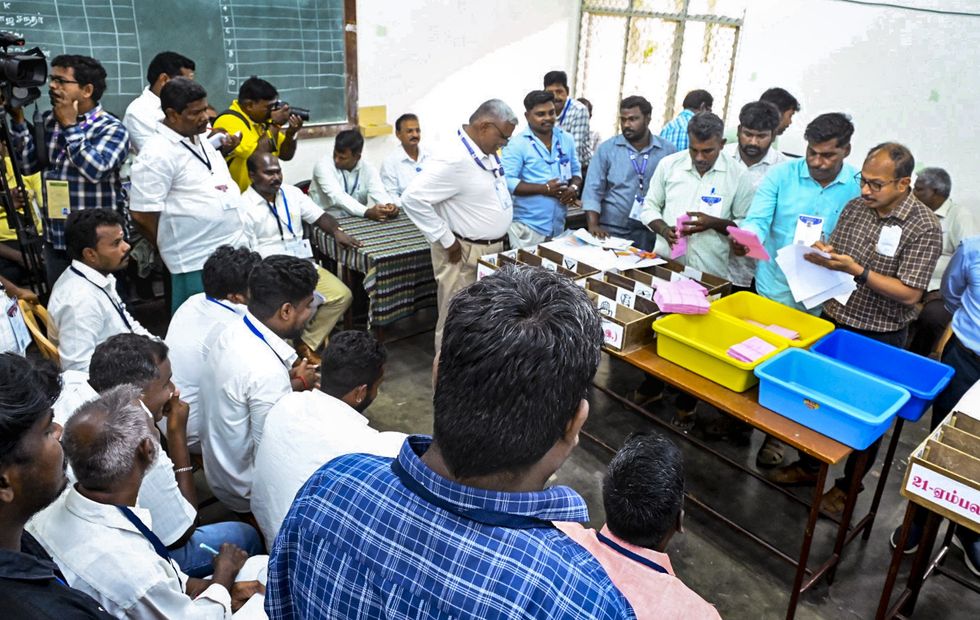 Puducherry: Poll officials during the counting of votes for the Puducherry Assembly elections at a counting centre, in Puducherry, Monday, May 4, 2026. PTI