OXFORD UNIVERSITY and AstraZeneca are recruiting around 10,000 adults and children in Britain for trials of an experimental coronavirus vaccine, a day after receiving US backing worth up to $1.2 billion.
Institutions across Britain had begun enrolling up to 10,260 adults and children to see how well the human immune system responds to the vaccine and how safe it is, the university said.
Researchers are mainly looking for healthcare staff and other public-facing workers to join the trial as in order to get a clear signal on the vaccine’s efficacy, they need a minimum number to catch the coronavirus in their everyday lives.
An initial trial that started on April 23 has already seen more than 1,000 volunteers aged 18-55 receive the injection and Oxford said phases II and III will add people aged 56 and older as well as children of 5 to 12 years.
“The speed at which this new vaccine has advanced into late-stage clinical trials is testament to Oxford’s ground-breaking scientific research,” AstraZeneca executive Mene Pangalos said.
But a read-out on how well the vaccine works may take between two and six months, Oxford University said on Friday.
The British drugmaker has already signed up Britain and the United States as partners to mass produce the vaccine, to be ready for delivery if and when there is conclusive evidence that it both works and is safe to use.
AstraZeneca Chief Executive Pascal Soriot said last month that a first indication on efficacy would likely come in June or July.
Healthy volunteers will be randomly assigned to either receive the ChAdOx1 vaccine, also known as AZD1222, or an established meningitis vaccine.
Participants are not told which group they are in, so as not to influence their behaviour. Minor side effects expected from either vaccine such as a sore arm or headache would therefore not give away which they have been given.
“If transmission remains high, we may get enough data in a couple of months to see if the vaccine works, but if transmission levels drop, this could take up to six months,” the university said in a statement.
The World Health Organization (WHO) listed eight vaccines candidates as being tested on humans in a May 15 overview.
This included firms such as Moderna Inc, Inovio , partners Pfizer Inc and BioNTech as well as China’s CanSino and Sinovac.











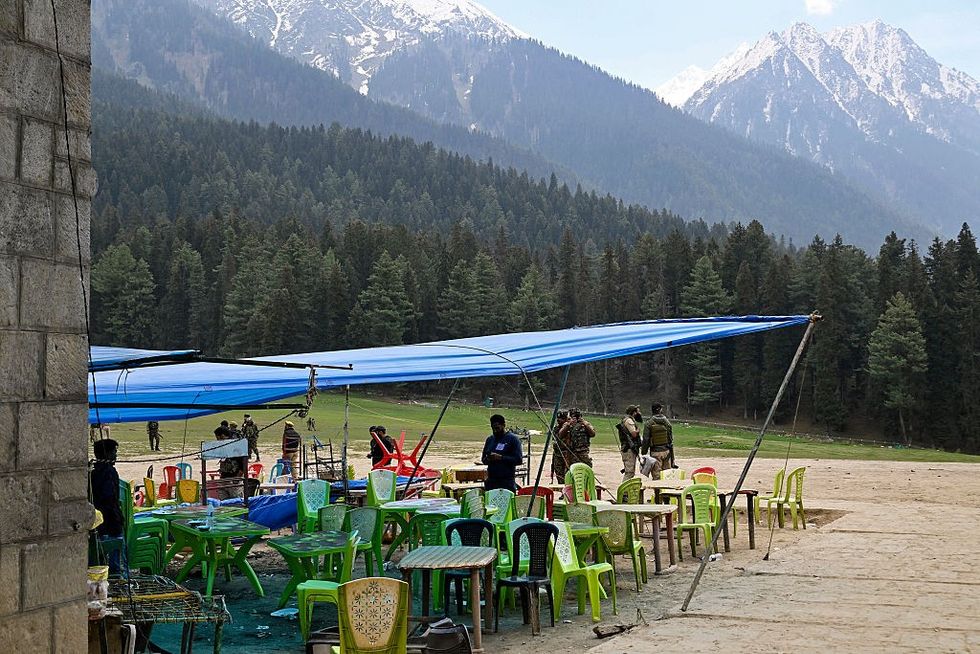 Security personnel inspect the site in the aftermath of an attack as food stall chairs lie empty in Pahalgam, about 90 kilometres (55 miles) from Srinagar on April 23, 2025. Indian security forces in Kashmir carried out a major manhunt on April 23, a day after gunmen opened fire on tourists killing 26 people in the region's deadliest attack on civilians since 2000. Getty Images
 Tourists visit Betaab Valley in Pahalgam, about 112 km south of Srinagar on June 26, 2025.Getty Images
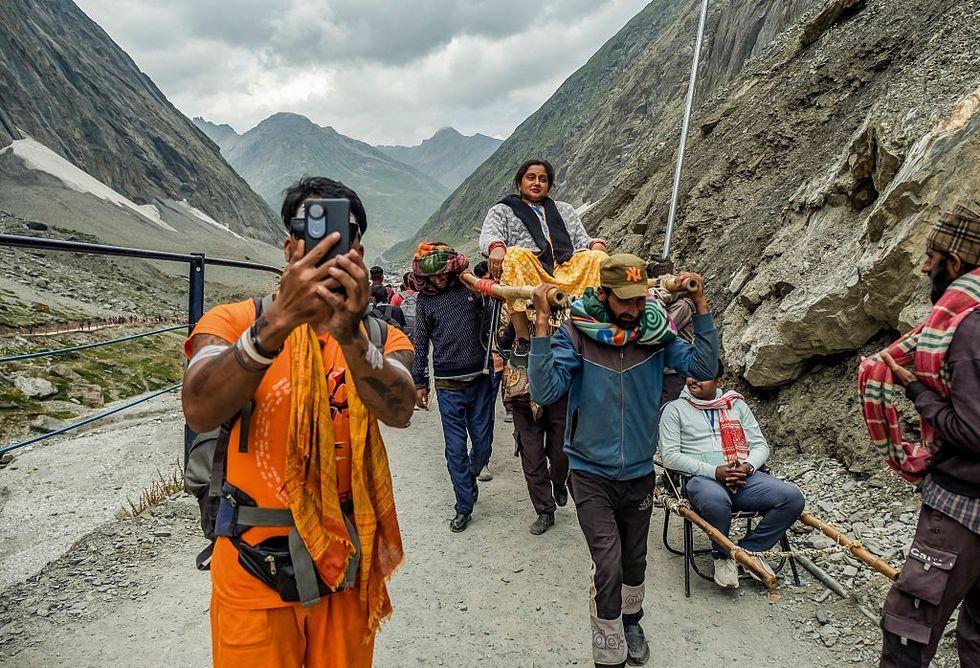 Pilgrims gather at the Baltal Base Camp near Domel, en route to the sacred Amarnath cave in Srinagar, Jammu and Kashmir, India, on July 29, 2025. The annual Amarnath Yatra, which began on July 3, proceeds under heightened security following a deadly terror attack in Pahalgam that claimed the lives of 25 tourists and a local pony handler. Security forces have been deployed in large numbers across the pilgrimage route, with checkpoints, surveillance, and restrictions in place to safeguard the thousands of devotees undertaking the arduous journey. The Amarnath Yatra is one of the most important Hindu pilgrimages, drawing worshippers from across India to the high-altitude Himalayan shrine dedicated to Lord Shiva. Despite the threat of violence and challenging terrain, pilgrims continue their spiritual trek, determined to complete the sacred journey under the shadow of grief and resilience.Getty Images