
Highlights:
- First Indian American to receive the Arthur M. Bueche Award.
- First person from Arizona to win the honor.
- Served as the 15th director of the U.S. National Science Foundation.
- Elected to the National Academy of Engineering in 2024.
- Received India's Padma Shri in 2025.
Sethuraman Panchanathan's fascination with science began with an unusual childhood experience. In 1969, when he was eight years old, Panchanathan stood with his father and hundreds of others outside the American Center in Chennai to see rocks brought back from the Moon during the Apollo 11 mission.
The rocks themselves did not leave the strongest impression on him. Instead, he was fascinated by the science and engineering that had made the journey possible.
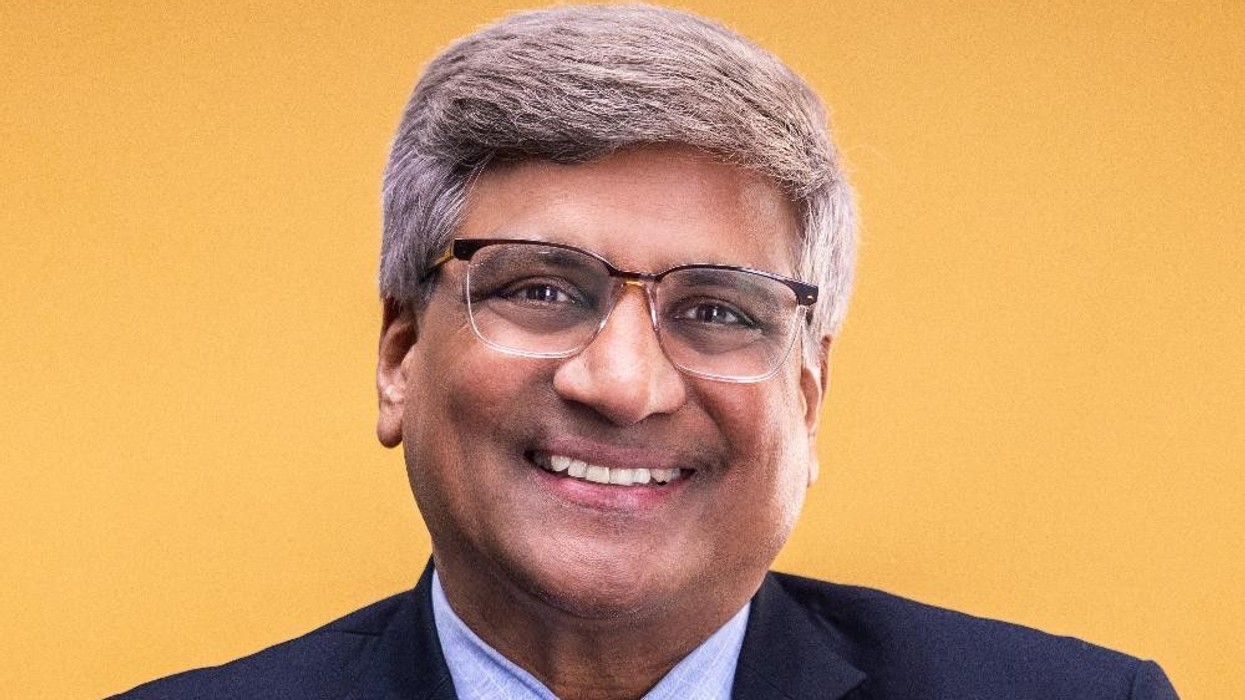
That early curiosity eventually developed into a career spanning engineering, research, technology policy and innovation in the United States. Panchanathan, now a University Professor of Technology and Innovation at Arizona State University (ASU), has become the first Indian American to receive the Arthur M. Bueche Award from the National Academy of Engineering (NAE) in the award's more than 40-year history.
The 2026 award will be presented in October at the NAE's annual meeting in Washington, DC.
From Chennai to US science leadership
The NAE recognized Panchanathan for his leadership in promoting fundamental science, technology and policy, advancing translational research and expanding opportunities across the United States.
The award also highlights his work connecting scientific discoveries with practical applications. Translational research focuses on moving ideas and discoveries from research settings toward real-world uses and broader societal impact.
Panchanathan previously served as the 15th director of the U.S. National Science Foundation (NSF). His tenure included the COVID-19 pandemic and the scientific race surrounding vaccine development.
During his time at the NSF, a new directorate was established for the first time in more than three decades. Its focus was on accelerating the translation of science and technology into economic progress, national security and societal impact across local and regional hubs.
Before leading the NSF, Panchanathan held senior research and innovation positions at Arizona State University. He led the university's Knowledge Enterprise and served as its chief research and innovation officer.
According to ASU, research volume at the university tripled during his time in that role, while the university was recognized by U.S. News & World Report as the most innovative university in the United States.
A career built around connecting people and ideas
ASU President Michael M. Crow described Panchanathan as a leading systems thinker and said the award reflected his ability to bring people together to solve major problems.
Panchanathan, however, has emphasized that the recognition is not solely about him.
He credited his family, teachers, mentors, students and colleagues for contributing to the work recognized by the award. His comments reflect an approach to science and innovation that places collaboration alongside individual achievement.
Panchanathan was elected to the National Academy of Engineering in 2024, an honor considered among the highest recognitions for engineers in the United States.
He is also the first person from Arizona to receive the Arthur M. Bueche Award. University of Arizona President Suresh Garimella nominated him for the honor.
The recognition comes as Panchanathan continues to work across several emerging areas of technology.
AI, quantum computing and the future
After returning to ASU, Panchanathan's current work has included artificial intelligence, quantum computing and the future of higher education.
In April, Phoenix Mayor Kate Gallego appointed him to lead the city's quantum strategy. He is also working on ideas for how higher education should evolve in an era increasingly shaped by artificial intelligence.
His approach includes focusing on students' mindsets and strengthening partnerships between universities and high-tech industries.
Panchanathan has also received recognition from India. In 2025, he was awarded the Padma Shri, adding a major Indian honor to a career that has connected academic research, technology policy and innovation in the United States.
For an eight-year-old in Chennai, the Apollo 11 Moon rocks sparked an interest not in the rocks themselves, but in the human ingenuity behind them. More than five decades later, that fascination has become a career dedicated to using science and technology to solve complex problems and expand opportunity.