

Nestled in the far northeastern corner of India, Arunachal Pradesh remains one of the country’s most enigmatic and unexplored states. Covered in dense forests, snow-capped peaks, and deep valleys, this land of the dawn-lit mountains is home to numerous legends and mysteries.
Among its many hidden wonders, one stands out as particularly intriguing: the Lake of No Return. This eerie waterbody, located near the India-Myanmar border in the Pangsau Pass area of Changlang district, has captivated historians, adventurers, and locals alike with its spine-chilling tales.
What gives this lake its sinister reputation? The name itself—Lake of No Return—suggests an ominous past, steeped in unsolved disappearances and eerie folklore. Its origins as a feared location date back to World War II when it became infamous for swallowing aircraft and soldiers, never to be seen again.
During the war, the Ledo Road was constructed to aid Allied forces in supplying China. Many aircraft flying over the region either crash-landed into the lake or disappeared within its depths. The region’s rugged terrain and dense jungles made rescue efforts nearly impossible, giving rise to speculation that the lake possessed supernatural powers, trapping all who ventured too close.
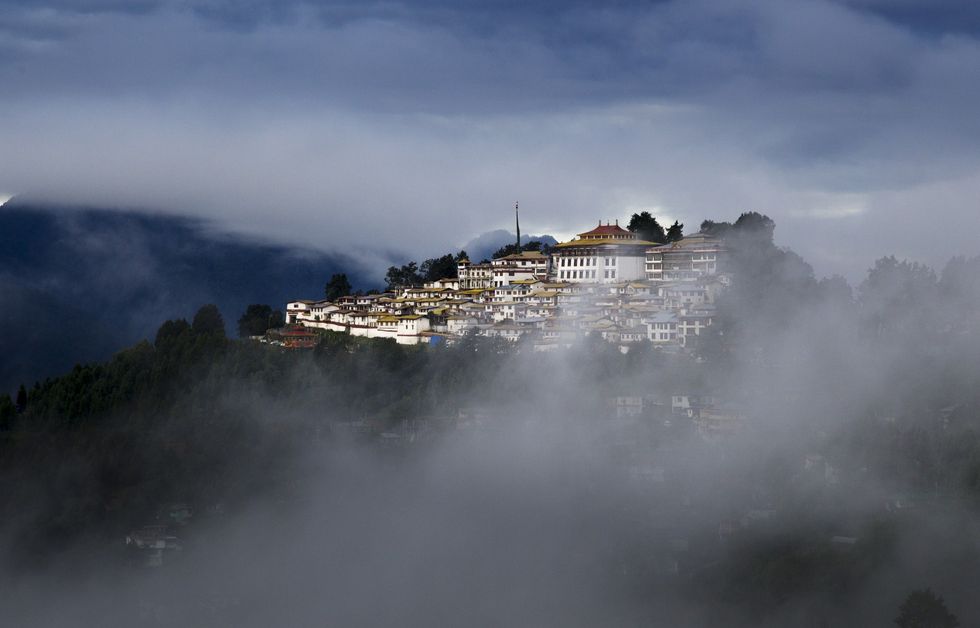 View of Tawang Monastery of Arunachal Pradesh which is one of the largest buddhist monastery of India.
Stories tell of American and British troops who sought refuge at the lake, only to mysteriously disappear. Locals recount chilling tales of soldiers drowning without a trace, further adding to the lake’s mystique.
Some believe that the lake’s marshy surroundings and the presence of quicksand-like soil might have played a role in these disappearances. Scientists suggest that those who stepped into the lake’s waters could have been sucked into the muddy depths, never to return.
For the indigenous tribes of Arunachal Pradesh, the Lake of No Return is more than just a historical mystery—it is a sacred yet feared location. Some legends claim that spirits guard the lake, ensuring that those who trespass never make it back. Others believe that it serves as a portal to another realm, drawing in unsuspecting souls. These age-old beliefs contribute to the lake’s aura of mystery, keeping many locals at a cautious distance.
While the lake is wrapped in mystery, its geographical and historical significance cannot be overlooked.
- Proximity to Pangsau Pass: The lake is located near Pangsau Pass, a crucial mountain pass connecting India and Myanmar. Historically, it played an essential role in cross-border trade and military operations.
- A Key Site in World War II: The lake’s location along the Ledo Road made it a strategic point during the war. Many war veterans and historians visit the region to understand its past.
- Tourism Potential: Despite its eerie reputation, the lake offers breathtaking views and an opportunity for adventure tourism. Surrounded by dense forests and mist-covered peaks, it provides a perfect escape for thrill-seekers and history buffs alike.
The Lake of No Return continues to intrigue and haunt those who hear its tale. Whether it is a site of tragic wartime accidents, a geological anomaly, or something more supernatural, the lake remains an unsolved enigma. For travelers drawn to the unexplained, this lake offers a unique experience—one that is as thrilling as it is unsettling.
Would you dare to visit and unravel its secrets?













 Outlook
 A Kashmiri craftswoman weaves a silk carpet at a factory in SrinagarTauseef Mustafa/AFP via Getty Images
 A worker weaves a carpet at a factory on the outskirts of JammuAlok pathania/AFP via Getty Images
 A worker checks thread reels at a carpet factory in JammuAlok pathania/AFP via Getty Images
 Getty Images