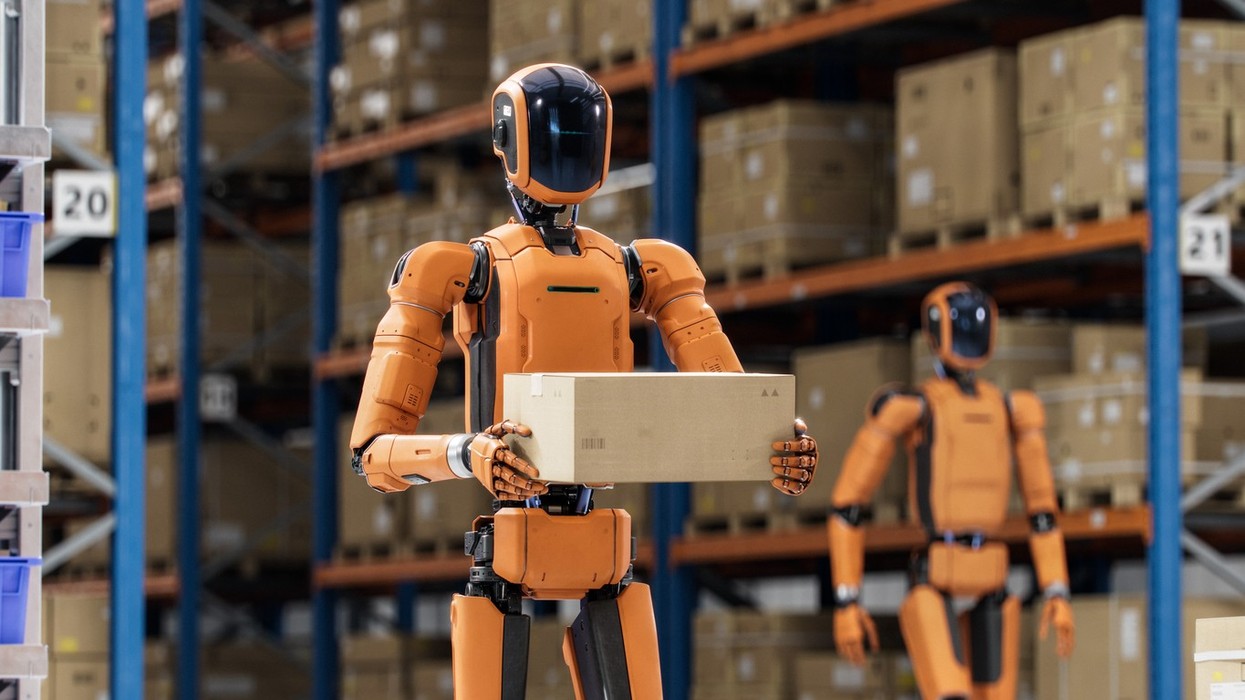

The Trump administration has announced a ban on the import of new foreign-made advanced humanoid robots, four-legged robots, and certain power inverters into the United States. Officials say the decision is aimed at protecting national security and strengthening America's critical supply chains. Although the move affects products from several countries, it is widely viewed as targeting Chinese manufacturers because China currently leads the global humanoid robotics industry.
The ban applies only to new devices that have not yet received authorization from the Federal Communications Commission (FCC). Robots and inverters that were previously approved can continue to be imported and sold in the United States.
National security concerns behind the ban
The main reason for the ban is cybersecurity. The Trump administration argues that advanced robots are no longer simple machines. They are internet-connected systems equipped with cameras, microphones, LiDAR sensors, GPS modules, artificial intelligence processors, and wireless communication technologies such as Wi-Fi, Bluetooth, and 5G. These features allow robots to map their surroundings, recognize people, collect data, and communicate with cloud servers.
According to US officials, these capabilities also create security risks if the devices are manufactured by companies that could be influenced by foreign governments.
The FCC added the products to its Covered List, which identifies communications equipment and technology considered a threat to US national security.
FCC chairman Brendan Carr said the agency was doing its part "to secure America's critical supply chains".
The administration said a White House-led interagency national security panel determined that advanced robots could become tools for surveillance or cyberattacks.
Officials warned that robots made outside the United States could allow "malign actors to surveil Americans, enhance the capabilities of foreign intelligence services, or to remotely commandeer the robots".
Power inverters also raised concerns because many modern units are connected to remote management platforms. Officials said attackers could potentially disable equipment, steal operational data, or gain unauthorized access to critical infrastructure.
The FCC cited concerns that the use of foreign-made inverters could allow overseas firms to turn them off, steal data, facilitate remote access and surveillance by "foreign government actors, or be otherwise exploited through a cyberattack".
Where humanoid robots are used
Humanoid robots are becoming increasingly common in industrial and commercial settings. They are designed to perform tasks that normally require human movement and interaction. Most use electric actuators, computer vision systems, force sensors, and AI software to navigate complex environments.
Four-legged robots are widely used for industrial inspections, military reconnaissance, disaster response, mining, construction, and infrastructure monitoring because they can move over rough terrain that wheeled machines cannot easily cross.
Chinese companies including Unitree, UBTech, and AgiBot have expanded rapidly in recent years by producing lower-cost humanoid robots for factories and commercial customers. Their products compete directly with American companies such as Tesla, Figure AI, and Boston Dynamics.
US officials said the ban was based on two major cybersecurity findings. First, they found a vulnerability that could allow access to a robot's live camera feeds, microphone audio, and detailed maps of a user's home.
Second, they identified a flaw that could let hackers remotely control a humanoid robot and search for other nearby robots, creating a network of compromised machines, or a "humanoid botnet." Officials said these risks were not only theoretical. They pointed to a 2026 case in which a security researcher gained control of about 7,000 connected robot vacuum cleaners in 24 countries after discovering a weakness in their cloud communication system.
A broader US-China technology battle
The robot ban is part of a wider effort by Washington to reduce dependence on Chinese technology. The United States has already imposed restrictions on advanced semiconductor exports to China, increased tariffs on Chinese electric vehicles, and tightened rules on several technology products.
The FCC previously imposed similar restrictions on foreign-made drones over comparable national security concerns. The latest decision extends that strategy to advanced robotics and connected industrial equipment.
Officials also argue that the move protects the US robotics industry during a period of rapid global competition. China accounted for roughly 85 per cent of global humanoid robot deployments last year, and analysts expect its domestic market to expand significantly by 2030. Lower production costs have allowed Chinese manufacturers to scale much faster than many international competitors.
China strongly criticized the decision. The Chinese embassy in Washington said Beijing has long opposed the US' "politicising" of trade issues and sanctions based on "groundless pretexts".
The embassy added that China will "take all necessary measures" in response to actions that harm its interests and urged the United States to "abandon its hegemonic mindset, and stop smearing Chinese companies and threatening them with sanctions".
Chinese officials also emphasized that the country's AI progress is based on "its own dedication and effort as well as international cooperation".
For the Trump administration, however, the issue extends beyond trade. Officials argue that connected robots and power systems are becoming part of America's critical infrastructure. By limiting imports of advanced foreign-made robotics, Washington hopes to reduce cybersecurity risks, protect sensitive data, strengthen domestic manufacturing, and maintain U.S. leadership in artificial intelligence and next-generation robotics.