
- Trump praised four former presidents honored at Mount Rushmore.
- He called communism "the enemy of July 4th, 1776."
- The president linked his anti-communist message to immigration.
- Trump criticized progressive views on American history and identity.
- His remarks came months before the 2026 midterm elections.
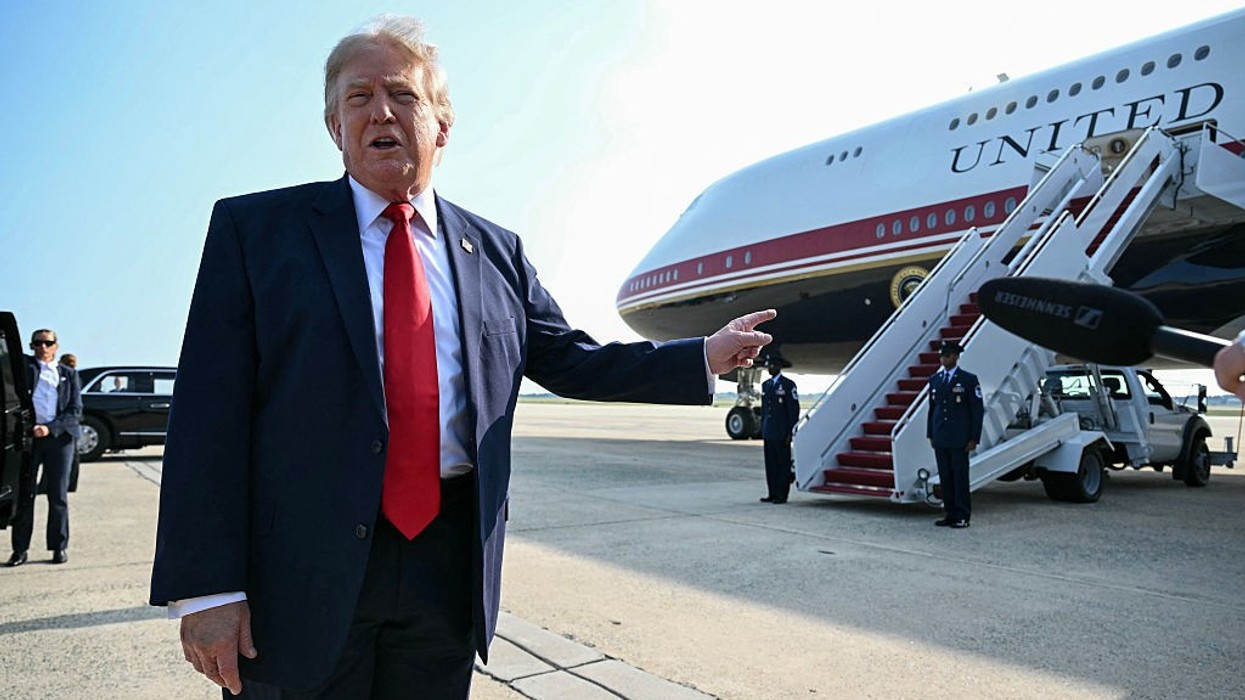
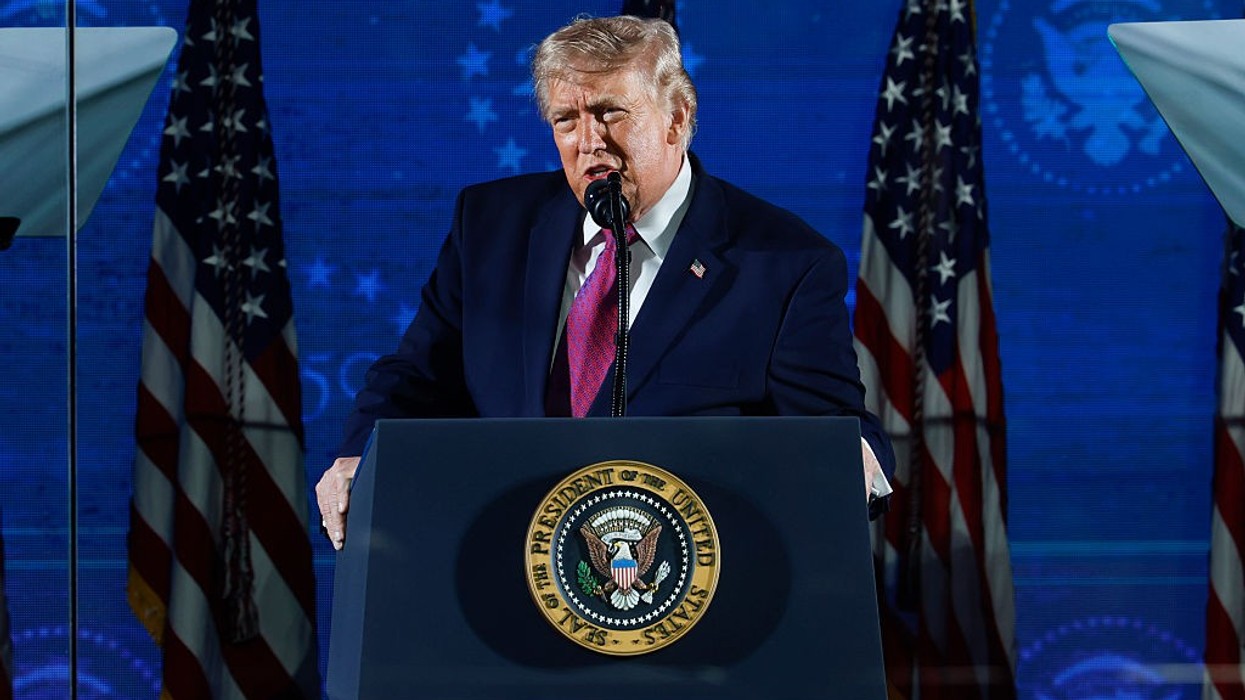
As the United States began celebrating the 250th anniversary of the Declaration of Independence, president Donald Trump used the occasion to deliver a strongly political speech at Mount Rushmore in South Dakota. Rather than focusing only on the nation's history and unity, Trump framed the anniversary as a moment to defend America against what he described as a growing "communist menace."
The event marked another stop on Trump's America250 tour leading up to the country's semiquincentennial celebrations. Thousands of supporters attended the rally, greeting the president with chants of "USA! USA!" An F-16 flyover added to the patriotic atmosphere before Trump took the stage.
During his 30-minute speech, Trump praised the four presidents whose faces are carved into Mount Rushmore, George Washington, Thomas Jefferson, Theodore Roosevelt and Abraham Lincoln.
"They were men of action, men of ambition, men of daring, men of destiny, and men of truly great intelligence," Trump said. "Above all, they were the great men of history."
Trump argued that the United States became exceptional because of both its Constitution and its national identity. He said recent efforts to reinterpret American history had weakened national pride.
"We are going to give our country its identity back," he told the audience.
The president then shifted to campaign-style remarks, focusing on his criticism of progressive Democrats. He claimed that communist ideas were returning to the United States decades after the end of the Cold War.
"As we approach this magnificent anniversary, we see our American identity under a renewed attack," Trump said.
"A generation after we fought and won the cold war against the menace of communism, there is now a resurgence of the communist menace in our land, including from newcomers to our country who embrace ideas totally opposed to our way of life and our great success."
Trump described communism as a direct threat to American democracy and freedom.
"It's the enemy of the constitution," he declared. "Above all, it's the enemy of July 4th, 1776 … Communism is the exact opposite of life, liberty, and the pursuit of happiness. It's death, tyranny and the pursuit of evil."
He also said that communist ideology was incompatible with American values.
"You can be loyal to Karl Marx or you can be loyal to America. You can be a communist or you can be a patriot. You cannot be both."
The speech came just days after several progressive candidates, including democratic socialists, won Democratic primary elections in states such as New York and Colorado. Trump did not mention every candidate by name during the speech, but his comments followed renewed debate over the growing influence of progressive politics within the Democratic Party.
The president also connected his criticism of communism with immigration. He argued that some newcomers to the United States support ideas that conflict with American principles and promised to remove those who promote such ideologies.
"We will send them quickly away, and we will continue to build our country bigger and better and stronger than ever before. America will never be a communist country," Trump said.
Trump also criticized efforts to present American history through the lens of slavery, racism and Indigenous displacement. He rejected arguments that America's founders should primarily be remembered for owning slaves or benefiting from colonial expansion.
"As for those who peddle Marxist lies about our heritage, tell our children that we live on stolen land or that our heroes were oppressors, they're doing something much worse than slandering our past," Trump said. "They are slandering and attacking our future, not going to let that happen."
The location of Trump's speech also drew attention because Mount Rushmore stands in the Black Hills, land that was guaranteed to the Sioux Nation under treaty before being taken by the U.S. government in the late nineteenth century. The site has long remained a subject of legal and historical debate.
Trump also urged Congress to end the Senate filibuster and pass the Save America Act, arguing that the legislation would strengthen election security. The proposal has faced criticism from opponents, who argue it could restrict voting access.
The Mount Rushmore event marked the beginning of a weekend of nationwide America250 celebrations. Trump is also scheduled to address another Independence Day gathering in Washington, D.C., where thousands are expected to attend despite extreme summer temperatures. His speech underscored how the anniversary has become both a celebration of American history and a platform for political debate ahead of the 2026 midterm elections.