Highlights:
- New book details a disagreement between Trump and JD Vance over Ukraine.
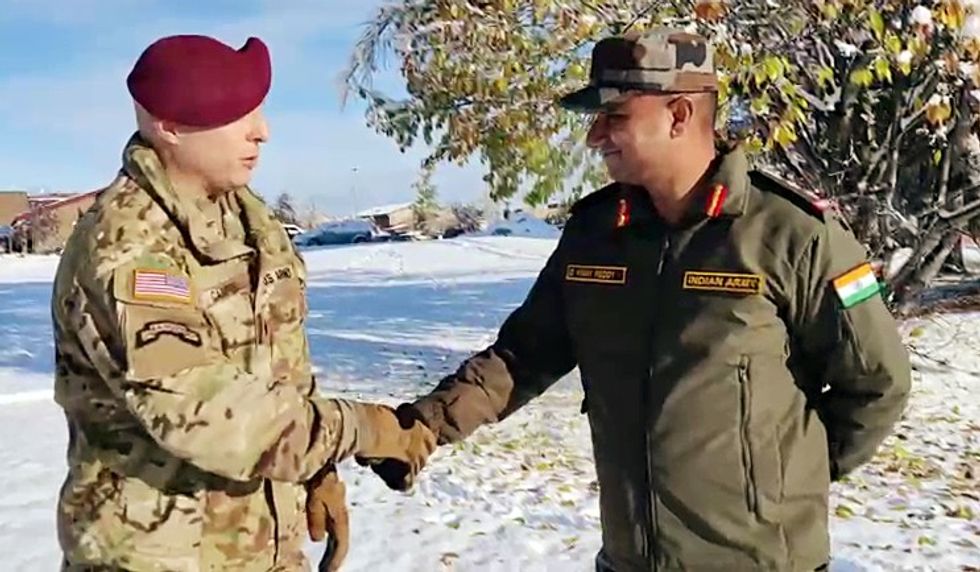
- Vance reportedly suggested Indian or Saudi troops as peacekeepers.
- Trump dismissed the idea, saying, “The Indians won’t do that.”
- The discussion took place during a January 2025 Oval Office meeting.
- The White House has not commented on the book’s claims.
A newly published book has revealed details of an internal debate within President Donald Trump’s second administration over possible peacekeeping arrangements in Ukraine.
The book, Regime Change, released on Tuesday (23), describes a meeting held in the Oval Office on January 30, 2025, just days after Trump returned to the White House for a second term. According to the authors, the discussion focused on possible ways to end the Russia-Ukraine war.
The meeting was organized by retired Army Lieutenant General Keith Kellogg, whom Trump appointed as special presidential envoy for Ukraine and Russia. Kellogg presented a proposal titled “An America First Plan: Trump’s Historic Peace Deal for Russia-Ukraine War.”
The draft plan outlined a possible ceasefire framework. Under the proposal, the United States would avoid formally recognizing Russia’s claims over occupied Ukrainian territories. At the same time, Ukraine would agree not to use military force to retake those areas.
One of the central elements of the proposal involved deploying foreign troops to monitor and enforce a ceasefire. Kellogg suggested that several European countries, including France, the United Kingdom, and the Netherlands, could provide peacekeeping forces.
According to the book, Vice President JD Vance raised concerns about the idea. He reportedly argued that the presence of troops from NATO member states inside Ukraine could be viewed by Moscow as a provocation. Vance believed such a move could increase tensions and potentially draw the United States deeper into the conflict.
Seeking an alternative, Vance reportedly asked National Security Advisor Michael Waltz whether countries outside Europe could contribute troops for a peacekeeping mission. After Waltz agreed that a non-European force might be preferable, Vance suggested India and Saudi Arabia as possible options.
Trump reportedly rejected the proposal immediately.
According to the book, Trump responded, “The Indians won’t do that. They won’t pay for something like that.”
The authors also state that Trump mentioned his positive relationship with Indian Prime Minister Narendra Modi. “Prime Minister Modi really liked him and wanted to visit,” Trump reportedly said. However, he maintained that “the Indians do not ever pay for anything,” and again insisted that “they won’t pay for something like that.”
The book says Trump had no objection if countries such as the United Kingdom or France chose to deploy their own forces, provided the United States did not become financially or militarily involved.
Beyond the debate over peacekeepers, the book portrays an administration that remained deeply skeptical of Ukrainian leadership. During the meeting, Trump reportedly criticized Ukrainian President Volodymyr Zelenskyy, calling him a “bad negotiator” who had “destroyed his country” but was “really good at getting stuff from the Biden administration.” Trump also allegedly described Ukraine as “the most corrupt country in the world.”
The authors further claim that Trump instructed Kellogg’s transition team not to communicate with Russian officials, saying, “Nobody on your team can talk to these people, because we’re working a deal.”
According to the book, Kellogg was never told who was conducting those negotiations. The White House has not officially commented on the claims made in Regime Change.