

Highlights:
- Trump reverses course and signs bill mandating release of Epstein-related federal records.
- Congress passes the legislation with overwhelming bipartisan support (427–1 in the House).
- DOJ must release the files within 30 days, with limited victim-protection redactions.
- Law prohibits withholding information due to political or reputational concerns.
- Move follows months of White House resistance and growing pressure from Trump’s own party.
President Donald Trump on Wednesday (19) signed a bipartisan bill compelling his administration to release all federal files connected to convicted sex offender Jeffrey Epstein. The decision marked a significant reversal for the president, who had spent months opposing congressional efforts toward transparency before conceding once it became clear that lawmakers would push the measure through with overwhelming support.
Trump's signature came after the US House of Representatives passed the bill in a lopsided 427-1 vote. The only dissent came from Republican Rep Clay Higgins of Louisiana, who argued that the legislation risked exposing the identities of individuals with no wrongdoing who happened to appear in federal investigative materials. The Senate later approved the bill unanimously, forging a formal roll-call vote and signalling congressional momentum.
The new law requires the Department of Justice to release all files, communications, and records related to Epstein, including information concerning the 2019 federal investigation into his death while in custody.
The department must make the documents public within 30 days. While certain redactions are allowed to protect victims and preserve ongoing federal investigations, the legislation explicitly forbids withholding information on the grounds of political sensitivity, reputational harm, or embarrassment.
Trump's about-face came after days of rising pressure within his own party. Although he had the authority to disclose many of the documents months earlier, he had resisted doing so, prompting growing frustration among Republicans and Democrats alike. Matters escalated when the administration summoned Rep Lauren Boebert, a vocal GOP supporter of the bill, to the White House Situation Room in an attempt to shift her stance. She refused.
By the weekend, Trump concluded that a veto ot continued opposition would be futile. In public statements, he framed the issue as a distraction from what he described as major Republican achievements, insisting he wanted Congress and the country to move on.
“Democrats have used the Epstein issue, which affects them far more than the Republican Party, to try and distract from our AMAZING Victories,” he wrote on social media while announcing that he had signed the legislation. A day earlier, he stated he did not want Republicans to lose focus on the party’s successes due to lingering controversy.
Trump has long acknowledged that he knew Epstein socially years before the disgraced financier’s fall, although he insists he was unaware of Epstein’s criminal activities and had severed ties well before Epstein’s 2019 arrest. Still, Epstein’s extensive network of high-profile associates—and the secrecy surrounding the federal files—has fueled speculation for years.
Before Trump’s return to the White House, several of his political allies helped amplify conspiracy theories about Epstein’s death and potential cover-ups within federal agencies. The bill’s passage now ensures that much of the long-hidden documentation will finally come to light, despite concerns from some lawmakers about the potential impact on innocent individuals referenced in the files.








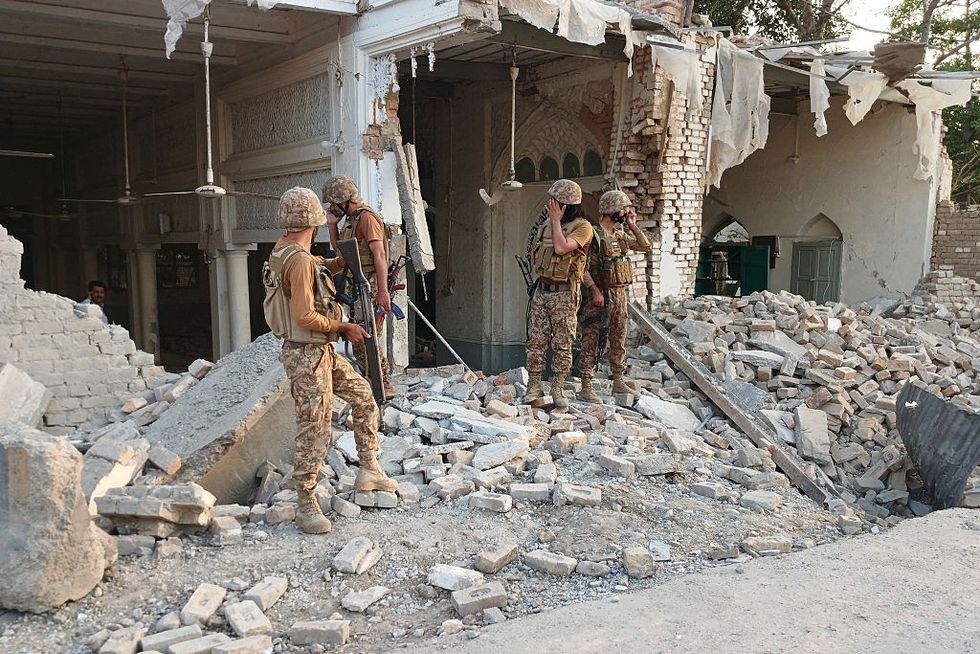 Army personnel stand amid the rubble following an explosion inside the police headquarters at Kohat in Pakistan's Khyber Pakhtunkhwa province on September 18, 2026. An explosion at a historic police headquarters in northern Pakistan on September 18 killed at least eight people and wounded 35 more, officials said, with the country's president swiftly blaming a militant group. Getty Images
 Mourners read the holy Quran while sitting around the grave of a paramilitary personnel of the Frontier Corps (FC) who was killed during the Afghanistan-Pakistan border clashes, in Kohat on October 17, 2025. A ceasefire along the frontier between Afghanistan and Pakistan was holding on October 16, officials on both sides said, after dozens of troops and civilians were killed in cross-border clashes.Getty Images